
EU-Mercosur Trade Deal: A Historic Agreement Amidst Controversy
In This Article
HIGHLIGHTS
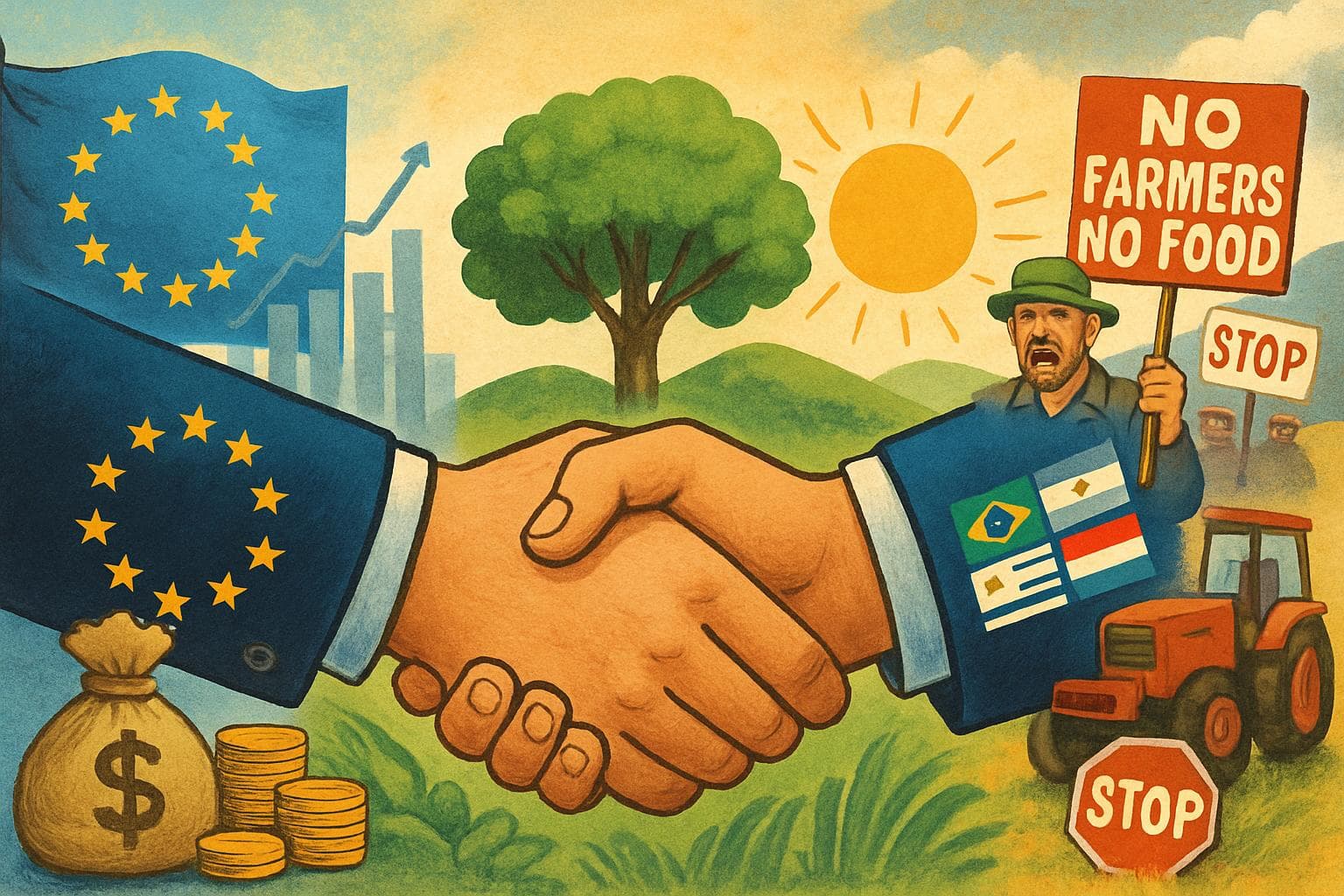
- The EU has finalized a free trade agreement with the Mercosur bloc, comprising Brazil, Argentina, Paraguay, and Uruguay, after 25 years of negotiations.
- The deal, hailed as historic by Brazil's President Lula, faces opposition from European farmers concerned about cheap imports affecting local agriculture.
- The agreement includes commitments to combat climate change and ensure sustainable trade practices, with potential suspensions if environmental standards are not met.
- The European Parliament must approve the deal, with voting expected to be close due to political and environmental concerns.
- The agreement aims to strengthen EU economic ties with South America, reducing reliance on China for critical minerals and fostering global economic cooperation.
The European Union has reached a landmark free trade agreement with the Mercosur bloc, which includes Brazil, Argentina, Paraguay, and Uruguay, concluding 25 years of negotiations. This historic deal, celebrated by Brazilian President Luiz Inacio Lula da Silva as a triumph for multilateralism, aims to enhance economic cooperation between the EU and South America. However, it has sparked significant opposition from European farmers and environmentalists.
Economic Opportunities and Environmental Commitments
The EU-Mercosur trade deal, described by EU Commission President Ursula von der Leyen as a "win-win agreement," promises substantial economic benefits. It is projected to save European companies €4 billion annually in export duties and create a €50 billion opportunity for EU exporters by 2040. The agreement also seeks to deepen economic ties with South America, a region rich in critical minerals essential for renewable energy and battery technology.
In addition to economic gains, the deal includes commitments to combat climate change, such as halting deforestation and ensuring sustainable trade practices. Cecilia Malmström, a former European commissioner for trade, emphasized that parts of the agreement could be suspended if Mercosur countries fail to adhere to environmental standards.
Opposition and Political Challenges
Despite its potential benefits, the trade agreement has faced fierce opposition from farmers across Europe. Protests erupted in France, Belgium, and Poland, with farmers expressing concerns that cheap imports could undermine local agriculture. "This will kill our agriculture in Poland," warned Janusz Sampolski, a Polish farmer.
The deal has also become a political flashpoint, with opposition parties in France attempting to leverage it against President Emmanuel Macron's government. The European Parliament's approval is required for the agreement to take effect, and voting is expected to be contentious due to political and environmental concerns.
Strategic Implications
The EU-Mercosur trade deal is seen as a strategic move to strengthen the EU's economic ties with the global south, reducing reliance on China for critical minerals and rare earths. Agathe Demarais, a senior policy fellow at the European Council on Foreign Relations, noted that failing to sign the agreement could push Latin American economies closer to Beijing's influence.
As the EU seeks to diversify its export markets and foster global economic cooperation, the trade deal represents a significant geopolitical signal in favor of rule-based international trade.
WHAT THIS MIGHT MEAN
The EU-Mercosur trade agreement's future hinges on its approval by the European Parliament, where political and environmental concerns could influence the outcome. If ratified, the deal could reshape economic relations between the EU and South America, offering new opportunities for trade and investment. However, the agreement's success will depend on balancing economic benefits with environmental commitments, ensuring that both blocs adhere to sustainable trade practices.
In the broader geopolitical context, the deal could strengthen the EU's position in the global south, countering China's growing influence in the region. As the EU navigates these complex dynamics, the agreement's implementation will be closely watched for its impact on international trade and environmental sustainability.
Related Articles
China Sets Lowest GDP Growth Target in Decades Amid Economic Challenges
Russian LNG Tanker Sinks in Mediterranean Amid Accusations of Ukrainian Drone Attack

UK Faces Dilemmas Amid Iran Conflict and China Spying Allegations

Labour MP's Husband Arrested in UK-China Espionage Probe
Spain's Sánchez Stands Firm Against Trump's Trade Threat Over Iran Stance
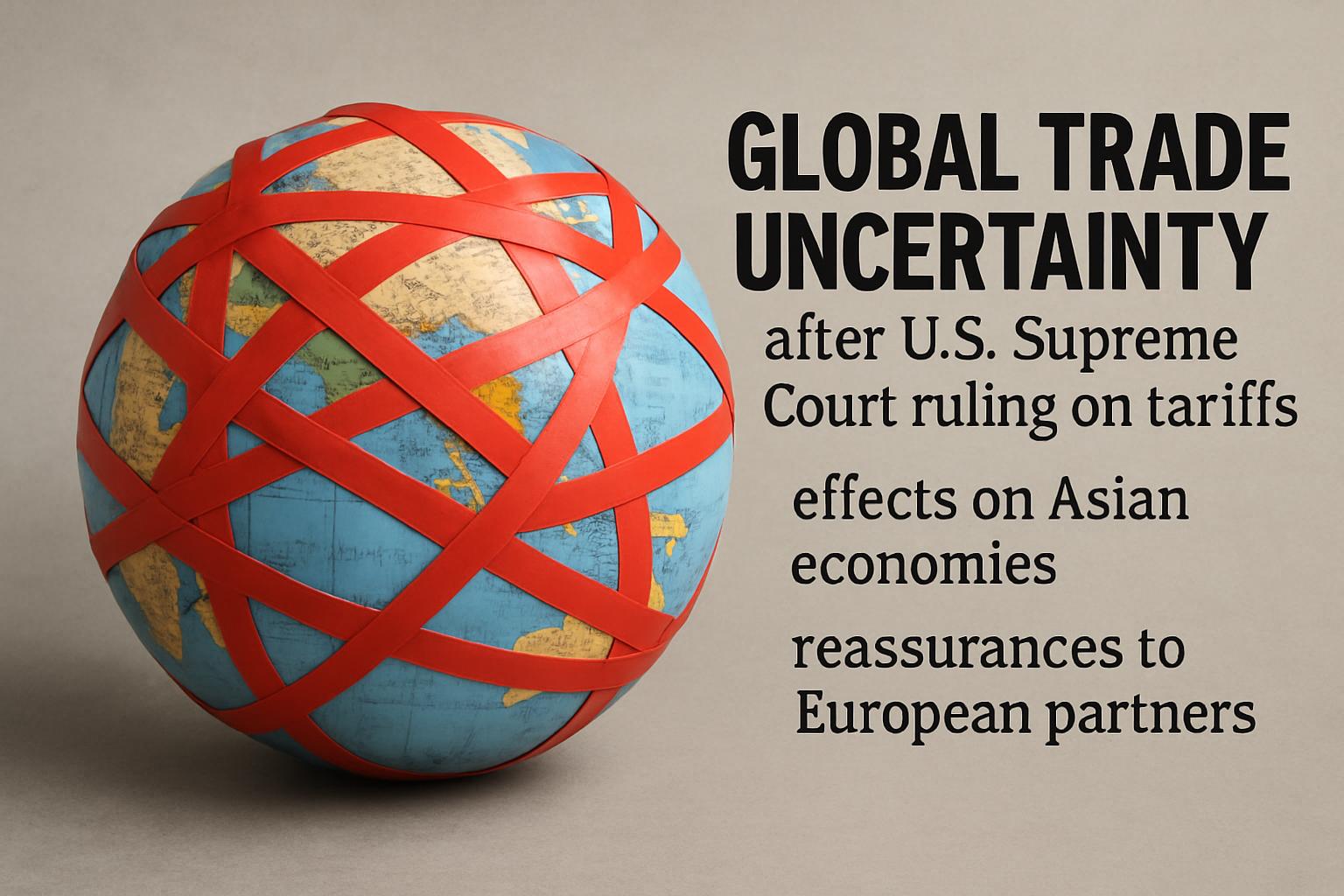
US Supreme Court Ruling Sparks Trade Uncertainty in Asia and Beyond
EU-Mercosur Trade Deal: A Historic Agreement Amidst Controversy
In This Article
 Alex Carter| Published
 HIGHLIGHTS
- The EU has finalized a free trade agreement with the Mercosur bloc, comprising Brazil, Argentina, Paraguay, and Uruguay, after 25 years of negotiations.
- The deal, hailed as historic by Brazil's President Lula, faces opposition from European farmers concerned about cheap imports affecting local agriculture.
- The agreement includes commitments to combat climate change and ensure sustainable trade practices, with potential suspensions if environmental standards are not met.
- The European Parliament must approve the deal, with voting expected to be close due to political and environmental concerns.
- The agreement aims to strengthen EU economic ties with South America, reducing reliance on China for critical minerals and fostering global economic cooperation.
The European Union has reached a landmark free trade agreement with the Mercosur bloc, which includes Brazil, Argentina, Paraguay, and Uruguay, concluding 25 years of negotiations. This historic deal, celebrated by Brazilian President Luiz Inacio Lula da Silva as a triumph for multilateralism, aims to enhance economic cooperation between the EU and South America. However, it has sparked significant opposition from European farmers and environmentalists.
Economic Opportunities and Environmental Commitments
The EU-Mercosur trade deal, described by EU Commission President Ursula von der Leyen as a "win-win agreement," promises substantial economic benefits. It is projected to save European companies €4 billion annually in export duties and create a €50 billion opportunity for EU exporters by 2040. The agreement also seeks to deepen economic ties with South America, a region rich in critical minerals essential for renewable energy and battery technology.
In addition to economic gains, the deal includes commitments to combat climate change, such as halting deforestation and ensuring sustainable trade practices. Cecilia Malmström, a former European commissioner for trade, emphasized that parts of the agreement could be suspended if Mercosur countries fail to adhere to environmental standards.
Opposition and Political Challenges
Despite its potential benefits, the trade agreement has faced fierce opposition from farmers across Europe. Protests erupted in France, Belgium, and Poland, with farmers expressing concerns that cheap imports could undermine local agriculture. "This will kill our agriculture in Poland," warned Janusz Sampolski, a Polish farmer.
The deal has also become a political flashpoint, with opposition parties in France attempting to leverage it against President Emmanuel Macron's government. The European Parliament's approval is required for the agreement to take effect, and voting is expected to be contentious due to political and environmental concerns.
Strategic Implications
The EU-Mercosur trade deal is seen as a strategic move to strengthen the EU's economic ties with the global south, reducing reliance on China for critical minerals and rare earths. Agathe Demarais, a senior policy fellow at the European Council on Foreign Relations, noted that failing to sign the agreement could push Latin American economies closer to Beijing's influence.
As the EU seeks to diversify its export markets and foster global economic cooperation, the trade deal represents a significant geopolitical signal in favor of rule-based international trade.
WHAT THIS MIGHT MEAN
The EU-Mercosur trade agreement's future hinges on its approval by the European Parliament, where political and environmental concerns could influence the outcome. If ratified, the deal could reshape economic relations between the EU and South America, offering new opportunities for trade and investment. However, the agreement's success will depend on balancing economic benefits with environmental commitments, ensuring that both blocs adhere to sustainable trade practices.
In the broader geopolitical context, the deal could strengthen the EU's position in the global south, countering China's growing influence in the region. As the EU navigates these complex dynamics, the agreement's implementation will be closely watched for its impact on international trade and environmental sustainability.
Related Articles
China Sets Lowest GDP Growth Target in Decades Amid Economic Challenges
Russian LNG Tanker Sinks in Mediterranean Amid Accusations of Ukrainian Drone Attack
UK Faces Dilemmas Amid Iran Conflict and China Spying Allegations
Labour MP's Husband Arrested in UK-China Espionage Probe
Spain's Sánchez Stands Firm Against Trump's Trade Threat Over Iran Stance
US Supreme Court Ruling Sparks Trade Uncertainty in Asia and Beyond