
Finnish Authorities Detain Vessel Over Suspected Undersea Cable Sabotage
In This Article
HIGHLIGHTS
- Finnish police detained the cargo vessel Fitburg, suspected of damaging undersea telecom cables between Finland and Estonia.
- The vessel, sailing from Russia to Israel, was found dragging its anchor, leading to suspicions of sabotage.
- All 14 crew members, from Russia, Georgia, Kazakhstan, and Azerbaijan, were arrested for potential involvement in the incident.
- The damaged cables are part of critical infrastructure, with experts linking such incidents to hybrid warfare amid the Russia-Ukraine conflict.
- Finnish authorities are investigating the case as aggravated criminal damage and interference with telecommunications.
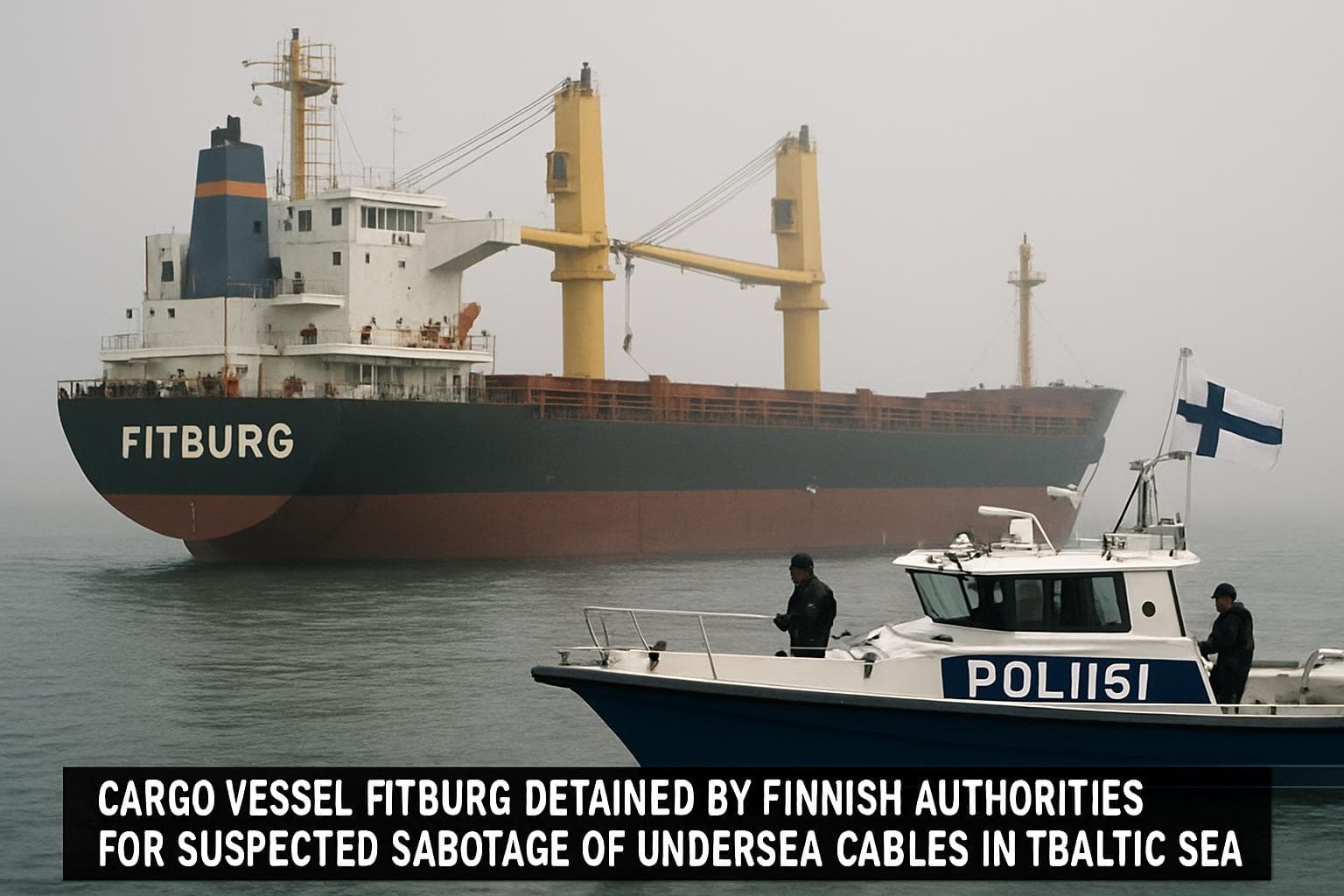
Finnish police have seized a cargo vessel, the Fitburg, suspected of damaging undersea telecommunications cables in the Baltic Sea, a region increasingly fraught with security concerns. The vessel, which was en route from St Petersburg, Russia, to Haifa, Israel, was intercepted after Finnish telecom operator Elisa reported disruptions to its cable running between Finland and Estonia.
Incident Details and Investigation
The Finnish coastguard, responding to the reported cable fault, discovered the Fitburg dragging its anchor along the seabed. This prompted authorities to board the vessel and detain its 14 crew members, hailing from Russia, Georgia, Kazakhstan, and Azerbaijan. The ship, operating under the flag of St Vincent and Grenadines, was taken to a port near Helsinki for further investigation.
Finnish police have launched a probe into aggravated criminal damage and interference with telecommunications. Deputy Police Chief Heikki Kopperoinen noted that it remains unclear whether the incident was intentional or accidental. However, the presence of the vessel in Finland's exclusive economic zone with its anchor chain lowered has raised suspicions.
Context of Hybrid Warfare
The Baltic Sea has witnessed a series of similar incidents in recent years, often viewed as part of a broader hybrid warfare strategy attributed to Russia, especially following its invasion of Ukraine in 2022. The European Commission and NATO have expressed concerns over the vulnerability of undersea cables, which are critical for international data and electricity transmission.
International Reactions and Security Measures
The Finnish government, along with Estonia, is closely monitoring the situation. Estonia reported a second cable disruption on the same day, though the cause remains under investigation. Finnish President Alexander Stubb emphasized the nation's preparedness for various security challenges, while EU officials reiterated the importance of safeguarding critical infrastructure against hybrid threats.
WHAT THIS MIGHT MEAN
The ongoing investigation into the Fitburg incident could lead to heightened tensions between Russia and Western nations, especially if evidence suggests deliberate sabotage. Should the probe confirm intentional damage, it may prompt calls for increased maritime security measures in the Baltic Sea, potentially involving NATO forces.
Legal proceedings against the crew could set a precedent for handling similar cases of suspected hybrid warfare. The incident underscores the need for international cooperation in protecting undersea cables, which are vital to global communications and economic stability.
As geopolitical tensions persist, particularly in the context of the Russia-Ukraine conflict, the Baltic Sea's security landscape may see further militarization, with countries bolstering their defenses against potential threats to critical infrastructure.
Images from the Web
Related Articles
France Releases Russian 'Shadow Fleet' Tanker Amid Rising Tensions
Russian LNG Tanker Sinks in Mediterranean Amid Accusations of Ukrainian Drone Attack

Russia-Ukraine Conflict: Four Years of Unyielding Struggle and Human Resilience

US Supreme Court Ruling on Tariffs Sparks Uncertainty for UK and Global Trade
Kenyan Nationals Recruited for Russia-Ukraine War Amid Allegations of Human Trafficking
Geneva Peace Talks Between Russia and Ukraine End Without Breakthrough
Finnish Authorities Detain Vessel Over Suspected Undersea Cable Sabotage
In This Article
 Sofia Romano| Published
 HIGHLIGHTS
- Finnish police detained the cargo vessel Fitburg, suspected of damaging undersea telecom cables between Finland and Estonia.
- The vessel, sailing from Russia to Israel, was found dragging its anchor, leading to suspicions of sabotage.
- All 14 crew members, from Russia, Georgia, Kazakhstan, and Azerbaijan, were arrested for potential involvement in the incident.
- The damaged cables are part of critical infrastructure, with experts linking such incidents to hybrid warfare amid the Russia-Ukraine conflict.
- Finnish authorities are investigating the case as aggravated criminal damage and interference with telecommunications.
Finnish police have seized a cargo vessel, the Fitburg, suspected of damaging undersea telecommunications cables in the Baltic Sea, a region increasingly fraught with security concerns. The vessel, which was en route from St Petersburg, Russia, to Haifa, Israel, was intercepted after Finnish telecom operator Elisa reported disruptions to its cable running between Finland and Estonia.
Incident Details and Investigation
The Finnish coastguard, responding to the reported cable fault, discovered the Fitburg dragging its anchor along the seabed. This prompted authorities to board the vessel and detain its 14 crew members, hailing from Russia, Georgia, Kazakhstan, and Azerbaijan. The ship, operating under the flag of St Vincent and Grenadines, was taken to a port near Helsinki for further investigation.
Finnish police have launched a probe into aggravated criminal damage and interference with telecommunications. Deputy Police Chief Heikki Kopperoinen noted that it remains unclear whether the incident was intentional or accidental. However, the presence of the vessel in Finland's exclusive economic zone with its anchor chain lowered has raised suspicions.
Context of Hybrid Warfare
The Baltic Sea has witnessed a series of similar incidents in recent years, often viewed as part of a broader hybrid warfare strategy attributed to Russia, especially following its invasion of Ukraine in 2022. The European Commission and NATO have expressed concerns over the vulnerability of undersea cables, which are critical for international data and electricity transmission.
International Reactions and Security Measures
The Finnish government, along with Estonia, is closely monitoring the situation. Estonia reported a second cable disruption on the same day, though the cause remains under investigation. Finnish President Alexander Stubb emphasized the nation's preparedness for various security challenges, while EU officials reiterated the importance of safeguarding critical infrastructure against hybrid threats.
WHAT THIS MIGHT MEAN
The ongoing investigation into the Fitburg incident could lead to heightened tensions between Russia and Western nations, especially if evidence suggests deliberate sabotage. Should the probe confirm intentional damage, it may prompt calls for increased maritime security measures in the Baltic Sea, potentially involving NATO forces.
Legal proceedings against the crew could set a precedent for handling similar cases of suspected hybrid warfare. The incident underscores the need for international cooperation in protecting undersea cables, which are vital to global communications and economic stability.
As geopolitical tensions persist, particularly in the context of the Russia-Ukraine conflict, the Baltic Sea's security landscape may see further militarization, with countries bolstering their defenses against potential threats to critical infrastructure.
Images from the Web
Related Articles
France Releases Russian 'Shadow Fleet' Tanker Amid Rising Tensions
Russian LNG Tanker Sinks in Mediterranean Amid Accusations of Ukrainian Drone Attack
Russia-Ukraine Conflict: Four Years of Unyielding Struggle and Human Resilience
US Supreme Court Ruling on Tariffs Sparks Uncertainty for UK and Global Trade
Kenyan Nationals Recruited for Russia-Ukraine War Amid Allegations of Human Trafficking
Geneva Peace Talks Between Russia and Ukraine End Without Breakthrough