
France Reintroduces Voluntary Military Service Amid Rising Russian Threat
In This Article
HIGHLIGHTS
- France will reintroduce a voluntary military service for young adults, offering a 10-month training program.
- The initiative is a response to growing concerns over Russian aggression and aims to bolster national security.
- Participants will receive a monthly stipend of at least €800 and other benefits, with the program starting in mid-2026.
- The scheme is part of a broader European trend towards strengthening military capabilities amid shifting global threats.
- French military leaders support the plan, viewing it as a way to create a hybrid force of professionals, reservists, and volunteers.
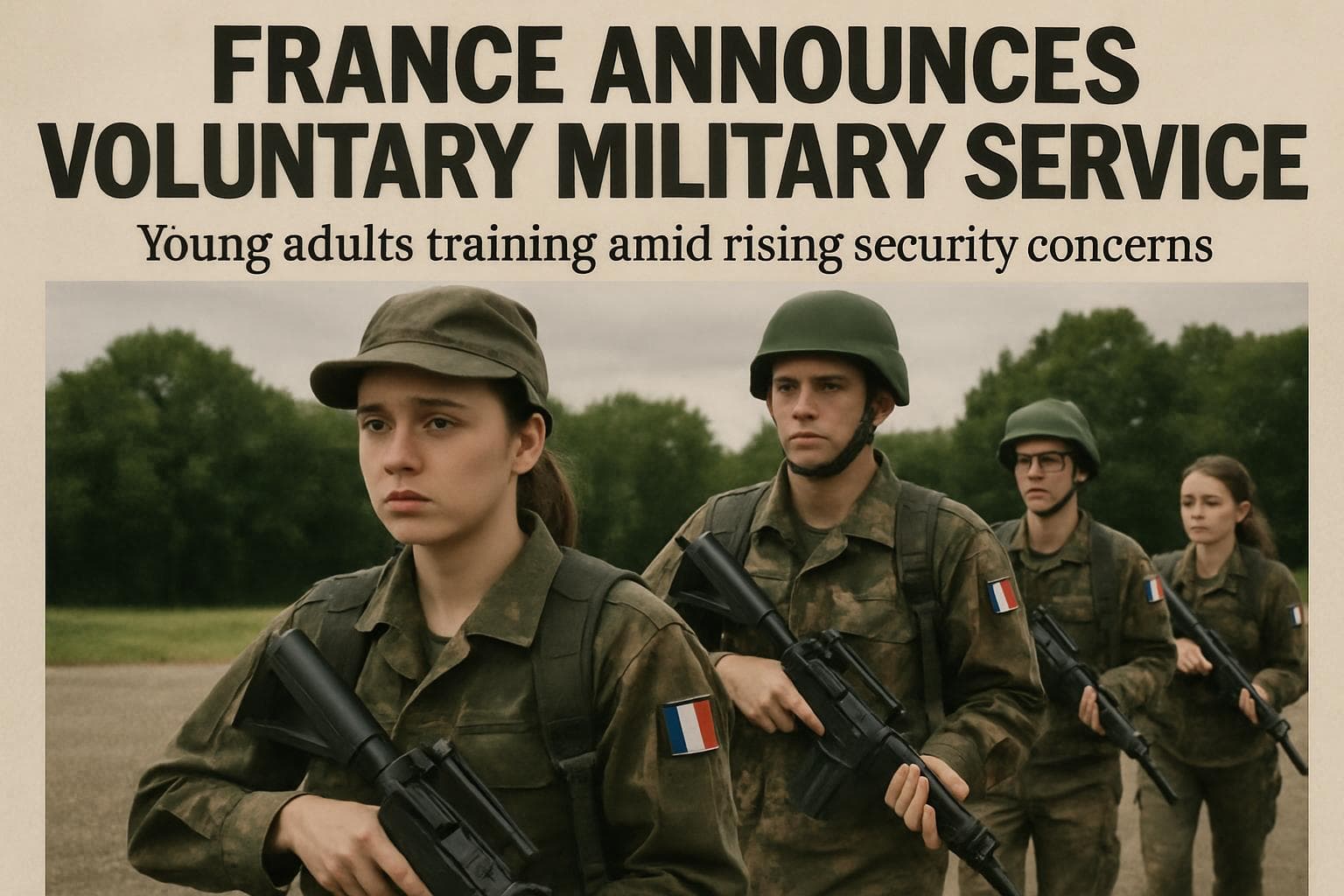
France is set to reintroduce a voluntary military service program, marking a significant shift in its defense strategy as concerns over Russian aggression mount. President Emmanuel Macron announced the initiative, which will offer young men and women a 10-month training period, during a speech at an infantry base near Grenoble.
The program, slated to begin by mid-2026, aims to engage 18- and 19-year-olds, providing them with a monthly stipend of at least €800, along with food, accommodation, and discounted rail travel. "The only way to avoid danger is to prepare for it," Macron stated, emphasizing the need for national mobilization in an increasingly uncertain world.
A Strategic Response to Global Threats
The reintroduction of military service comes nearly 30 years after France phased out conscription. Macron clarified that while the country would not revert to mandatory service, the new voluntary scheme is essential to address "accelerating threats" on the global stage. The initiative aligns France with other European nations like Belgium, the Netherlands, and Germany, which have launched similar programs in response to the perceived Russian threat.
Building a Hybrid Military Force
French military leaders, including armed services chief Gen Fabien Mandon, have expressed support for the plan, viewing it as a step towards creating a hybrid military force. This structure would integrate professional soldiers, reservists, and volunteers, enhancing the country's defense capabilities. The program is expected to start with 3,000 volunteers in 2026, with ambitions to expand to 50,000 by 2036.
European Defense Strategy and Youth Engagement
Macron highlighted the importance of youth engagement in national defense, noting a "thirst for engagement" among the younger generation. The program not only aims to bolster military ranks but also to provide a reservoir of trained personnel who could transition into civilian life, join the reserves, or pursue full military careers.
WHAT THIS MIGHT MEAN
The reintroduction of voluntary military service in France could have significant implications for both national and European defense strategies. As tensions with Russia continue to rise, this move may strengthen France's military readiness and serve as a model for other European nations considering similar measures. Experts suggest that the success of the program will depend on its ability to attract and retain motivated young participants, as well as its integration with existing military structures.
Politically, the initiative underscores France's commitment to national security and its proactive stance in addressing global threats. It also reflects a broader European trend towards self-reliance in defense, as traditional security guarantees from allies like the United States become less certain. As the program unfolds, its impact on France's military capabilities and its role in shaping European defense policies will be closely watched.
Related Articles
China Sets Lowest GDP Growth Target in Decades Amid Economic Challenges
Cuba Faces Widespread Blackout Amid Deepening Fuel Crisis
Russian LNG Tanker Sinks in Mediterranean Amid Accusations of Ukrainian Drone Attack

UK Faces Dilemmas Amid Iran Conflict and China Spying Allegations

Google Faces Legal Battle Over AI Chatbot's Alleged Role in Tragic Death
Iran Postpones Khamenei Funeral Amid Escalating US-Israeli Strikes
France Reintroduces Voluntary Military Service Amid Rising Russian Threat
In This Article
 Alex Carter| Published
 HIGHLIGHTS
- France will reintroduce a voluntary military service for young adults, offering a 10-month training program.
- The initiative is a response to growing concerns over Russian aggression and aims to bolster national security.
- Participants will receive a monthly stipend of at least €800 and other benefits, with the program starting in mid-2026.
- The scheme is part of a broader European trend towards strengthening military capabilities amid shifting global threats.
- French military leaders support the plan, viewing it as a way to create a hybrid force of professionals, reservists, and volunteers.
France is set to reintroduce a voluntary military service program, marking a significant shift in its defense strategy as concerns over Russian aggression mount. President Emmanuel Macron announced the initiative, which will offer young men and women a 10-month training period, during a speech at an infantry base near Grenoble.
The program, slated to begin by mid-2026, aims to engage 18- and 19-year-olds, providing them with a monthly stipend of at least €800, along with food, accommodation, and discounted rail travel. "The only way to avoid danger is to prepare for it," Macron stated, emphasizing the need for national mobilization in an increasingly uncertain world.
A Strategic Response to Global Threats
The reintroduction of military service comes nearly 30 years after France phased out conscription. Macron clarified that while the country would not revert to mandatory service, the new voluntary scheme is essential to address "accelerating threats" on the global stage. The initiative aligns France with other European nations like Belgium, the Netherlands, and Germany, which have launched similar programs in response to the perceived Russian threat.
Building a Hybrid Military Force
French military leaders, including armed services chief Gen Fabien Mandon, have expressed support for the plan, viewing it as a step towards creating a hybrid military force. This structure would integrate professional soldiers, reservists, and volunteers, enhancing the country's defense capabilities. The program is expected to start with 3,000 volunteers in 2026, with ambitions to expand to 50,000 by 2036.
European Defense Strategy and Youth Engagement
Macron highlighted the importance of youth engagement in national defense, noting a "thirst for engagement" among the younger generation. The program not only aims to bolster military ranks but also to provide a reservoir of trained personnel who could transition into civilian life, join the reserves, or pursue full military careers.
WHAT THIS MIGHT MEAN
The reintroduction of voluntary military service in France could have significant implications for both national and European defense strategies. As tensions with Russia continue to rise, this move may strengthen France's military readiness and serve as a model for other European nations considering similar measures. Experts suggest that the success of the program will depend on its ability to attract and retain motivated young participants, as well as its integration with existing military structures.
Politically, the initiative underscores France's commitment to national security and its proactive stance in addressing global threats. It also reflects a broader European trend towards self-reliance in defense, as traditional security guarantees from allies like the United States become less certain. As the program unfolds, its impact on France's military capabilities and its role in shaping European defense policies will be closely watched.
Related Articles
China Sets Lowest GDP Growth Target in Decades Amid Economic Challenges
Cuba Faces Widespread Blackout Amid Deepening Fuel Crisis
Russian LNG Tanker Sinks in Mediterranean Amid Accusations of Ukrainian Drone Attack
UK Faces Dilemmas Amid Iran Conflict and China Spying Allegations
Google Faces Legal Battle Over AI Chatbot's Alleged Role in Tragic Death
Iran Postpones Khamenei Funeral Amid Escalating US-Israeli Strikes