
Gaza Conflict Death Toll Surpasses 70,000 Amid Ceasefire Violations
In This Article
HIGHLIGHTS
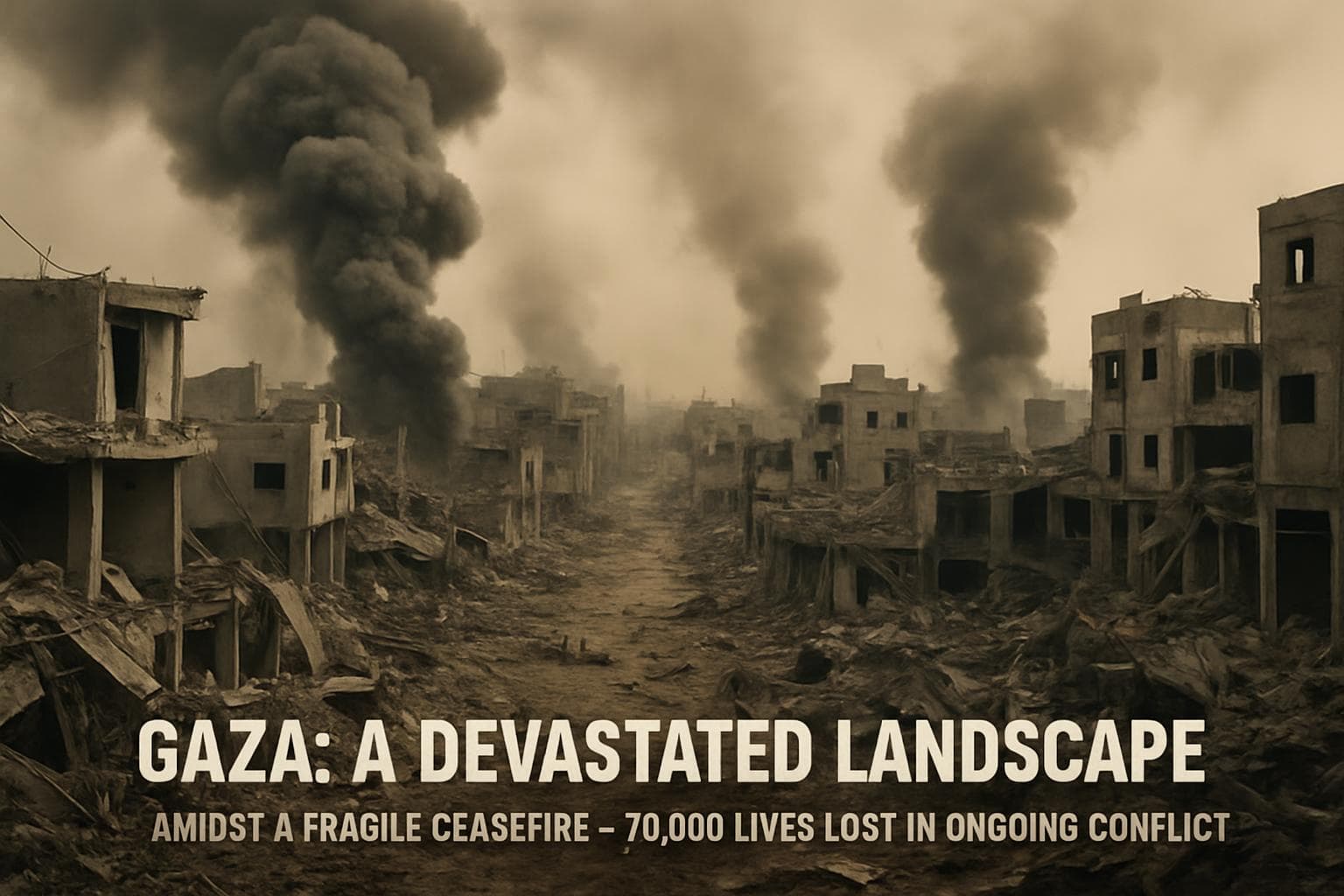
- Over 70,000 Palestinians have been killed since the Israel-Gaza conflict began, according to Gaza's health ministry.
- The death toll has continued to rise despite a ceasefire that took effect on 10 October, with ongoing Israeli airstrikes.
- Two Palestinian children were reportedly killed by an Israeli drone strike in southern Gaza, sparking further tensions.
- Israel claims its military actions target militants violating the truce, while both sides accuse each other of ceasefire breaches.
- International journalists face restrictions entering Gaza, complicating independent verification of casualty figures.
The ongoing conflict between Israel and Hamas has resulted in a staggering death toll of over 70,000 Palestinians, as reported by Gaza's health ministry. Despite a ceasefire that began on 10 October, the violence has persisted, with Israeli airstrikes continuing in response to alleged truce violations. The Gaza health ministry, operating under the Hamas-run government, has reported these figures, which are generally considered reliable by international bodies, though Israel disputes them.
Rising Casualties Amid Ceasefire
The ceasefire, brokered by the United States, was intended to halt hostilities following the Hamas-led attack on southern Israel on 7 October 2023, which resulted in approximately 1,200 Israeli deaths and 251 hostages taken. However, since the ceasefire's inception, at least 352 Palestinians have been killed, according to Gaza's health ministry. The ministry does not differentiate between civilian and combatant casualties in its reports.
Tragic Loss of Young Lives
In a recent incident, two young brothers, Fadi and Juma Abu Assi, aged eight and eleven, were killed by an Israeli drone strike in southern Gaza. The boys were reportedly gathering firewood near Khan Younis when they were struck. The Israel Defense Forces (IDF) stated that they targeted two individuals who crossed into an Israeli-controlled area and engaged in suspicious activities. The deaths of the children have drawn international attention and criticism, highlighting the ongoing humanitarian crisis in the region.
International and Regional Tensions
The conflict has also seen Israeli military actions extend beyond Gaza, with operations in Syria and Lebanon targeting militant groups. Israel claims these actions are necessary to prevent future attacks, while groups like Hezbollah have condemned the strikes. The international community continues to grapple with the complex dynamics of the Middle East, as efforts to stabilize the region remain in preliminary stages.
WHAT THIS MIGHT MEAN
The continuation of hostilities despite the ceasefire raises questions about the effectiveness of international mediation efforts. If the violence persists, it could lead to further destabilization in the region, complicating peace efforts and exacerbating the humanitarian crisis. Experts suggest that a renewed focus on diplomatic solutions and humanitarian aid is crucial to address the immediate needs of the affected populations and to pave the way for long-term peace. The international community's role in facilitating dialogue and providing oversight may prove pivotal in preventing further escalation.
Related Articles

US Ambassador's Biblical Land Remarks Spark Outcry from Arab Nations

Middle East Conflict Drives UK Energy Prices to New Highs

UK Faces Dilemmas Amid Iran Conflict and China Spying Allegations

US and Israel Intensify Military Campaign as Iran's Capabilities Dwindle
Senate Blocks Resolution to Limit Trump's Military Actions in Iran
Iran Postpones Khamenei Funeral Amid Escalating US-Israeli Strikes
Gaza Conflict Death Toll Surpasses 70,000 Amid Ceasefire Violations
In This Article
 James Okoro| Published
 HIGHLIGHTS
- Over 70,000 Palestinians have been killed since the Israel-Gaza conflict began, according to Gaza's health ministry.
- The death toll has continued to rise despite a ceasefire that took effect on 10 October, with ongoing Israeli airstrikes.
- Two Palestinian children were reportedly killed by an Israeli drone strike in southern Gaza, sparking further tensions.
- Israel claims its military actions target militants violating the truce, while both sides accuse each other of ceasefire breaches.
- International journalists face restrictions entering Gaza, complicating independent verification of casualty figures.
The ongoing conflict between Israel and Hamas has resulted in a staggering death toll of over 70,000 Palestinians, as reported by Gaza's health ministry. Despite a ceasefire that began on 10 October, the violence has persisted, with Israeli airstrikes continuing in response to alleged truce violations. The Gaza health ministry, operating under the Hamas-run government, has reported these figures, which are generally considered reliable by international bodies, though Israel disputes them.
Rising Casualties Amid Ceasefire
The ceasefire, brokered by the United States, was intended to halt hostilities following the Hamas-led attack on southern Israel on 7 October 2023, which resulted in approximately 1,200 Israeli deaths and 251 hostages taken. However, since the ceasefire's inception, at least 352 Palestinians have been killed, according to Gaza's health ministry. The ministry does not differentiate between civilian and combatant casualties in its reports.
Tragic Loss of Young Lives
In a recent incident, two young brothers, Fadi and Juma Abu Assi, aged eight and eleven, were killed by an Israeli drone strike in southern Gaza. The boys were reportedly gathering firewood near Khan Younis when they were struck. The Israel Defense Forces (IDF) stated that they targeted two individuals who crossed into an Israeli-controlled area and engaged in suspicious activities. The deaths of the children have drawn international attention and criticism, highlighting the ongoing humanitarian crisis in the region.
International and Regional Tensions
The conflict has also seen Israeli military actions extend beyond Gaza, with operations in Syria and Lebanon targeting militant groups. Israel claims these actions are necessary to prevent future attacks, while groups like Hezbollah have condemned the strikes. The international community continues to grapple with the complex dynamics of the Middle East, as efforts to stabilize the region remain in preliminary stages.
WHAT THIS MIGHT MEAN
The continuation of hostilities despite the ceasefire raises questions about the effectiveness of international mediation efforts. If the violence persists, it could lead to further destabilization in the region, complicating peace efforts and exacerbating the humanitarian crisis. Experts suggest that a renewed focus on diplomatic solutions and humanitarian aid is crucial to address the immediate needs of the affected populations and to pave the way for long-term peace. The international community's role in facilitating dialogue and providing oversight may prove pivotal in preventing further escalation.
Related Articles
US Ambassador's Biblical Land Remarks Spark Outcry from Arab Nations
Middle East Conflict Drives UK Energy Prices to New Highs
UK Faces Dilemmas Amid Iran Conflict and China Spying Allegations
US and Israel Intensify Military Campaign as Iran's Capabilities Dwindle
Senate Blocks Resolution to Limit Trump's Military Actions in Iran
Iran Postpones Khamenei Funeral Amid Escalating US-Israeli Strikes