
Controversial Appointments to Gaza Peace Board Stir Diplomatic Tensions
In This Article
HIGHLIGHTS
- The White House announced a "Board of Peace" for Gaza, sparking criticism for its lack of Palestinian representation and colonial overtones.
- Key figures on the board include US Secretary of State Marco Rubio, Jared Kushner, and former UK Prime Minister Tony Blair, raising concerns over their suitability.
- Israel has objected to some board appointments, claiming they were not coordinated with its policies.
- The board is part of Trump's 20-point plan to govern Gaza temporarily and aims to replace Hamas, amid ongoing Israeli-Palestinian tensions.
- The board's structure includes a "founding Executive Board" and a "Gaza Executive Board," with the latter overseeing day-to-day governance.
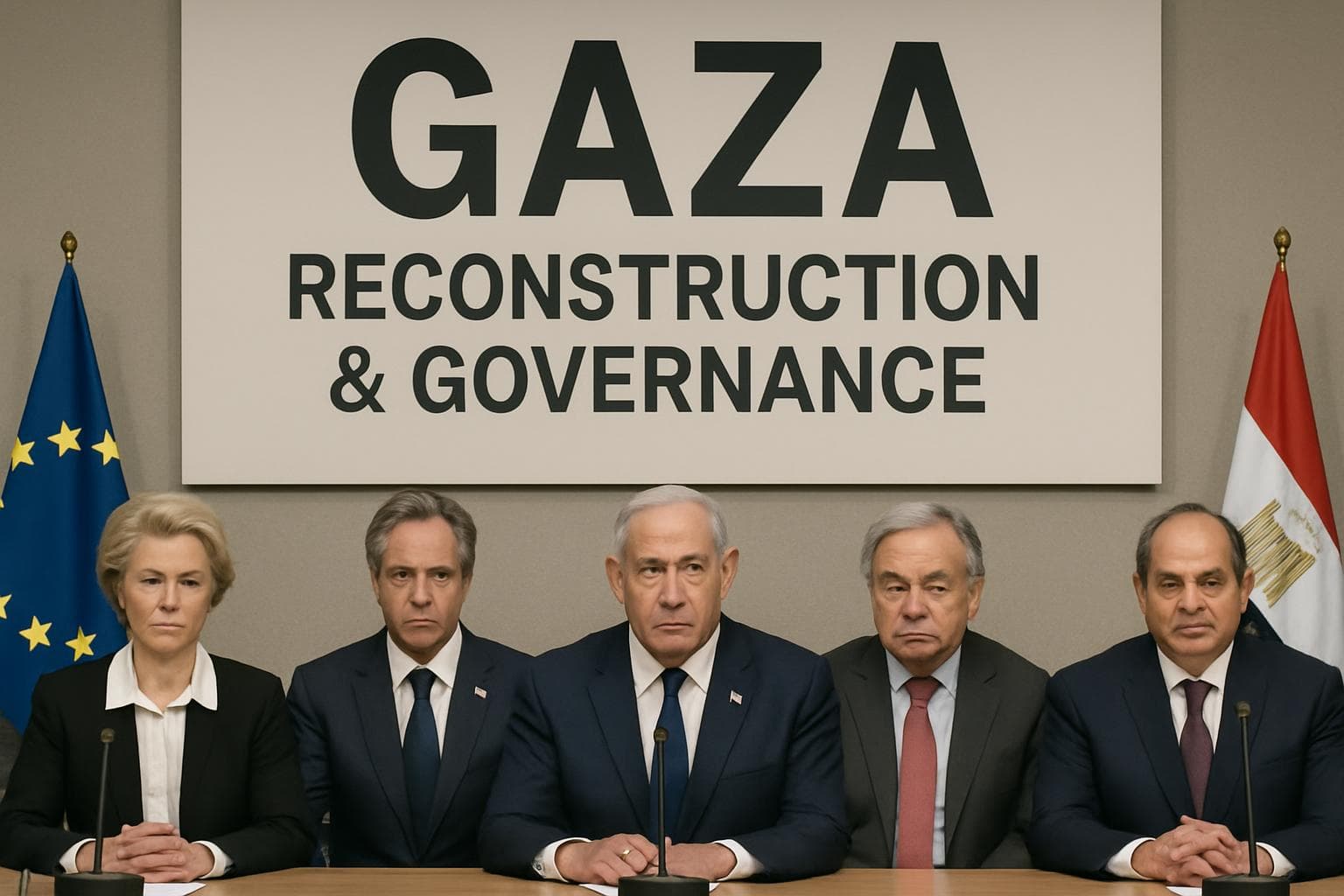
The White House's recent announcement of a "Board of Peace" to oversee governance and reconstruction in Gaza has ignited a wave of criticism and diplomatic friction. The board, part of President Donald Trump's ambitious 20-point plan to bring stability to the region, has been criticized for its perceived colonial approach and lack of Palestinian representation.
Key Figures and Criticisms
The board's composition has drawn scrutiny, featuring prominent figures such as US Secretary of State Marco Rubio, Trump's son-in-law Jared Kushner, and former UK Prime Minister Tony Blair. Their inclusion has raised eyebrows, particularly Blair's, due to his controversial role in the Iraq War and Britain's colonial history in the Middle East. Francesca Albanese, the UN's special rapporteur on human rights in the occupied Palestinian territories, has been vocal in her opposition, stating, "Tony Blair? Hell no. Hands off Palestine."
The board is divided into two main bodies: the "founding Executive Board," focusing on investment and diplomacy, and the "Gaza Executive Board," tasked with overseeing the National Committee for the Administration of Gaza (NCAG). The NCAG, led by Dr. Ali Shaath, consists of technocratic Palestinians, although the overarching boards lack Palestinian voices.
Israeli Concerns and Regional Dynamics
Israel has expressed objections to certain appointments, claiming they were not coordinated with its policies. Prime Minister Benjamin Netanyahu has instructed the Israeli foreign minister to discuss these concerns with Marco Rubio. The board's formation comes amid a fragile ceasefire, with ongoing violence and humanitarian challenges in Gaza. Despite the ceasefire, over 463 Palestinians have died, and the region continues to suffer from severe shortages of food and aid.
The board's role is to temporarily govern Gaza, replacing Hamas, and address complex issues such as disarmament and reconstruction. However, the involvement of figures like Turkish President Recep Tayyip Erdoğan has been contentious, with Israel historically opposing Turkey's role in regional security efforts.
Future Prospects and Challenges
As the US-drafted ceasefire plan enters its second phase, the board faces significant challenges, including the disarmament of Hamas and the deployment of an international security force. The lack of clarity around the board's full composition and the acceptance of invitations by key figures like Erdoğan and Egyptian President Abdel Fatah al-Sisi adds to the uncertainty.
WHAT THIS MIGHT MEAN
The establishment of the Gaza "Board of Peace" could lead to heightened diplomatic tensions, particularly if Israel's objections are not addressed. The board's success hinges on its ability to gain legitimacy among Palestinians and regional stakeholders. If key figures like Erdoğan and Sisi decline their roles, the board's effectiveness could be compromised. Additionally, the ongoing humanitarian crisis in Gaza remains a critical challenge that could undermine the board's objectives. The international community will closely watch how these developments unfold, as they could significantly impact Middle East diplomacy and US foreign policy in the region.
Related Articles

Senate Blocks Resolution to Limit Trump's Military Actions in Iran
Congress Subpoenas Attorney General Bondi in Epstein Investigation

UK Faces Dilemmas Amid Iran Conflict and China Spying Allegations

Tech Giants Pledge to Cover AI Data Center Energy Costs Amid Rising Electricity Concerns

Cuba Faces Widespread Blackout Amid Deepening Fuel Crisis
Russian LNG Tanker Sinks in Mediterranean Amid Accusations of Ukrainian Drone Attack
Controversial Appointments to Gaza Peace Board Stir Diplomatic Tensions
In This Article
 Alex Carter| Published
 HIGHLIGHTS
- The White House announced a "Board of Peace" for Gaza, sparking criticism for its lack of Palestinian representation and colonial overtones.
- Key figures on the board include US Secretary of State Marco Rubio, Jared Kushner, and former UK Prime Minister Tony Blair, raising concerns over their suitability.
- Israel has objected to some board appointments, claiming they were not coordinated with its policies.
- The board is part of Trump's 20-point plan to govern Gaza temporarily and aims to replace Hamas, amid ongoing Israeli-Palestinian tensions.
- The board's structure includes a "founding Executive Board" and a "Gaza Executive Board," with the latter overseeing day-to-day governance.
The White House's recent announcement of a "Board of Peace" to oversee governance and reconstruction in Gaza has ignited a wave of criticism and diplomatic friction. The board, part of President Donald Trump's ambitious 20-point plan to bring stability to the region, has been criticized for its perceived colonial approach and lack of Palestinian representation.
Key Figures and Criticisms
The board's composition has drawn scrutiny, featuring prominent figures such as US Secretary of State Marco Rubio, Trump's son-in-law Jared Kushner, and former UK Prime Minister Tony Blair. Their inclusion has raised eyebrows, particularly Blair's, due to his controversial role in the Iraq War and Britain's colonial history in the Middle East. Francesca Albanese, the UN's special rapporteur on human rights in the occupied Palestinian territories, has been vocal in her opposition, stating, "Tony Blair? Hell no. Hands off Palestine."
The board is divided into two main bodies: the "founding Executive Board," focusing on investment and diplomacy, and the "Gaza Executive Board," tasked with overseeing the National Committee for the Administration of Gaza (NCAG). The NCAG, led by Dr. Ali Shaath, consists of technocratic Palestinians, although the overarching boards lack Palestinian voices.
Israeli Concerns and Regional Dynamics
Israel has expressed objections to certain appointments, claiming they were not coordinated with its policies. Prime Minister Benjamin Netanyahu has instructed the Israeli foreign minister to discuss these concerns with Marco Rubio. The board's formation comes amid a fragile ceasefire, with ongoing violence and humanitarian challenges in Gaza. Despite the ceasefire, over 463 Palestinians have died, and the region continues to suffer from severe shortages of food and aid.
The board's role is to temporarily govern Gaza, replacing Hamas, and address complex issues such as disarmament and reconstruction. However, the involvement of figures like Turkish President Recep Tayyip Erdoğan has been contentious, with Israel historically opposing Turkey's role in regional security efforts.
Future Prospects and Challenges
As the US-drafted ceasefire plan enters its second phase, the board faces significant challenges, including the disarmament of Hamas and the deployment of an international security force. The lack of clarity around the board's full composition and the acceptance of invitations by key figures like Erdoğan and Egyptian President Abdel Fatah al-Sisi adds to the uncertainty.
WHAT THIS MIGHT MEAN
The establishment of the Gaza "Board of Peace" could lead to heightened diplomatic tensions, particularly if Israel's objections are not addressed. The board's success hinges on its ability to gain legitimacy among Palestinians and regional stakeholders. If key figures like Erdoğan and Sisi decline their roles, the board's effectiveness could be compromised. Additionally, the ongoing humanitarian crisis in Gaza remains a critical challenge that could undermine the board's objectives. The international community will closely watch how these developments unfold, as they could significantly impact Middle East diplomacy and US foreign policy in the region.
Related Articles
Senate Blocks Resolution to Limit Trump's Military Actions in Iran
Congress Subpoenas Attorney General Bondi in Epstein Investigation
UK Faces Dilemmas Amid Iran Conflict and China Spying Allegations
Tech Giants Pledge to Cover AI Data Center Energy Costs Amid Rising Electricity Concerns
Cuba Faces Widespread Blackout Amid Deepening Fuel Crisis
Russian LNG Tanker Sinks in Mediterranean Amid Accusations of Ukrainian Drone Attack