
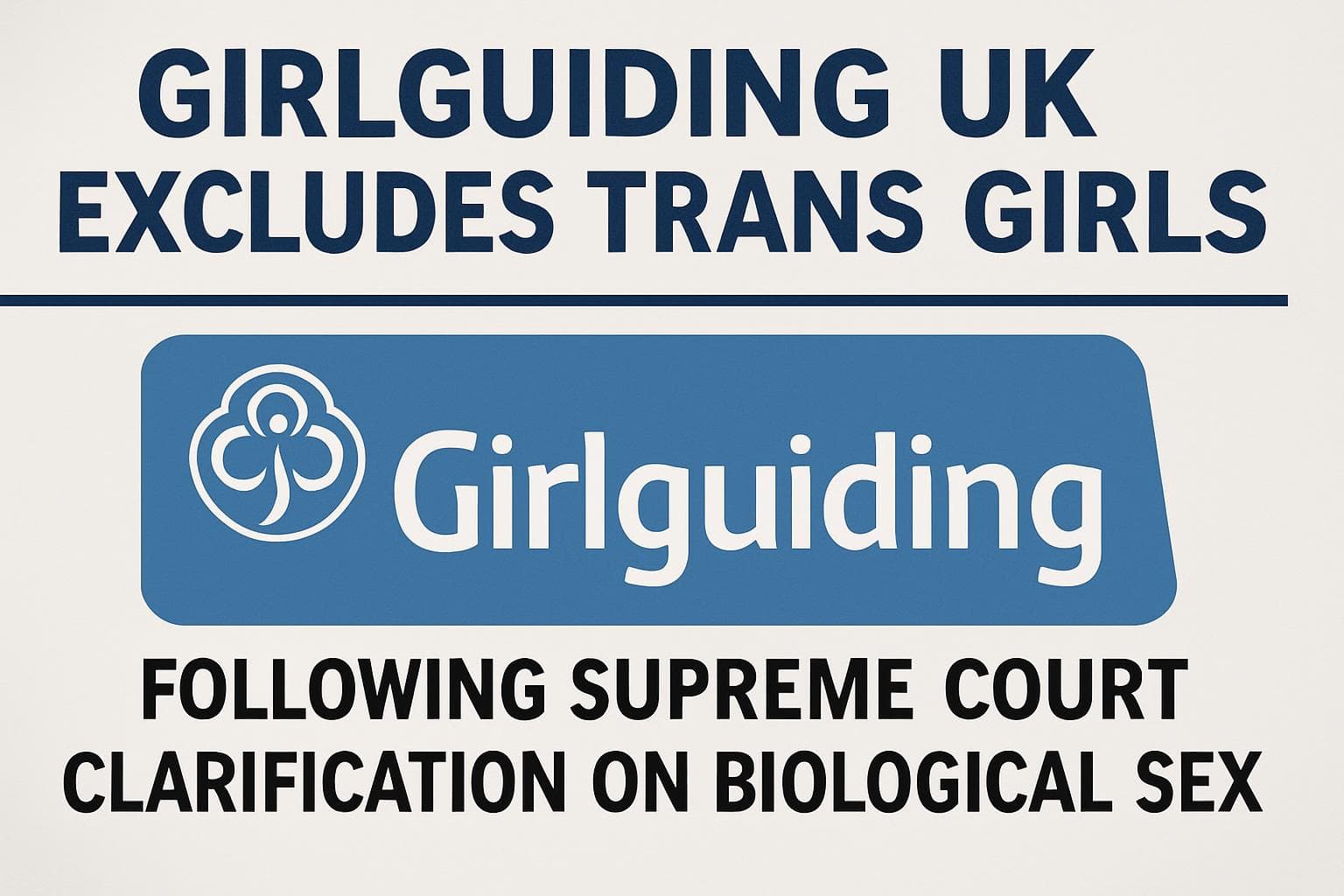
Girlguiding UK Excludes Trans Girls Following Supreme Court Ruling
In This Article
HIGHLIGHTS
- Girlguiding UK has decided to exclude trans girls from joining, citing a Supreme Court ruling on biological sex.
- The decision follows legal advice and consultations with members, impacting new members but not current ones.
- The 2010 Equality Act's interpretation by the Supreme Court has influenced this policy change, emphasizing biological sex.
- Trans rights groups criticize the decision, while some women's rights organizations support it.
- Girlguiding aims to maintain inclusion through a new taskforce despite the policy shift.
Girlguiding UK has announced a significant policy change, barring trans girls from joining its ranks. This decision comes in response to a Supreme Court ruling earlier this year, which clarified that the term "sex" in the Equality Act 2010 refers to biological sex. The organization, which serves approximately 385,000 girls and young women across the UK, stated that this move was made after extensive legal consultations and discussions with its members.
Legal Context and Decision-Making
The Supreme Court's ruling in April has had far-reaching implications for organizations like Girlguiding, which must navigate the complex landscape of gender identity and legal definitions. The ruling emphasized that single-sex spaces and organizations could lawfully exclude individuals based on biological sex. Girlguiding's trustees, including Chair Denise Wilson and Chief Executive Felicity Oswald, expressed that the decision was difficult but necessary to align with legal standards.
Reactions and Implications
The policy change has sparked a mixed response. Trans rights organization TransActual criticized the decision, arguing that it causes harm rather than solving any issues. Conversely, women's rights charity Sex Matters praised the move as the right course of action. Despite the exclusion of trans girls, Girlguiding remains committed to supporting marginalized groups through a newly established taskforce.
Impact on Membership
While the new policy affects prospective members, current members will not experience immediate changes. Girlguiding clarified that most adult volunteer roles remain open to all genders, with specific roles designated for women. The organization does not collect data on gender identity, making it unclear how many individuals the policy change will directly impact.
WHAT THIS MIGHT MEAN
The decision by Girlguiding UK to exclude trans girls could set a precedent for other single-sex organizations grappling with similar legal and ethical dilemmas. As the interpretation of the Equality Act continues to evolve, organizations may face increased pressure to reassess their inclusion policies. Legal challenges could arise, potentially prompting further judicial clarification on the balance between gender identity rights and single-sex spaces. Experts suggest that ongoing dialogue and legal guidance will be crucial in navigating these complex issues while striving for inclusivity and respect for all individuals.
Related Articles
High Court Dismisses Legal Challenge Over Transgender Access to Hampstead Ponds
NHS Tribunal Ruling Sparks Debate Over Transgender Rights and Single-Sex Spaces

Scottish Government Faces Legal Challenge Over Transgender Inmate Policy
Court of Appeal Upholds Low Traffic Neighbourhoods in Tower Hamlets
High Court Upholds Guidance on Single-Sex Spaces Amidst Transgender Rights Debate
Scottish Government Defends Transgender Prisoner Policy Amid Legal Challenge
Girlguiding UK Excludes Trans Girls Following Supreme Court Ruling
In This Article
 Ethan Brooks| Published
 HIGHLIGHTS
- Girlguiding UK has decided to exclude trans girls from joining, citing a Supreme Court ruling on biological sex.
- The decision follows legal advice and consultations with members, impacting new members but not current ones.
- The 2010 Equality Act's interpretation by the Supreme Court has influenced this policy change, emphasizing biological sex.
- Trans rights groups criticize the decision, while some women's rights organizations support it.
- Girlguiding aims to maintain inclusion through a new taskforce despite the policy shift.
Girlguiding UK has announced a significant policy change, barring trans girls from joining its ranks. This decision comes in response to a Supreme Court ruling earlier this year, which clarified that the term "sex" in the Equality Act 2010 refers to biological sex. The organization, which serves approximately 385,000 girls and young women across the UK, stated that this move was made after extensive legal consultations and discussions with its members.
Legal Context and Decision-Making
The Supreme Court's ruling in April has had far-reaching implications for organizations like Girlguiding, which must navigate the complex landscape of gender identity and legal definitions. The ruling emphasized that single-sex spaces and organizations could lawfully exclude individuals based on biological sex. Girlguiding's trustees, including Chair Denise Wilson and Chief Executive Felicity Oswald, expressed that the decision was difficult but necessary to align with legal standards.
Reactions and Implications
The policy change has sparked a mixed response. Trans rights organization TransActual criticized the decision, arguing that it causes harm rather than solving any issues. Conversely, women's rights charity Sex Matters praised the move as the right course of action. Despite the exclusion of trans girls, Girlguiding remains committed to supporting marginalized groups through a newly established taskforce.
Impact on Membership
While the new policy affects prospective members, current members will not experience immediate changes. Girlguiding clarified that most adult volunteer roles remain open to all genders, with specific roles designated for women. The organization does not collect data on gender identity, making it unclear how many individuals the policy change will directly impact.
WHAT THIS MIGHT MEAN
The decision by Girlguiding UK to exclude trans girls could set a precedent for other single-sex organizations grappling with similar legal and ethical dilemmas. As the interpretation of the Equality Act continues to evolve, organizations may face increased pressure to reassess their inclusion policies. Legal challenges could arise, potentially prompting further judicial clarification on the balance between gender identity rights and single-sex spaces. Experts suggest that ongoing dialogue and legal guidance will be crucial in navigating these complex issues while striving for inclusivity and respect for all individuals.
Related Articles
High Court Dismisses Legal Challenge Over Transgender Access to Hampstead Ponds
NHS Tribunal Ruling Sparks Debate Over Transgender Rights and Single-Sex Spaces
Scottish Government Faces Legal Challenge Over Transgender Inmate Policy
Court of Appeal Upholds Low Traffic Neighbourhoods in Tower Hamlets
High Court Upholds Guidance on Single-Sex Spaces Amidst Transgender Rights Debate
Scottish Government Defends Transgender Prisoner Policy Amid Legal Challenge