
Global Drought Crisis: A Slow-Moving Catastrophe Impacting Millions
In This Article
HIGHLIGHTS
- A UN-backed report highlights a global drought crisis, exacerbated by climate change and El Niño, affecting millions worldwide.
- Over 90 million people in eastern and southern Africa face extreme hunger, with Somalia seeing a quarter of its population nearing starvation.
- Drought has led to severe agricultural impacts, including a 50% drop in Spain's olive production and a 70% decline in Zimbabwe's corn crop.
- The report calls for enhanced early warning systems and systematic monitoring to mitigate the effects of water scarcity and ecosystem collapse.
- Drought conditions have disrupted global trade, notably reducing Panama Canal traffic by over a third between October 2023 and January 2024.
A recent UN-backed report has painted a stark picture of a global drought crisis, describing it as a "slow-moving catastrophe" that is intensifying due to climate change and the El Niño phenomenon. The report, authored by experts including Dr. Mark Svoboda of the US National Drought Mitigation Center, underscores the urgent need for systematic monitoring and enhanced early warning systems to combat the devastating effects of water scarcity and ecosystem collapse.
Impact on Vulnerable Regions
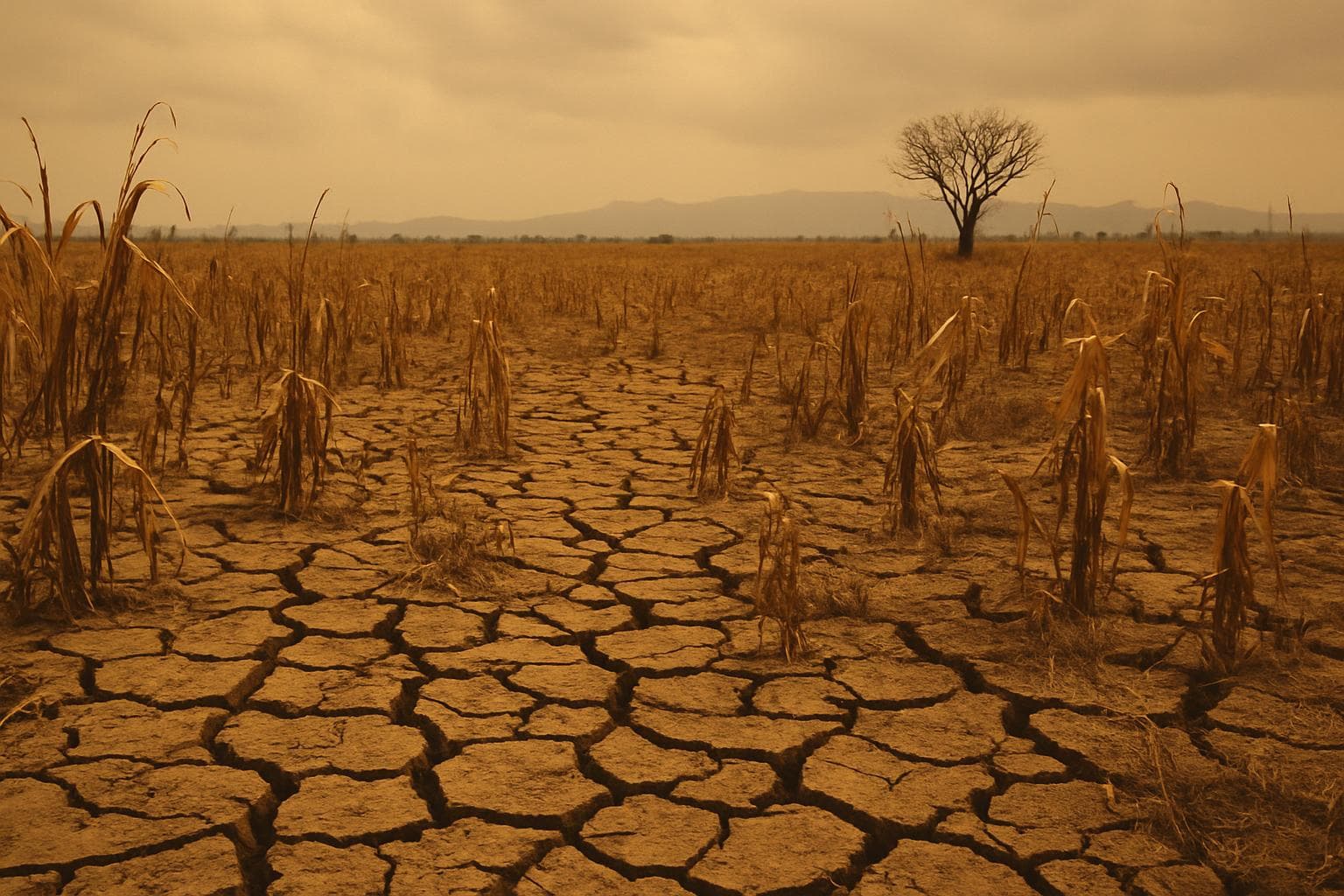
The report highlights the severe impact of drought across various regions, with eastern and southern Africa among the hardest hit. More than 90 million people in these areas are facing extreme hunger, with Somalia witnessing a quarter of its population on the brink of starvation. The situation has been exacerbated by years of failed rainy seasons, leading to widespread crop failures and livestock deaths. In Zimbabwe, for instance, the corn crop saw a staggering 70% decline last year, while 9,000 cattle perished.
Agricultural and Economic Consequences
The drought's impact extends beyond Africa, affecting agricultural production and economies worldwide. In Spain, olive production has halved due to insufficient rainfall, causing olive oil prices to double. Similarly, Morocco has experienced six consecutive years of drought, resulting in a 57% water deficit. The Panama Canal, a crucial trade route, saw traffic drop by more than a third between October 2023 and January 2024 due to low water levels.
The Role of Climate Change and El Niño
The report attributes the worsening drought conditions to the combined effects of climate change and El Niño, a natural climate phenomenon that disrupts global weather patterns. El Niño has led to drier conditions in regions such as southern Africa and parts of Southeast Asia, compounding the challenges posed by global warming. "This is not a dry spell. This is a slow-moving global catastrophe, the worst I've ever seen," remarked Dr. Svoboda.
Humanitarian and Social Impacts
Beyond economic and environmental consequences, the drought has profound humanitarian implications. In Eastern Africa, forced child marriages have more than doubled as families struggle to survive. The report also notes that drought disproportionately affects the world's most vulnerable populations, including women and children, with far-reaching impacts on society.
WHAT THIS MIGHT MEAN
As the global drought crisis continues to unfold, the need for international cooperation and proactive measures becomes increasingly urgent. Experts warn that without significant intervention, the situation could lead to further food insecurity, economic instability, and social unrest. Governments worldwide must prioritize the development of drought resilience strategies, including investment in sustainable water management and agricultural practices. The report serves as a wake-up call, emphasizing that no country, regardless of its wealth or capacity, can afford to be complacent in the face of this escalating global challenge.
Related Articles

France Intercepts Russian 'Shadow Fleet' Tanker in Mediterranean
Spain's Sánchez Stands Firm Against Trump's Trade Threat Over Iran Stance

US-Iran Tensions Escalate Amid Renewed Nuclear Talks and Protests

Russia-Ukraine Conflict: Four Years of Unyielding Struggle and Human Resilience

Palestinian-American Teen Killed by Israeli Settlers in West Bank Sparks Calls for Accountability
UK Faces Unrelenting Rainfall Amid Blocked Weather Patterns and Climate Crisis
Global Drought Crisis: A Slow-Moving Catastrophe Impacting Millions
In This Article
 James Okoro| Published
 HIGHLIGHTS
- A UN-backed report highlights a global drought crisis, exacerbated by climate change and El Niño, affecting millions worldwide.
- Over 90 million people in eastern and southern Africa face extreme hunger, with Somalia seeing a quarter of its population nearing starvation.
- Drought has led to severe agricultural impacts, including a 50% drop in Spain's olive production and a 70% decline in Zimbabwe's corn crop.
- The report calls for enhanced early warning systems and systematic monitoring to mitigate the effects of water scarcity and ecosystem collapse.
- Drought conditions have disrupted global trade, notably reducing Panama Canal traffic by over a third between October 2023 and January 2024.
A recent UN-backed report has painted a stark picture of a global drought crisis, describing it as a "slow-moving catastrophe" that is intensifying due to climate change and the El Niño phenomenon. The report, authored by experts including Dr. Mark Svoboda of the US National Drought Mitigation Center, underscores the urgent need for systematic monitoring and enhanced early warning systems to combat the devastating effects of water scarcity and ecosystem collapse.
Impact on Vulnerable Regions
The report highlights the severe impact of drought across various regions, with eastern and southern Africa among the hardest hit. More than 90 million people in these areas are facing extreme hunger, with Somalia witnessing a quarter of its population on the brink of starvation. The situation has been exacerbated by years of failed rainy seasons, leading to widespread crop failures and livestock deaths. In Zimbabwe, for instance, the corn crop saw a staggering 70% decline last year, while 9,000 cattle perished.
Agricultural and Economic Consequences
The drought's impact extends beyond Africa, affecting agricultural production and economies worldwide. In Spain, olive production has halved due to insufficient rainfall, causing olive oil prices to double. Similarly, Morocco has experienced six consecutive years of drought, resulting in a 57% water deficit. The Panama Canal, a crucial trade route, saw traffic drop by more than a third between October 2023 and January 2024 due to low water levels.
The Role of Climate Change and El Niño
The report attributes the worsening drought conditions to the combined effects of climate change and El Niño, a natural climate phenomenon that disrupts global weather patterns. El Niño has led to drier conditions in regions such as southern Africa and parts of Southeast Asia, compounding the challenges posed by global warming. "This is not a dry spell. This is a slow-moving global catastrophe, the worst I've ever seen," remarked Dr. Svoboda.
Humanitarian and Social Impacts
Beyond economic and environmental consequences, the drought has profound humanitarian implications. In Eastern Africa, forced child marriages have more than doubled as families struggle to survive. The report also notes that drought disproportionately affects the world's most vulnerable populations, including women and children, with far-reaching impacts on society.
WHAT THIS MIGHT MEAN
As the global drought crisis continues to unfold, the need for international cooperation and proactive measures becomes increasingly urgent. Experts warn that without significant intervention, the situation could lead to further food insecurity, economic instability, and social unrest. Governments worldwide must prioritize the development of drought resilience strategies, including investment in sustainable water management and agricultural practices. The report serves as a wake-up call, emphasizing that no country, regardless of its wealth or capacity, can afford to be complacent in the face of this escalating global challenge.
Related Articles
France Intercepts Russian 'Shadow Fleet' Tanker in Mediterranean
Spain's Sánchez Stands Firm Against Trump's Trade Threat Over Iran Stance
US-Iran Tensions Escalate Amid Renewed Nuclear Talks and Protests
Russia-Ukraine Conflict: Four Years of Unyielding Struggle and Human Resilience
Palestinian-American Teen Killed by Israeli Settlers in West Bank Sparks Calls for Accountability
UK Faces Unrelenting Rainfall Amid Blocked Weather Patterns and Climate Crisis