
Global Plastic Pollution Treaty Talks Collapse Amid Deep Divisions
In This Article
HIGHLIGHTS
- Global negotiations for a treaty to end plastic pollution have collapsed, with no agreement reached after the sixth round of talks.
- A divide persists between nations advocating for reduced plastic production and those favoring improved recycling methods.
- Over 100 countries support curbing plastic production, while oil-producing states like Saudi Arabia and Russia oppose such measures.
- The failure to reach a consensus is seen as a setback for multilateralism, with some countries expressing disappointment and anger.
- Despite the deadlock, countries plan to resume discussions, aiming for a future agreement to address the environmental crisis.
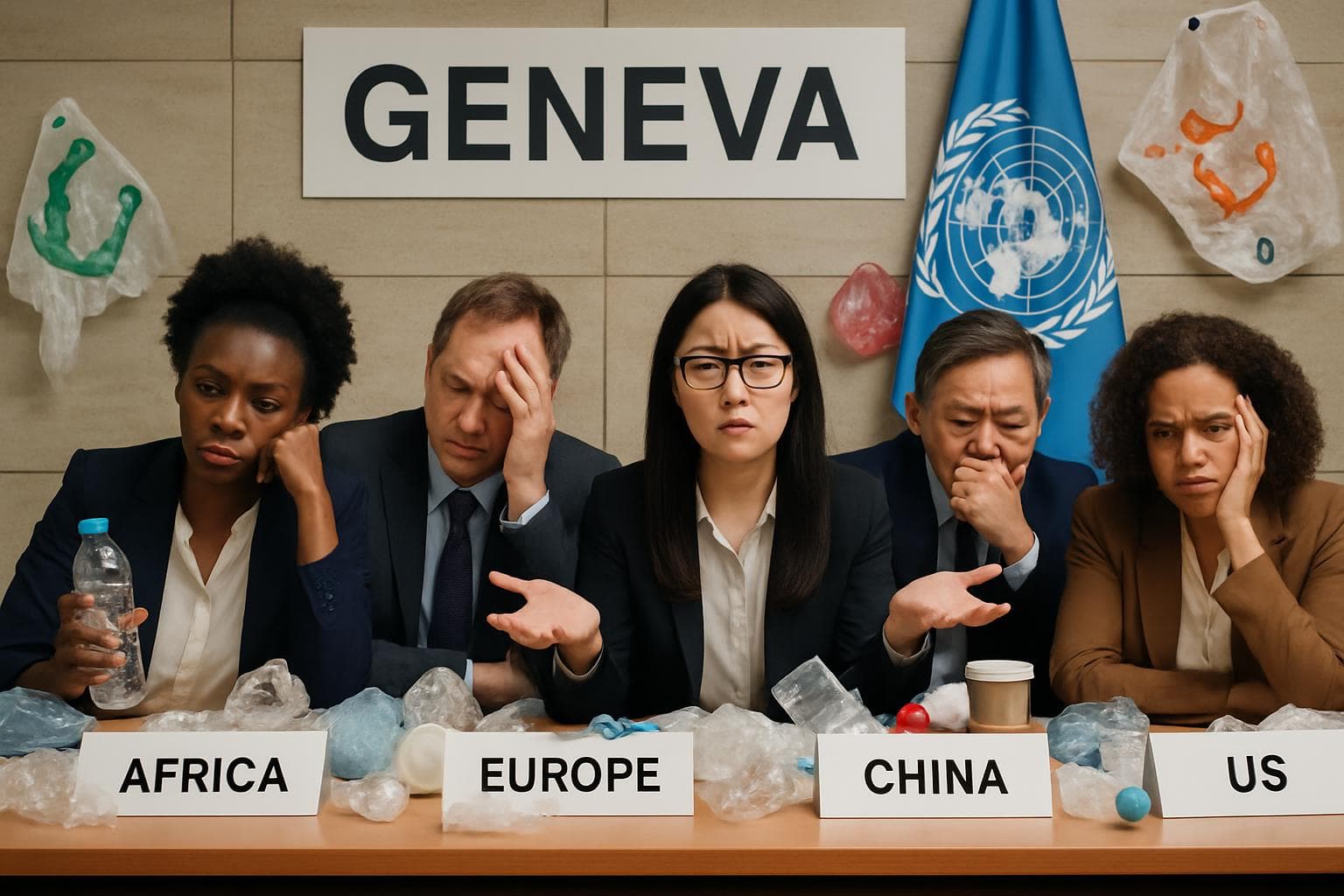
Efforts to forge a landmark global treaty to combat plastic pollution have once again faltered, as negotiations ended without consensus. The United Nations-led talks, which marked the sixth round in nearly three years, extended beyond their scheduled conclusion on Thursday, yet failed to bridge the persistent divide between nations. The core issue remains whether to reduce plastic production or focus on enhancing recycling infrastructure.
Stalemate in Geneva
The negotiations, held in Geneva, were characterized by a stark split among participating countries. Over 100 nations, including France and the European Union, advocated for legally binding measures to curb plastic production and regulate toxic chemicals. However, oil-producing countries such as Saudi Arabia and Russia resisted these proposals, emphasizing the importance of plastics to their economies and advocating for improved recycling systems instead.
Emma Hardy, the UK's Marine Minister, expressed her disappointment, stating, "Plastic pollution is a global crisis that no country can solve alone." Her sentiments were echoed by France's Minister for Ecological Transition, Agnès Pannier-Runacher, who criticized the obstruction by a few nations driven by "short-term financial interests."
Environmental and Health Concerns
The urgency of the talks stems from mounting scientific evidence highlighting the detrimental effects of plastic pollution on human health and the environment. Microplastics have been detected in various ecosystems and even within human organs, raising alarms about the long-term impacts. Despite the benefits plastics offer across sectors, the environmental and health risks have prompted calls for decisive action.
Countries like Tuvalu, representing small island developing states, emphasized the dire consequences of inaction, noting the threat to ecosystems, food security, and cultural heritage. Meanwhile, China's delegation described the negotiations as a "long marathon," urging continued collaboration to achieve a plastic-free future for upcoming generations.
Future Prospects
The collapse of the talks has been viewed as a setback for multilateralism, with some NGOs labeling it a "blow." Despite the impasse, delegates remain committed to resuming discussions. Luis Vayas Valdivieso, chair of the negotiating committee, presented two draft treaties, both of which were rejected. Saudi Arabia criticized the drafts for lacking balance, particularly concerning plastic production limits.
WHAT THIS MIGHT MEAN
The failure to reach an agreement underscores the complexities of addressing global environmental challenges. As countries prepare to reconvene, the pressure mounts to find common ground. Experts suggest that future negotiations may need to explore innovative solutions that balance economic interests with environmental imperatives. The outcome of these talks could significantly influence global efforts to mitigate plastic pollution and shape the trajectory of international environmental policy.
Related Articles
Russian LNG Tanker Sinks in Mediterranean Amid Accusations of Ukrainian Drone Attack
China Sets Lowest GDP Growth Target in Decades Amid Economic Challenges

Breakthrough Drug Offers Hope for Children with Severe Epilepsy

UK Faces Dilemmas Amid Iran Conflict and China Spying Allegations

South West Water Faces Legal Repercussions Over Devon Parasite Outbreak

Intensified US-Israel Strikes on Iran Spark Global Outcry
Global Plastic Pollution Treaty Talks Collapse Amid Deep Divisions
In This Article
 Leila Hassan| Published
 HIGHLIGHTS
- Global negotiations for a treaty to end plastic pollution have collapsed, with no agreement reached after the sixth round of talks.
- A divide persists between nations advocating for reduced plastic production and those favoring improved recycling methods.
- Over 100 countries support curbing plastic production, while oil-producing states like Saudi Arabia and Russia oppose such measures.
- The failure to reach a consensus is seen as a setback for multilateralism, with some countries expressing disappointment and anger.
- Despite the deadlock, countries plan to resume discussions, aiming for a future agreement to address the environmental crisis.
Efforts to forge a landmark global treaty to combat plastic pollution have once again faltered, as negotiations ended without consensus. The United Nations-led talks, which marked the sixth round in nearly three years, extended beyond their scheduled conclusion on Thursday, yet failed to bridge the persistent divide between nations. The core issue remains whether to reduce plastic production or focus on enhancing recycling infrastructure.
Stalemate in Geneva
The negotiations, held in Geneva, were characterized by a stark split among participating countries. Over 100 nations, including France and the European Union, advocated for legally binding measures to curb plastic production and regulate toxic chemicals. However, oil-producing countries such as Saudi Arabia and Russia resisted these proposals, emphasizing the importance of plastics to their economies and advocating for improved recycling systems instead.
Emma Hardy, the UK's Marine Minister, expressed her disappointment, stating, "Plastic pollution is a global crisis that no country can solve alone." Her sentiments were echoed by France's Minister for Ecological Transition, Agnès Pannier-Runacher, who criticized the obstruction by a few nations driven by "short-term financial interests."
Environmental and Health Concerns
The urgency of the talks stems from mounting scientific evidence highlighting the detrimental effects of plastic pollution on human health and the environment. Microplastics have been detected in various ecosystems and even within human organs, raising alarms about the long-term impacts. Despite the benefits plastics offer across sectors, the environmental and health risks have prompted calls for decisive action.
Countries like Tuvalu, representing small island developing states, emphasized the dire consequences of inaction, noting the threat to ecosystems, food security, and cultural heritage. Meanwhile, China's delegation described the negotiations as a "long marathon," urging continued collaboration to achieve a plastic-free future for upcoming generations.
Future Prospects
The collapse of the talks has been viewed as a setback for multilateralism, with some NGOs labeling it a "blow." Despite the impasse, delegates remain committed to resuming discussions. Luis Vayas Valdivieso, chair of the negotiating committee, presented two draft treaties, both of which were rejected. Saudi Arabia criticized the drafts for lacking balance, particularly concerning plastic production limits.
WHAT THIS MIGHT MEAN
The failure to reach an agreement underscores the complexities of addressing global environmental challenges. As countries prepare to reconvene, the pressure mounts to find common ground. Experts suggest that future negotiations may need to explore innovative solutions that balance economic interests with environmental imperatives. The outcome of these talks could significantly influence global efforts to mitigate plastic pollution and shape the trajectory of international environmental policy.
Related Articles
Russian LNG Tanker Sinks in Mediterranean Amid Accusations of Ukrainian Drone Attack
China Sets Lowest GDP Growth Target in Decades Amid Economic Challenges
Breakthrough Drug Offers Hope for Children with Severe Epilepsy
UK Faces Dilemmas Amid Iran Conflict and China Spying Allegations
South West Water Faces Legal Repercussions Over Devon Parasite Outbreak
Intensified US-Israel Strikes on Iran Spark Global Outcry