
Great Barrier Reef Faces Unprecedented Coral Decline Amid Climate Challenges
In This Article
HIGHLIGHTS
- The Great Barrier Reef has experienced its largest annual decline in coral cover since records began nearly 40 years ago, according to the Australian Institute of Marine Science (AIMS).
- The northern and southern sections of the reef saw coral cover fall by 25% and 30% respectively, primarily due to severe coral bleaching events.
- Climate change-induced heat stress is the main cause of bleaching, with additional impacts from cyclones and crown-of-thorns starfish outbreaks.
- AIMS warns that the reef may reach a tipping point where coral cannot recover quickly enough between catastrophic events.
- Efforts to control crown-of-thorns starfish have seen some success, with over 50,000 starfish culled to protect the reef's biodiversity.
The Great Barrier Reef, a UNESCO World Heritage site and the world's largest coral reef system, has suffered its most significant annual decline in coral cover since monitoring began in 1986. A report by the Australian Institute of Marine Science (AIMS) highlights the severe impact of climate change-induced heat stress, which has led to widespread coral bleaching across the reef's northern and southern sections.
Record Decline in Coral Cover
The latest AIMS survey reveals that coral cover in the northern section of the reef, stretching from Cooktown to Cape York, has decreased by 25%. Meanwhile, the southern section, from Mackay to north of Bundaberg, experienced a 30% reduction. These figures mark the most substantial annual drops recorded, underscoring the reef's vulnerability to environmental stressors.
Climate Change and Other Threats
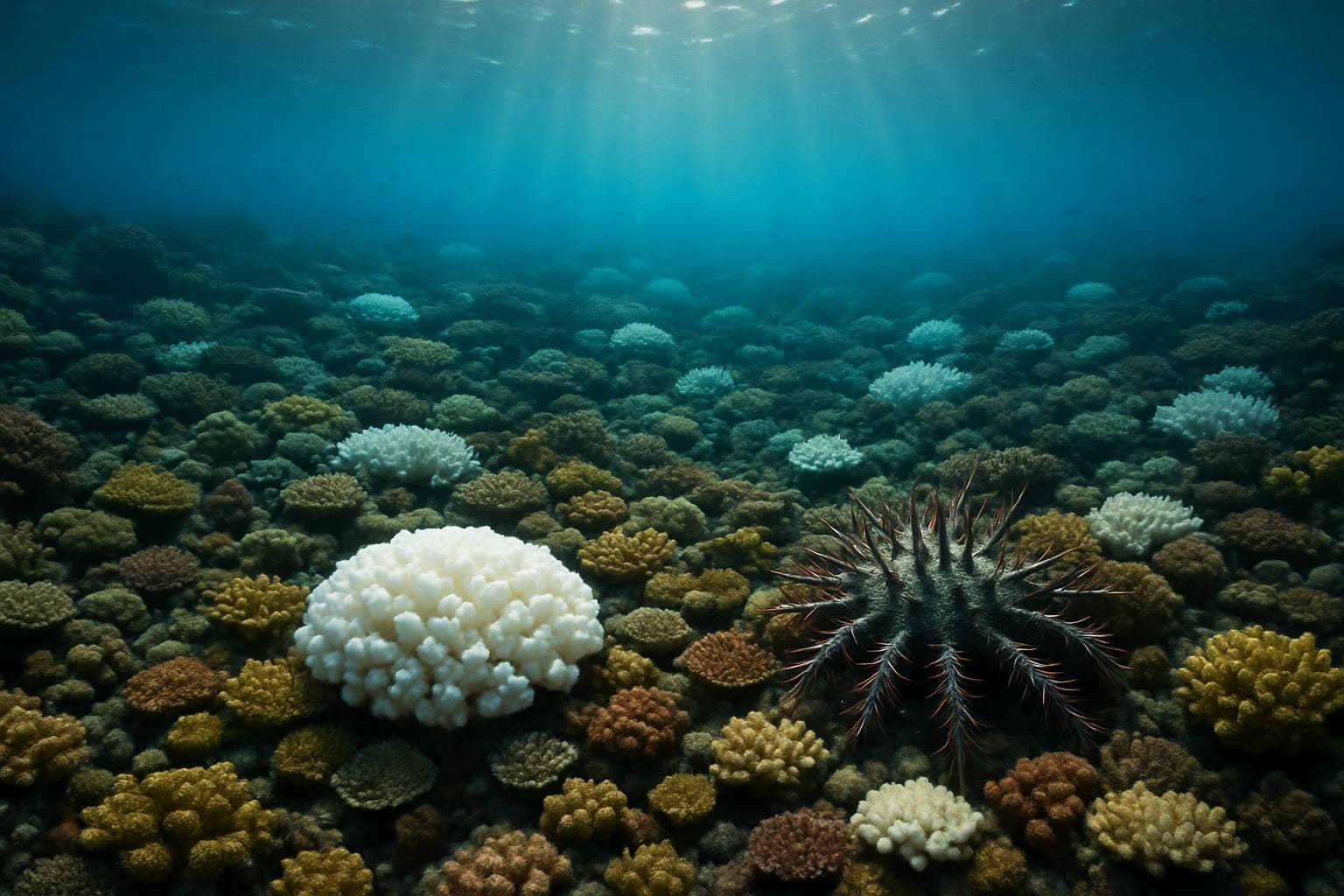
The primary driver of this decline is the intense heat stress caused by rising ocean temperatures, a direct consequence of climate change. This stress has led to the sixth mass bleaching event since 2016, turning vibrant corals white and threatening marine biodiversity. Additionally, natural events such as cyclones and outbreaks of crown-of-thorns starfish, which feed on coral, have exacerbated the situation.
Efforts to Mitigate Damage
Despite these challenges, there have been some positive developments. The Australian government's crown-of-thorns starfish culling program has successfully removed over 50,000 starfish, helping to protect the reef's delicate ecosystem. Dr. Mike Emslie, who leads the AIMS monitoring program, emphasized the importance of giving the reef a chance to recover, noting its inherent resilience when environmental conditions stabilize.
The Future of the Reef
The report warns that the Great Barrier Reef may soon reach a tipping point where it cannot recover between catastrophic events. The frequency of bleaching events is increasing, leaving insufficient time for coral regeneration. As Dr. Emslie noted, the reef's future depends on reducing global carbon emissions and minimizing local stressors to allow for recovery.
WHAT THIS MIGHT MEAN
The future of the Great Barrier Reef hinges on global and local efforts to combat climate change. If current trends continue, the reef may face irreversible damage, threatening the biodiversity it supports and the livelihoods dependent on it. Experts suggest that immediate action to reduce carbon emissions and enhance reef management strategies is crucial. The success of initiatives like the crown-of-thorns starfish culling program offers hope, but sustained efforts are needed to ensure the reef's survival for future generations.
Images from the Web
Related Articles
Great Barrier Reef's Future Hinges on Global Warming Limits, Study Finds
Unprecedented Marine Heatwave Devastates Western Australia's Coral Reefs

Australia Bars IS-Linked Citizen from Returning Amidst Repatriation Debate

Tragic Train Collision Near Machu Picchu Leaves One Dead and Dozens Injured

Australia Initiates Major Gun Buyback Following Bondi Beach Terror Attack

Tragedy at Bondi Beach: Community Mourns Victims of Mass Shooting
Great Barrier Reef Faces Unprecedented Coral Decline Amid Climate Challenges
In This Article
 Leila Hassan| Published
 HIGHLIGHTS
- The Great Barrier Reef has experienced its largest annual decline in coral cover since records began nearly 40 years ago, according to the Australian Institute of Marine Science (AIMS).
- The northern and southern sections of the reef saw coral cover fall by 25% and 30% respectively, primarily due to severe coral bleaching events.
- Climate change-induced heat stress is the main cause of bleaching, with additional impacts from cyclones and crown-of-thorns starfish outbreaks.
- AIMS warns that the reef may reach a tipping point where coral cannot recover quickly enough between catastrophic events.
- Efforts to control crown-of-thorns starfish have seen some success, with over 50,000 starfish culled to protect the reef's biodiversity.
The Great Barrier Reef, a UNESCO World Heritage site and the world's largest coral reef system, has suffered its most significant annual decline in coral cover since monitoring began in 1986. A report by the Australian Institute of Marine Science (AIMS) highlights the severe impact of climate change-induced heat stress, which has led to widespread coral bleaching across the reef's northern and southern sections.
Record Decline in Coral Cover
The latest AIMS survey reveals that coral cover in the northern section of the reef, stretching from Cooktown to Cape York, has decreased by 25%. Meanwhile, the southern section, from Mackay to north of Bundaberg, experienced a 30% reduction. These figures mark the most substantial annual drops recorded, underscoring the reef's vulnerability to environmental stressors.
Climate Change and Other Threats
The primary driver of this decline is the intense heat stress caused by rising ocean temperatures, a direct consequence of climate change. This stress has led to the sixth mass bleaching event since 2016, turning vibrant corals white and threatening marine biodiversity. Additionally, natural events such as cyclones and outbreaks of crown-of-thorns starfish, which feed on coral, have exacerbated the situation.
Efforts to Mitigate Damage
Despite these challenges, there have been some positive developments. The Australian government's crown-of-thorns starfish culling program has successfully removed over 50,000 starfish, helping to protect the reef's delicate ecosystem. Dr. Mike Emslie, who leads the AIMS monitoring program, emphasized the importance of giving the reef a chance to recover, noting its inherent resilience when environmental conditions stabilize.
The Future of the Reef
The report warns that the Great Barrier Reef may soon reach a tipping point where it cannot recover between catastrophic events. The frequency of bleaching events is increasing, leaving insufficient time for coral regeneration. As Dr. Emslie noted, the reef's future depends on reducing global carbon emissions and minimizing local stressors to allow for recovery.
WHAT THIS MIGHT MEAN
The future of the Great Barrier Reef hinges on global and local efforts to combat climate change. If current trends continue, the reef may face irreversible damage, threatening the biodiversity it supports and the livelihoods dependent on it. Experts suggest that immediate action to reduce carbon emissions and enhance reef management strategies is crucial. The success of initiatives like the crown-of-thorns starfish culling program offers hope, but sustained efforts are needed to ensure the reef's survival for future generations.
Images from the Web
Related Articles
Great Barrier Reef's Future Hinges on Global Warming Limits, Study Finds
Unprecedented Marine Heatwave Devastates Western Australia's Coral Reefs
Australia Bars IS-Linked Citizen from Returning Amidst Repatriation Debate
Tragic Train Collision Near Machu Picchu Leaves One Dead and Dozens Injured
Australia Initiates Major Gun Buyback Following Bondi Beach Terror Attack
Tragedy at Bondi Beach: Community Mourns Victims of Mass Shooting