
Guinea-Bissau Military Seizes Power Amid Election Turmoil
In This Article
HIGHLIGHTS
- Military officers in Guinea-Bissau have seized power, detaining President Umaro Sissoco Embaló amid election chaos.
- The coup follows disputed election results, with both Embaló and rival Fernando Dias claiming victory.
- The military has suspended the electoral process, closed borders, and imposed a night-time curfew.
- Guinea-Bissau, a known drug trafficking hub, has experienced at least nine coups since its independence in 1974.
- International bodies, including the African Union and Ecowas, have expressed deep concern over the coup.
In a dramatic turn of events, military officers in Guinea-Bissau have taken control of the government, detaining President Umaro Sissoco Embaló and suspending the electoral process. This development comes amid a backdrop of disputed election results, with both Embaló and his main rival, Fernando Dias, claiming victory in the recent presidential elections.
Military Takeover and Political Instability
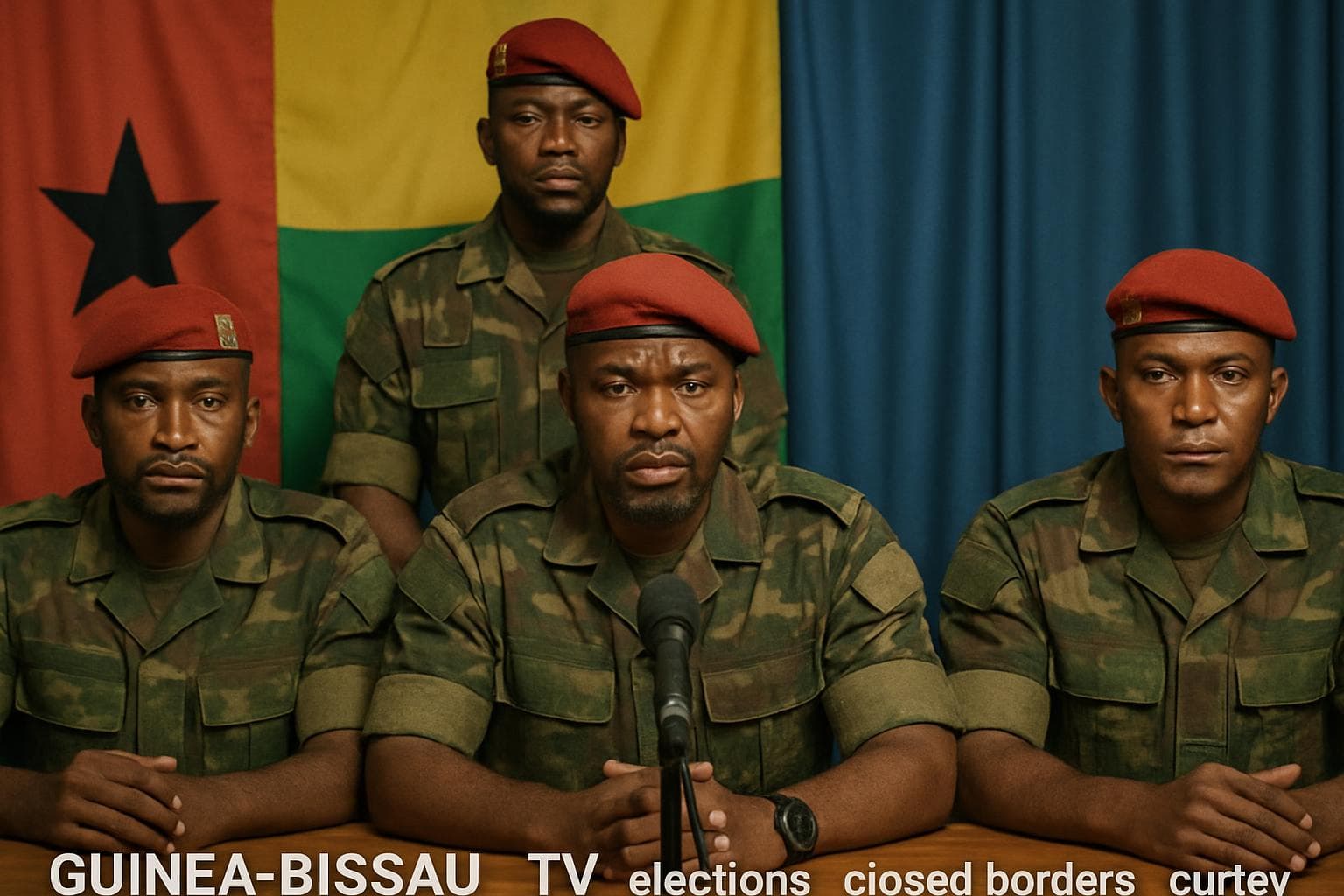
The coup was announced shortly after gunfire erupted in the capital, Bissau, near key government buildings. Military officers appeared on state television, declaring the formation of "the High Military Command for the Restoration of Order." They have since closed the country's borders and imposed a night-time curfew, urging citizens to remain calm.
Guinea-Bissau, a West African nation with a history of political instability, has witnessed at least nine coups or attempted coups since gaining independence from Portugal in 1974. The country is also notorious as a drug trafficking hub, with its strategic location and geography making it a key transit point for cocaine smuggling.
Election Dispute and Detentions
The recent elections have been marred by controversy, with both Embaló and Dias claiming to have won. The election commission was expected to announce provisional results shortly before the coup. Government sources have confirmed the detention of several key figures, including Dias, former Prime Minister Domingos Pereira, and Interior Minister Botché Candé.
International Reactions and Concerns
The international community has reacted with alarm to the developments in Guinea-Bissau. Leaders of election observation missions from the African Union and the West African bloc Ecowas have expressed "deep concern" over the military's actions. Portugal, the former colonial power, has called for a return to constitutional order and urged all parties to refrain from violence.
Historical Context and Future Implications
The military's takeover is the latest chapter in Guinea-Bissau's turbulent political history. The country has struggled with governance issues and economic challenges, with an average yearly income of just $963 in 2024, according to the World Bank. The UN labeled it a "narco state" in 2008 due to its role in the global cocaine trade.
WHAT THIS MIGHT MEAN
The military coup in Guinea-Bissau raises significant concerns about the country's future stability and governance. If the military maintains control, it could lead to prolonged political uncertainty and potential international isolation. The suspension of the electoral process may also undermine democratic institutions and erode public trust in governance.
International pressure, particularly from regional bodies like Ecowas and the African Union, could play a crucial role in mediating the crisis and pushing for a return to civilian rule. However, the entrenched influence of the military and the ongoing issues related to drug trafficking pose significant challenges to achieving long-term stability.
Experts suggest that a negotiated settlement involving key political stakeholders and the military may be necessary to restore order and pave the way for credible elections. The international community's response and support will be vital in ensuring a peaceful resolution to the crisis.
Related Articles
Uganda's Museveni Wins Seventh Term Amid Controversy and Allegations
US-Iran Tensions Escalate Amid Renewed Nuclear Talks and Protests
Russia-Ukraine Conflict: Four Years of Unyielding Struggle and Human Resilience
Palestinian-American Teen Killed by Israeli Settlers in West Bank Sparks Calls for Accountability

UK Faces Unrelenting Rainfall Amid Blocked Weather Patterns and Climate Crisis
Jimmy Lai's 20-Year Sentence Sparks Global Outcry Over Hong Kong's National Security Law
Guinea-Bissau Military Seizes Power Amid Election Turmoil
In This Article
 James Okoro| Published
 HIGHLIGHTS
- Military officers in Guinea-Bissau have seized power, detaining President Umaro Sissoco Embaló amid election chaos.
- The coup follows disputed election results, with both Embaló and rival Fernando Dias claiming victory.
- The military has suspended the electoral process, closed borders, and imposed a night-time curfew.
- Guinea-Bissau, a known drug trafficking hub, has experienced at least nine coups since its independence in 1974.
- International bodies, including the African Union and Ecowas, have expressed deep concern over the coup.
In a dramatic turn of events, military officers in Guinea-Bissau have taken control of the government, detaining President Umaro Sissoco Embaló and suspending the electoral process. This development comes amid a backdrop of disputed election results, with both Embaló and his main rival, Fernando Dias, claiming victory in the recent presidential elections.
Military Takeover and Political Instability
The coup was announced shortly after gunfire erupted in the capital, Bissau, near key government buildings. Military officers appeared on state television, declaring the formation of "the High Military Command for the Restoration of Order." They have since closed the country's borders and imposed a night-time curfew, urging citizens to remain calm.
Guinea-Bissau, a West African nation with a history of political instability, has witnessed at least nine coups or attempted coups since gaining independence from Portugal in 1974. The country is also notorious as a drug trafficking hub, with its strategic location and geography making it a key transit point for cocaine smuggling.
Election Dispute and Detentions
The recent elections have been marred by controversy, with both Embaló and Dias claiming to have won. The election commission was expected to announce provisional results shortly before the coup. Government sources have confirmed the detention of several key figures, including Dias, former Prime Minister Domingos Pereira, and Interior Minister Botché Candé.
International Reactions and Concerns
The international community has reacted with alarm to the developments in Guinea-Bissau. Leaders of election observation missions from the African Union and the West African bloc Ecowas have expressed "deep concern" over the military's actions. Portugal, the former colonial power, has called for a return to constitutional order and urged all parties to refrain from violence.
Historical Context and Future Implications
The military's takeover is the latest chapter in Guinea-Bissau's turbulent political history. The country has struggled with governance issues and economic challenges, with an average yearly income of just $963 in 2024, according to the World Bank. The UN labeled it a "narco state" in 2008 due to its role in the global cocaine trade.
WHAT THIS MIGHT MEAN
The military coup in Guinea-Bissau raises significant concerns about the country's future stability and governance. If the military maintains control, it could lead to prolonged political uncertainty and potential international isolation. The suspension of the electoral process may also undermine democratic institutions and erode public trust in governance.
International pressure, particularly from regional bodies like Ecowas and the African Union, could play a crucial role in mediating the crisis and pushing for a return to civilian rule. However, the entrenched influence of the military and the ongoing issues related to drug trafficking pose significant challenges to achieving long-term stability.
Experts suggest that a negotiated settlement involving key political stakeholders and the military may be necessary to restore order and pave the way for credible elections. The international community's response and support will be vital in ensuring a peaceful resolution to the crisis.
Related Articles
Uganda's Museveni Wins Seventh Term Amid Controversy and Allegations
US-Iran Tensions Escalate Amid Renewed Nuclear Talks and Protests
Russia-Ukraine Conflict: Four Years of Unyielding Struggle and Human Resilience
Palestinian-American Teen Killed by Israeli Settlers in West Bank Sparks Calls for Accountability
UK Faces Unrelenting Rainfall Amid Blocked Weather Patterns and Climate Crisis
Jimmy Lai's 20-Year Sentence Sparks Global Outcry Over Hong Kong's National Security Law