
Hiroshima Commemorates 80th Anniversary of Atomic Bombing Amid Calls for Nuclear Disarmament
In This Article
HIGHLIGHTS
- Hiroshima marked 80 years since the atomic bombing with a ceremony attended by global officials, emphasizing the need for nuclear disarmament.
- Hiroshima Mayor Kazumi Matsui criticized the global trend towards military build-up and nuclear deterrence, urging for the abolition of nuclear weapons.
- Survivors, known as Hibakusha, shared personal stories to highlight the ongoing impact of nuclear warfare and the importance of peace.
- The ceremony included the addition of over 4,940 names of deceased survivors to a registry, bringing the total deaths attributed to the bombing to nearly 350,000.
- The nuclear Non-Proliferation Treaty and the Treaty on the Prohibition of Nuclear Weapons were central topics, with calls for Japan to ratify the latter.
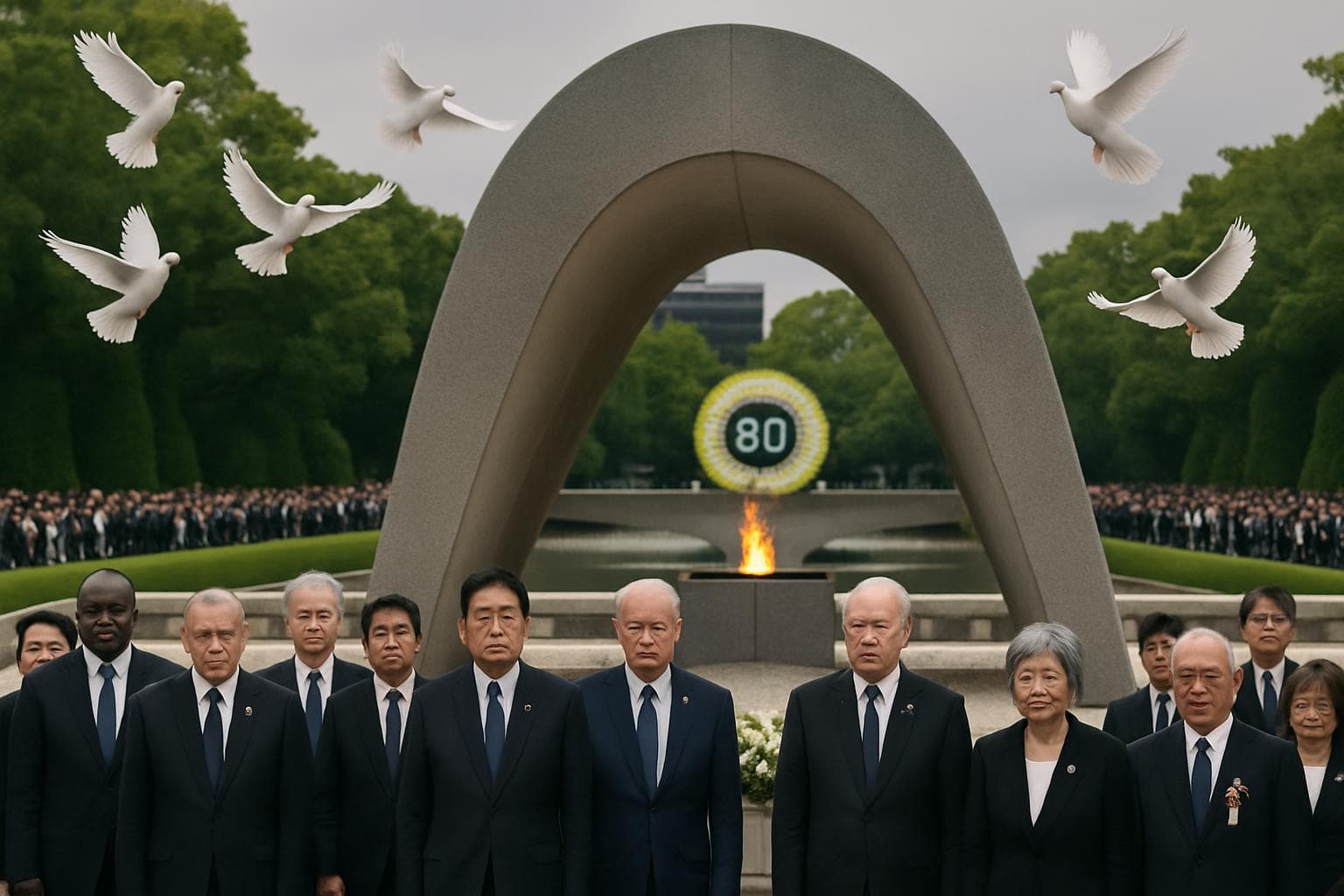
Hiroshima solemnly commemorated the 80th anniversary of the atomic bombing on Wednesday, with a poignant ceremony at the Peace Memorial Park. Attended by Japanese Prime Minister Shigeru Ishiba and representatives from 120 countries, the event underscored the urgent need for nuclear disarmament in a world increasingly reliant on nuclear deterrence.
A Call for Peace
Hiroshima Mayor Kazumi Matsui delivered a powerful peace declaration, warning that current global conflicts, such as those in Ukraine and the Middle East, have contributed to a worrying acceptance of nuclear weapons. "These developments flagrantly disregard the lessons the international community should have learned from the tragedies of history," Matsui stated, emphasizing the potential "utterly inhumane" consequences for future generations.
The ceremony, marked by the release of white doves and the burning of an eternal "flame of peace," served as a reminder of the devastation wrought by the atomic bomb dropped by the US on August 6, 1945. The attack killed an estimated 140,000 people by the end of that year, with the subsequent Nagasaki bombing claiming an additional 74,000 lives.
Survivors' Stories
The event also highlighted the voices of Hibakusha, survivors of the atomic bombings, who continue to share their harrowing experiences. Shingo Naito, who was six years old at the time, recounted the loss of his father and siblings, while Saitoshi Tanaka reflected on the parallels between his suffering and the current bloodshed in conflict zones like Gaza and Ukraine.
Legal and Political Context
Central to the discussions was the nuclear Non-Proliferation Treaty, which aims to prevent the spread of nuclear weapons. Mayor Matsui expressed concern over its potential dysfunctionality and urged Japan to ratify the Treaty on the Prohibition of Nuclear Weapons, an international agreement that has been opposed by nuclear powers such as the US and Russia. Despite Japan's reliance on US nuclear deterrence for security, small protests in Hiroshima called for the abolition of nuclear weapons.
WHAT THIS MIGHT MEAN
The 80th anniversary of Hiroshima's bombing serves as a stark reminder of the catastrophic consequences of nuclear warfare. As global tensions rise, the push for nuclear disarmament faces significant challenges, particularly from nations that view nuclear arsenals as essential for national defense. The ongoing debate over Japan's stance on nuclear treaties highlights the complex balance between national security and global peace efforts.
Moving forward, the testimonies of Hibakusha and the advocacy of groups like Nihon Hidankyo, which recently won the Nobel Peace Prize, will be crucial in shaping public opinion and policy. The international community's response to these calls for disarmament could determine the future trajectory of nuclear policy and the preservation of peace-building frameworks worldwide.
Related Articles
Intensified US-Israel Strikes on Iran Spark Global Outcry
Russian LNG Tanker Sinks in Mediterranean Amid Accusations of Ukrainian Drone Attack
US and Israel Intensify Military Campaign as Iran's Capabilities Dwindle
Senate Blocks Resolution to Limit Trump's Military Actions in Iran
UK-Iran Tensions: Starmer Defends Cautious Approach Amid Trump Criticism
Spain's Sánchez Stands Firm Against Trump's Trade Threat Over Iran Stance
Hiroshima Commemorates 80th Anniversary of Atomic Bombing Amid Calls for Nuclear Disarmament
In This Article
 Ethan Brooks| Published
 HIGHLIGHTS
- Hiroshima marked 80 years since the atomic bombing with a ceremony attended by global officials, emphasizing the need for nuclear disarmament.
- Hiroshima Mayor Kazumi Matsui criticized the global trend towards military build-up and nuclear deterrence, urging for the abolition of nuclear weapons.
- Survivors, known as Hibakusha, shared personal stories to highlight the ongoing impact of nuclear warfare and the importance of peace.
- The ceremony included the addition of over 4,940 names of deceased survivors to a registry, bringing the total deaths attributed to the bombing to nearly 350,000.
- The nuclear Non-Proliferation Treaty and the Treaty on the Prohibition of Nuclear Weapons were central topics, with calls for Japan to ratify the latter.
Hiroshima solemnly commemorated the 80th anniversary of the atomic bombing on Wednesday, with a poignant ceremony at the Peace Memorial Park. Attended by Japanese Prime Minister Shigeru Ishiba and representatives from 120 countries, the event underscored the urgent need for nuclear disarmament in a world increasingly reliant on nuclear deterrence.
A Call for Peace
Hiroshima Mayor Kazumi Matsui delivered a powerful peace declaration, warning that current global conflicts, such as those in Ukraine and the Middle East, have contributed to a worrying acceptance of nuclear weapons. "These developments flagrantly disregard the lessons the international community should have learned from the tragedies of history," Matsui stated, emphasizing the potential "utterly inhumane" consequences for future generations.
The ceremony, marked by the release of white doves and the burning of an eternal "flame of peace," served as a reminder of the devastation wrought by the atomic bomb dropped by the US on August 6, 1945. The attack killed an estimated 140,000 people by the end of that year, with the subsequent Nagasaki bombing claiming an additional 74,000 lives.
Survivors' Stories
The event also highlighted the voices of Hibakusha, survivors of the atomic bombings, who continue to share their harrowing experiences. Shingo Naito, who was six years old at the time, recounted the loss of his father and siblings, while Saitoshi Tanaka reflected on the parallels between his suffering and the current bloodshed in conflict zones like Gaza and Ukraine.
Legal and Political Context
Central to the discussions was the nuclear Non-Proliferation Treaty, which aims to prevent the spread of nuclear weapons. Mayor Matsui expressed concern over its potential dysfunctionality and urged Japan to ratify the Treaty on the Prohibition of Nuclear Weapons, an international agreement that has been opposed by nuclear powers such as the US and Russia. Despite Japan's reliance on US nuclear deterrence for security, small protests in Hiroshima called for the abolition of nuclear weapons.
WHAT THIS MIGHT MEAN
The 80th anniversary of Hiroshima's bombing serves as a stark reminder of the catastrophic consequences of nuclear warfare. As global tensions rise, the push for nuclear disarmament faces significant challenges, particularly from nations that view nuclear arsenals as essential for national defense. The ongoing debate over Japan's stance on nuclear treaties highlights the complex balance between national security and global peace efforts.
Moving forward, the testimonies of Hibakusha and the advocacy of groups like Nihon Hidankyo, which recently won the Nobel Peace Prize, will be crucial in shaping public opinion and policy. The international community's response to these calls for disarmament could determine the future trajectory of nuclear policy and the preservation of peace-building frameworks worldwide.
Related Articles
Intensified US-Israel Strikes on Iran Spark Global Outcry
Russian LNG Tanker Sinks in Mediterranean Amid Accusations of Ukrainian Drone Attack
US and Israel Intensify Military Campaign as Iran's Capabilities Dwindle
Senate Blocks Resolution to Limit Trump's Military Actions in Iran
UK-Iran Tensions: Starmer Defends Cautious Approach Amid Trump Criticism
Spain's Sánchez Stands Firm Against Trump's Trade Threat Over Iran Stance