
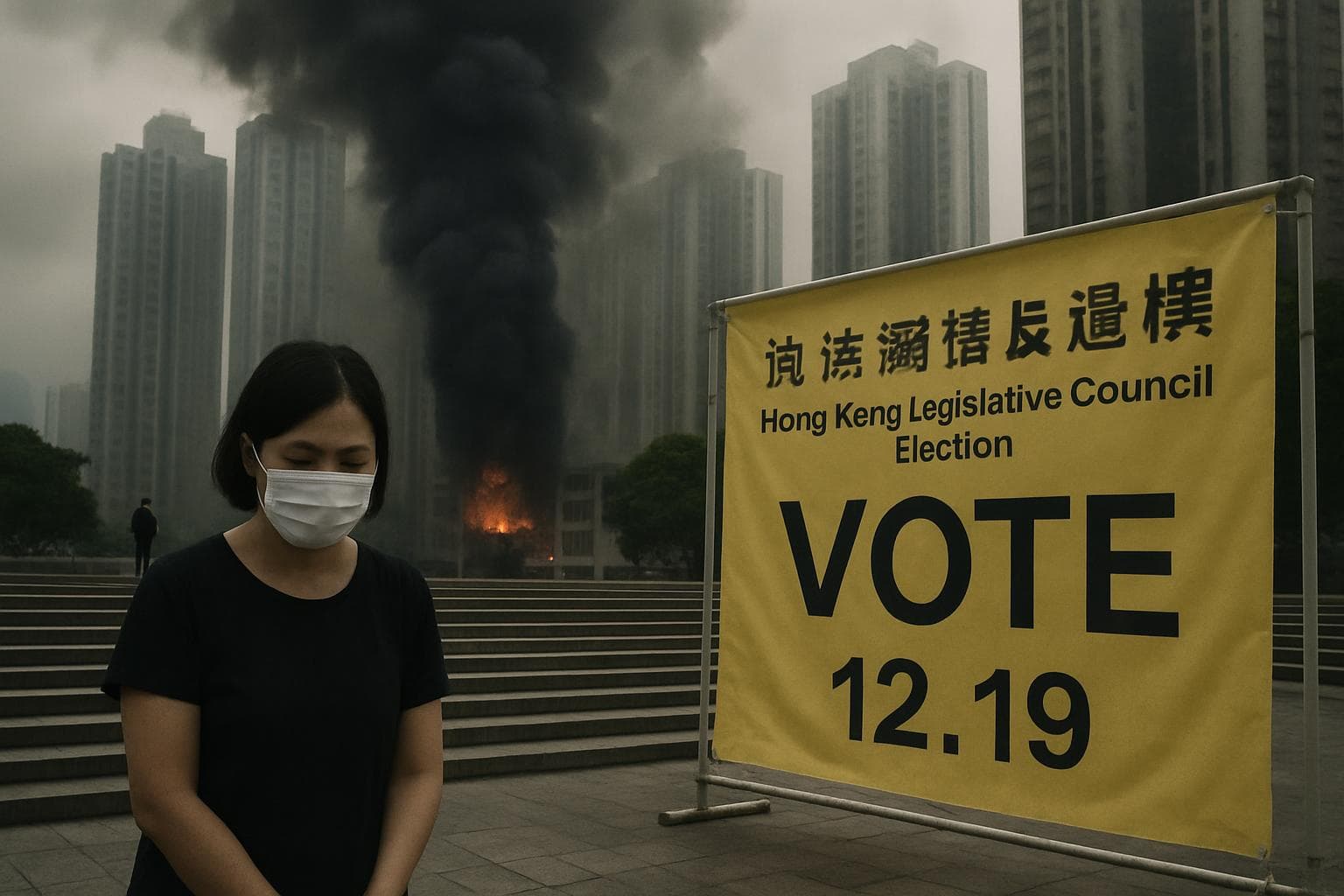
Hong Kong's Legislative Council Election Overshadowed by Tai Po Fire Tragedy
In This Article
HIGHLIGHTS
- Hong Kong's recent Legislative Council election saw a voter turnout of 31.9%, slightly higher than the record low of 30.2% in 2021.
- The election occurred amid public mourning for a deadly fire in Tai Po, which claimed at least 159 lives, raising concerns about building safety.
- Only candidates vetted as "patriots" by a government committee were allowed to run, reflecting Beijing's influence over the electoral process.
- Authorities launched a campaign to boost voter participation, offering incentives like vouchers and extending polling hours.
- The election was marked by arrests related to inciting vote boycotts, highlighting tensions under Hong Kong's national security law.
Hong Kong's recent Legislative Council (LegCo) election, held on Sunday, has been marked by a voter turnout of 31.9%, a slight increase from the record low of 30.2% in 2021. This election, seen as a barometer of public sentiment, unfolded against the backdrop of a devastating fire in the Tai Po district, which claimed at least 159 lives and has sparked widespread concern over building safety standards.
Election Amid Mourning
The election took place as Hongkongers mourned the victims of the Tai Po fire, the deadliest in over seven decades. The blaze, which engulfed multiple high-rise buildings, has prompted calls for transparency and accountability regarding building safety regulations. As the city grapples with this tragedy, questions have arisen about whether the disaster could have been prevented.
Beijing's Influence and Voter Apathy
The election was conducted under new rules that allow only candidates vetted as "patriots" by a government committee to stand for election. This change, part of a broader electoral overhaul by Beijing, has been criticized for weakening democracy in Hong Kong. Of the 90 LegCo seats, only 20 are directly elected, with the remainder filled by pro-Beijing committees and special interest groups.
Efforts to Boost Participation
In an effort to counter voter apathy, the Hong Kong government launched an extensive campaign to encourage participation. Measures included extending polling hours, offering "thank you cards" redeemable for vouchers, and organizing public events. Despite these efforts, only 1.3 million of the 4.1 million registered voters participated, reflecting ongoing discontent among the populace.
Crackdown on Dissent
The election also saw a crackdown on dissent, with authorities arresting several individuals for allegedly inciting others to boycott the vote or cast invalid ballots. This move underscores the heightened tensions under Hong Kong's national security law, which has been a point of contention since its implementation following the 2019 pro-democracy protests.
WHAT THIS MIGHT MEAN
The aftermath of the Tai Po fire and the recent election results could have significant implications for Hong Kong's political landscape. The low voter turnout, despite government incentives, suggests persistent public discontent and skepticism towards the current electoral system. As investigations into the fire continue, there may be increased pressure on authorities to address building safety standards and provide transparency.
Politically, the arrests related to inciting vote boycotts highlight the ongoing enforcement of the national security law, which could further stifle dissent and limit avenues for public expression. Experts suggest that unless there are meaningful reforms, the disconnect between the government and the populace may deepen, potentially leading to further unrest in the region.
Related Articles

Dalai Lama's Grammy Win Sparks Beijing's Criticism Over Political Manipulation
Jimmy Lai's 20-Year Sentence Sparks Global Outcry Over Hong Kong's National Security Law
Jimmy Lai Sentenced to 20 Years in Hong Kong: A Blow to Press Freedom and Pro-Democracy Activism
UK-China Relations Thaw as Sanctions on British MPs Lifted During Starmer's Beijing Visit
Panama Supreme Court Annuls Hong Kong Firm's Canal Port Contracts Amid US-China Tensions
China Sets Lowest GDP Growth Target in Decades Amid Economic Challenges
Hong Kong's Legislative Council Election Overshadowed by Tai Po Fire Tragedy
In This Article
 Alex Carter| Published
 HIGHLIGHTS
- Hong Kong's recent Legislative Council election saw a voter turnout of 31.9%, slightly higher than the record low of 30.2% in 2021.
- The election occurred amid public mourning for a deadly fire in Tai Po, which claimed at least 159 lives, raising concerns about building safety.
- Only candidates vetted as "patriots" by a government committee were allowed to run, reflecting Beijing's influence over the electoral process.
- Authorities launched a campaign to boost voter participation, offering incentives like vouchers and extending polling hours.
- The election was marked by arrests related to inciting vote boycotts, highlighting tensions under Hong Kong's national security law.
Hong Kong's recent Legislative Council (LegCo) election, held on Sunday, has been marked by a voter turnout of 31.9%, a slight increase from the record low of 30.2% in 2021. This election, seen as a barometer of public sentiment, unfolded against the backdrop of a devastating fire in the Tai Po district, which claimed at least 159 lives and has sparked widespread concern over building safety standards.
Election Amid Mourning
The election took place as Hongkongers mourned the victims of the Tai Po fire, the deadliest in over seven decades. The blaze, which engulfed multiple high-rise buildings, has prompted calls for transparency and accountability regarding building safety regulations. As the city grapples with this tragedy, questions have arisen about whether the disaster could have been prevented.
Beijing's Influence and Voter Apathy
The election was conducted under new rules that allow only candidates vetted as "patriots" by a government committee to stand for election. This change, part of a broader electoral overhaul by Beijing, has been criticized for weakening democracy in Hong Kong. Of the 90 LegCo seats, only 20 are directly elected, with the remainder filled by pro-Beijing committees and special interest groups.
Efforts to Boost Participation
In an effort to counter voter apathy, the Hong Kong government launched an extensive campaign to encourage participation. Measures included extending polling hours, offering "thank you cards" redeemable for vouchers, and organizing public events. Despite these efforts, only 1.3 million of the 4.1 million registered voters participated, reflecting ongoing discontent among the populace.
Crackdown on Dissent
The election also saw a crackdown on dissent, with authorities arresting several individuals for allegedly inciting others to boycott the vote or cast invalid ballots. This move underscores the heightened tensions under Hong Kong's national security law, which has been a point of contention since its implementation following the 2019 pro-democracy protests.
WHAT THIS MIGHT MEAN
The aftermath of the Tai Po fire and the recent election results could have significant implications for Hong Kong's political landscape. The low voter turnout, despite government incentives, suggests persistent public discontent and skepticism towards the current electoral system. As investigations into the fire continue, there may be increased pressure on authorities to address building safety standards and provide transparency.
Politically, the arrests related to inciting vote boycotts highlight the ongoing enforcement of the national security law, which could further stifle dissent and limit avenues for public expression. Experts suggest that unless there are meaningful reforms, the disconnect between the government and the populace may deepen, potentially leading to further unrest in the region.
Related Articles
Dalai Lama's Grammy Win Sparks Beijing's Criticism Over Political Manipulation
Jimmy Lai's 20-Year Sentence Sparks Global Outcry Over Hong Kong's National Security Law
Jimmy Lai Sentenced to 20 Years in Hong Kong: A Blow to Press Freedom and Pro-Democracy Activism
UK-China Relations Thaw as Sanctions on British MPs Lifted During Starmer's Beijing Visit
Panama Supreme Court Annuls Hong Kong Firm's Canal Port Contracts Amid US-China Tensions
China Sets Lowest GDP Growth Target in Decades Amid Economic Challenges