
India-EU Trade Deal Finalized Amid Global Trade Tensions
In This Article
HIGHLIGHTS
- India and the EU have finalized a significant free trade agreement, opening India's market to the EU's 27 nations.
- The deal was accelerated by Trump's tariff threats and concerns over China's manufacturing dominance.
- The EU is India's largest trading partner, with trade in goods reaching $142.3 billion in 2024.
- The agreement is part of a broader trend of countries seeking to hedge against US trade unpredictability.
- The deal still requires ratification but signals a strategic shift in global trade alliances.
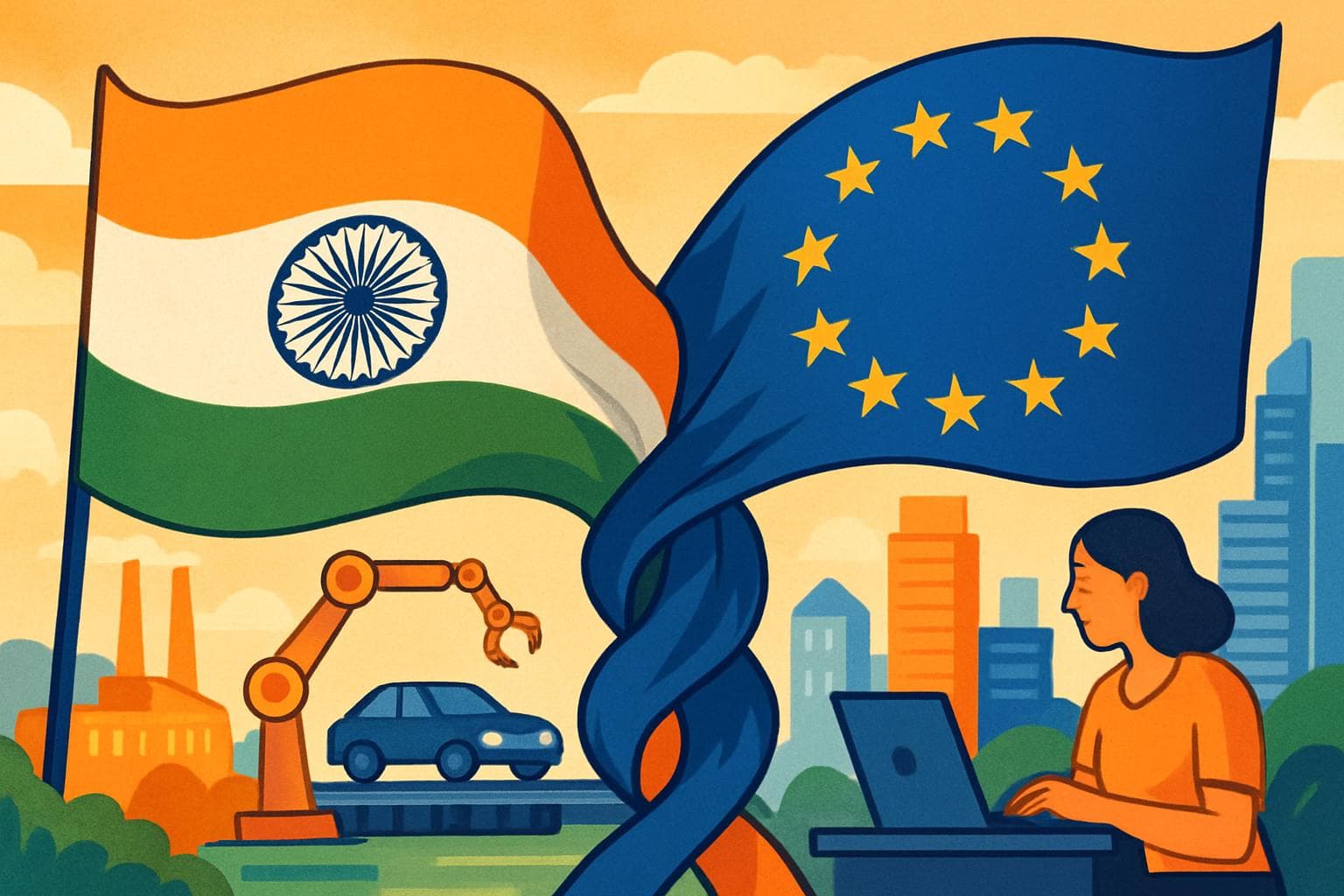
In a landmark move, India and the European Union have finalized a free trade agreement, marking a pivotal shift in global trade dynamics. This agreement, hailed by European Commission President Ursula von der Leyen as the "mother of all deals," is set to open India's vast market to the EU's 27 member states, focusing on manufacturing and services sectors.
Geopolitical Context and Accelerated Talks
The trade negotiations, which had been stalled for two decades, gained momentum over the past six months. This acceleration was largely driven by the geopolitical landscape shaped by former US President Donald Trump's unpredictable trade policies. Trump's administration had imposed heavy tariffs on Indian goods, including a 50% tariff that penalized India's continued purchase of Russian oil. These tariffs, coupled with Trump's threats towards EU countries, prompted India and the EU to expedite their trade discussions.
Strategic Implications and Global Trade Relations
The EU, already India's largest trading partner with bilateral trade reaching $142.3 billion in 2024, sees this agreement as a strategic move to diversify its trade relations. The deal is the seventh trade agreement India has completed recently, reflecting a broader trend of countries seeking to mitigate the risks associated with US trade policies. Michael Kugelman, a senior fellow at the Atlantic Council, noted, "The Trump factor provided a very strong impetus to the deal because both India and the EU are facing shock US tariffs that they never expected."
Looking Beyond Trade
Beyond economic benefits, the agreement carries significant geopolitical weight. It signals a collective effort by global powers to protect themselves against unilateral US trade measures. The deal follows the EU's recent trade accord with the South American trade bloc Mercosur, which also faced delays due to similar geopolitical concerns.
WHAT THIS MIGHT MEAN
As the India-EU trade deal awaits ratification, its successful implementation could redefine global trade alliances. Experts suggest that this agreement might encourage other nations to pursue similar partnerships, potentially diminishing the US's influence in global trade. Furthermore, the deal could serve as a blueprint for future trade negotiations, emphasizing the importance of geopolitical stability in economic agreements. As countries continue to navigate the complexities of international trade, the India-EU deal stands as a testament to the evolving landscape of global economic relations.
Related Articles
Trump's New Tariff Strategy Sparks Global Trade Uncertainty
Tech Giants Pledge to Cover AI Data Center Energy Costs Amid Rising Electricity Concerns

Russian LNG Tanker Sinks in Mediterranean Amid Accusations of Ukrainian Drone Attack
Spain's Sánchez Stands Firm Against Trump's Trade Threat Over Iran Stance
US Supreme Court Ruling Sparks Trade Uncertainty in Asia and Beyond

Congress Subpoenas Attorney General Bondi in Epstein Investigation
India-EU Trade Deal Finalized Amid Global Trade Tensions
In This Article
 Daniel Rivera| Published
 HIGHLIGHTS
- India and the EU have finalized a significant free trade agreement, opening India's market to the EU's 27 nations.
- The deal was accelerated by Trump's tariff threats and concerns over China's manufacturing dominance.
- The EU is India's largest trading partner, with trade in goods reaching $142.3 billion in 2024.
- The agreement is part of a broader trend of countries seeking to hedge against US trade unpredictability.
- The deal still requires ratification but signals a strategic shift in global trade alliances.
In a landmark move, India and the European Union have finalized a free trade agreement, marking a pivotal shift in global trade dynamics. This agreement, hailed by European Commission President Ursula von der Leyen as the "mother of all deals," is set to open India's vast market to the EU's 27 member states, focusing on manufacturing and services sectors.
Geopolitical Context and Accelerated Talks
The trade negotiations, which had been stalled for two decades, gained momentum over the past six months. This acceleration was largely driven by the geopolitical landscape shaped by former US President Donald Trump's unpredictable trade policies. Trump's administration had imposed heavy tariffs on Indian goods, including a 50% tariff that penalized India's continued purchase of Russian oil. These tariffs, coupled with Trump's threats towards EU countries, prompted India and the EU to expedite their trade discussions.
Strategic Implications and Global Trade Relations
The EU, already India's largest trading partner with bilateral trade reaching $142.3 billion in 2024, sees this agreement as a strategic move to diversify its trade relations. The deal is the seventh trade agreement India has completed recently, reflecting a broader trend of countries seeking to mitigate the risks associated with US trade policies. Michael Kugelman, a senior fellow at the Atlantic Council, noted, "The Trump factor provided a very strong impetus to the deal because both India and the EU are facing shock US tariffs that they never expected."
Looking Beyond Trade
Beyond economic benefits, the agreement carries significant geopolitical weight. It signals a collective effort by global powers to protect themselves against unilateral US trade measures. The deal follows the EU's recent trade accord with the South American trade bloc Mercosur, which also faced delays due to similar geopolitical concerns.
WHAT THIS MIGHT MEAN
As the India-EU trade deal awaits ratification, its successful implementation could redefine global trade alliances. Experts suggest that this agreement might encourage other nations to pursue similar partnerships, potentially diminishing the US's influence in global trade. Furthermore, the deal could serve as a blueprint for future trade negotiations, emphasizing the importance of geopolitical stability in economic agreements. As countries continue to navigate the complexities of international trade, the India-EU deal stands as a testament to the evolving landscape of global economic relations.
Related Articles
Trump's New Tariff Strategy Sparks Global Trade Uncertainty
Tech Giants Pledge to Cover AI Data Center Energy Costs Amid Rising Electricity Concerns
Russian LNG Tanker Sinks in Mediterranean Amid Accusations of Ukrainian Drone Attack
Spain's Sánchez Stands Firm Against Trump's Trade Threat Over Iran Stance
US Supreme Court Ruling Sparks Trade Uncertainty in Asia and Beyond
Congress Subpoenas Attorney General Bondi in Epstein Investigation