
Indonesia's Protests Escalate Amid Economic Discontent and Police Brutality Allegations
In This Article
HIGHLIGHTS
- Protests erupted across Indonesia on August 25, triggered by lawmakers' controversial housing allowances and economic inequality.
- The death of 21-year-old delivery driver Affan Kurniawan, killed by police, intensified public outrage and spread protests nationwide.
- At least seven people have died, 20 remain missing, and over 1,240 have been detained amid escalating violence and unrest.
- President Prabowo Subianto has promised to cut lawmakers' perks and ordered a firm response from security forces.
- The UN has called for an investigation into alleged police brutality, while Prabowo has pledged to investigate Kurniawan's death.
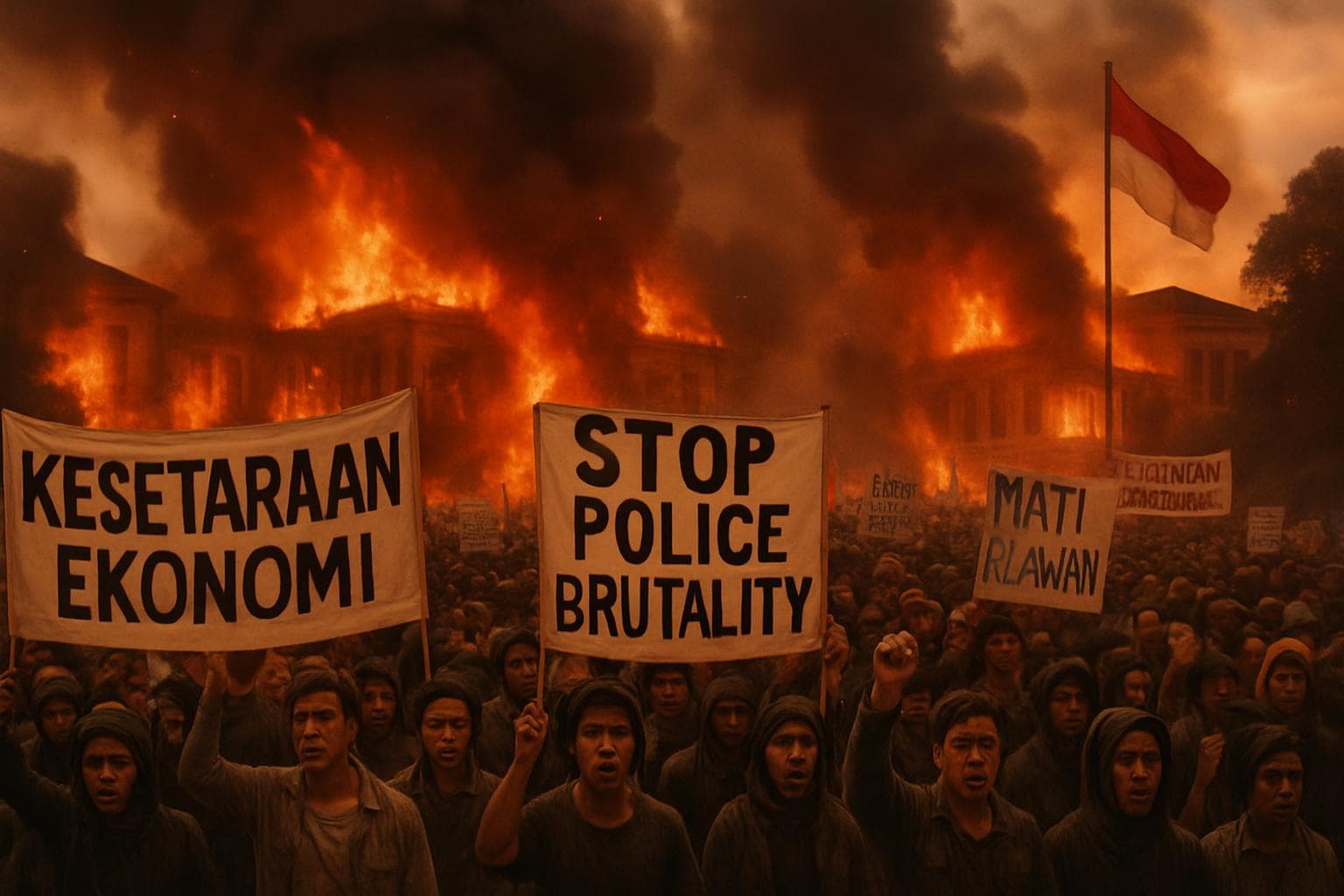
Mass protests have engulfed Indonesia since August 25, sparked by public anger over lawmakers' housing allowances and broader economic inequality. The unrest, which began in Jakarta, has spread across the archipelago, fueled by the death of 21-year-old Affan Kurniawan, a motorcycle delivery driver killed by police during a demonstration. His death has become a rallying point for protesters, highlighting issues of police brutality and accountability.
Origins of the Unrest
The protests were initially triggered by the Indonesian government's decision to increase allowances for national parliamentarians, a move seen as tone-deaf amid widespread economic hardship. Reports indicate that lawmakers receive over 100 million rupiah monthly, more than 30 times the average national income. This disparity, coupled with austerity measures affecting education and health, has exacerbated public frustration.
Escalation and Response
The demonstrations have turned violent, with at least seven fatalities and hundreds injured. Government buildings and police headquarters have been set ablaze, and over 1,240 people have been detained. In response, President Prabowo Subianto has ordered security forces to take firm action, citing signs of unlawful acts. He has also announced cuts to lawmakers' perks, a move welcomed by some but criticized as insufficient.
Human Rights Concerns
The protests have drawn international attention, with the United Nations calling for an investigation into alleged police brutality. "All security forces must comply with basic principles on the use of force," stated UN spokesperson Ravina Shamdasani. Meanwhile, President Prabowo has pledged to investigate Kurniawan's death, with seven officers detained for further inquiry.
Public Sentiment and Future Demands
Protesters, including former student leader Herianto, argue that symbolic changes are not enough. "People expect deeper reforms, particularly in areas affecting ordinary citizens," he said. The protests have highlighted long-standing issues of political corruption and social inequality, with demands for more accountable governance.
WHAT THIS MIGHT MEAN
The ongoing protests in Indonesia could lead to significant political and social changes. If President Prabowo's concessions are deemed insufficient, the unrest may continue, potentially destabilizing his administration. The international community's call for an investigation into police actions could pressure the government to implement reforms, particularly regarding human rights and accountability. Experts suggest that addressing systemic issues such as economic inequality and political corruption will be crucial for restoring public trust and preventing future unrest.
Related Articles
Intensified US-Israel Strikes on Iran Spark Global Outcry
Canada Calls for De-escalation Amid US-Israel Strikes on Iran
US Supreme Court Ruling Sparks Trade Uncertainty in Asia and Beyond

Palestinian-American Teen Killed by Israeli Settlers in West Bank Sparks Calls for Accountability

US-Iran Tensions Escalate Amid Military Buildup and Diplomatic Deadlock
UN Report: Sudan's El Fasher Siege Shows Genocide Hallmarks
Indonesia's Protests Escalate Amid Economic Discontent and Police Brutality Allegations
In This Article
 Sofia Romano| Published
 HIGHLIGHTS
- Protests erupted across Indonesia on August 25, triggered by lawmakers' controversial housing allowances and economic inequality.
- The death of 21-year-old delivery driver Affan Kurniawan, killed by police, intensified public outrage and spread protests nationwide.
- At least seven people have died, 20 remain missing, and over 1,240 have been detained amid escalating violence and unrest.
- President Prabowo Subianto has promised to cut lawmakers' perks and ordered a firm response from security forces.
- The UN has called for an investigation into alleged police brutality, while Prabowo has pledged to investigate Kurniawan's death.
Mass protests have engulfed Indonesia since August 25, sparked by public anger over lawmakers' housing allowances and broader economic inequality. The unrest, which began in Jakarta, has spread across the archipelago, fueled by the death of 21-year-old Affan Kurniawan, a motorcycle delivery driver killed by police during a demonstration. His death has become a rallying point for protesters, highlighting issues of police brutality and accountability.
Origins of the Unrest
The protests were initially triggered by the Indonesian government's decision to increase allowances for national parliamentarians, a move seen as tone-deaf amid widespread economic hardship. Reports indicate that lawmakers receive over 100 million rupiah monthly, more than 30 times the average national income. This disparity, coupled with austerity measures affecting education and health, has exacerbated public frustration.
Escalation and Response
The demonstrations have turned violent, with at least seven fatalities and hundreds injured. Government buildings and police headquarters have been set ablaze, and over 1,240 people have been detained. In response, President Prabowo Subianto has ordered security forces to take firm action, citing signs of unlawful acts. He has also announced cuts to lawmakers' perks, a move welcomed by some but criticized as insufficient.
Human Rights Concerns
The protests have drawn international attention, with the United Nations calling for an investigation into alleged police brutality. "All security forces must comply with basic principles on the use of force," stated UN spokesperson Ravina Shamdasani. Meanwhile, President Prabowo has pledged to investigate Kurniawan's death, with seven officers detained for further inquiry.
Public Sentiment and Future Demands
Protesters, including former student leader Herianto, argue that symbolic changes are not enough. "People expect deeper reforms, particularly in areas affecting ordinary citizens," he said. The protests have highlighted long-standing issues of political corruption and social inequality, with demands for more accountable governance.
WHAT THIS MIGHT MEAN
The ongoing protests in Indonesia could lead to significant political and social changes. If President Prabowo's concessions are deemed insufficient, the unrest may continue, potentially destabilizing his administration. The international community's call for an investigation into police actions could pressure the government to implement reforms, particularly regarding human rights and accountability. Experts suggest that addressing systemic issues such as economic inequality and political corruption will be crucial for restoring public trust and preventing future unrest.
Related Articles
Intensified US-Israel Strikes on Iran Spark Global Outcry
Canada Calls for De-escalation Amid US-Israel Strikes on Iran
US Supreme Court Ruling Sparks Trade Uncertainty in Asia and Beyond
Palestinian-American Teen Killed by Israeli Settlers in West Bank Sparks Calls for Accountability
US-Iran Tensions Escalate Amid Military Buildup and Diplomatic Deadlock
UN Report: Sudan's El Fasher Siege Shows Genocide Hallmarks