
Widespread Protests Erupt Across Iran Amid Economic Crisis and Government Crackdown
In This Article
HIGHLIGHTS
- Protests in Iran, sparked by economic turmoil, have spread to 111 cities, with at least 36 people killed and over 2,200 arrested.
- Demonstrations began on December 28 due to the Iranian rial's sharp decline, leading to widespread unrest against government corruption.
- Security forces have used tear gas, pellet guns, and live ammunition against protesters, with reports of violence in Kurdish regions.
- Protesters are calling for the return of Reza Pahlavi and the removal of Supreme Leader Ayatollah Ali Khamenei.
- Kurdish opposition parties have called for a general strike, signaling continued resistance against the Iranian regime.
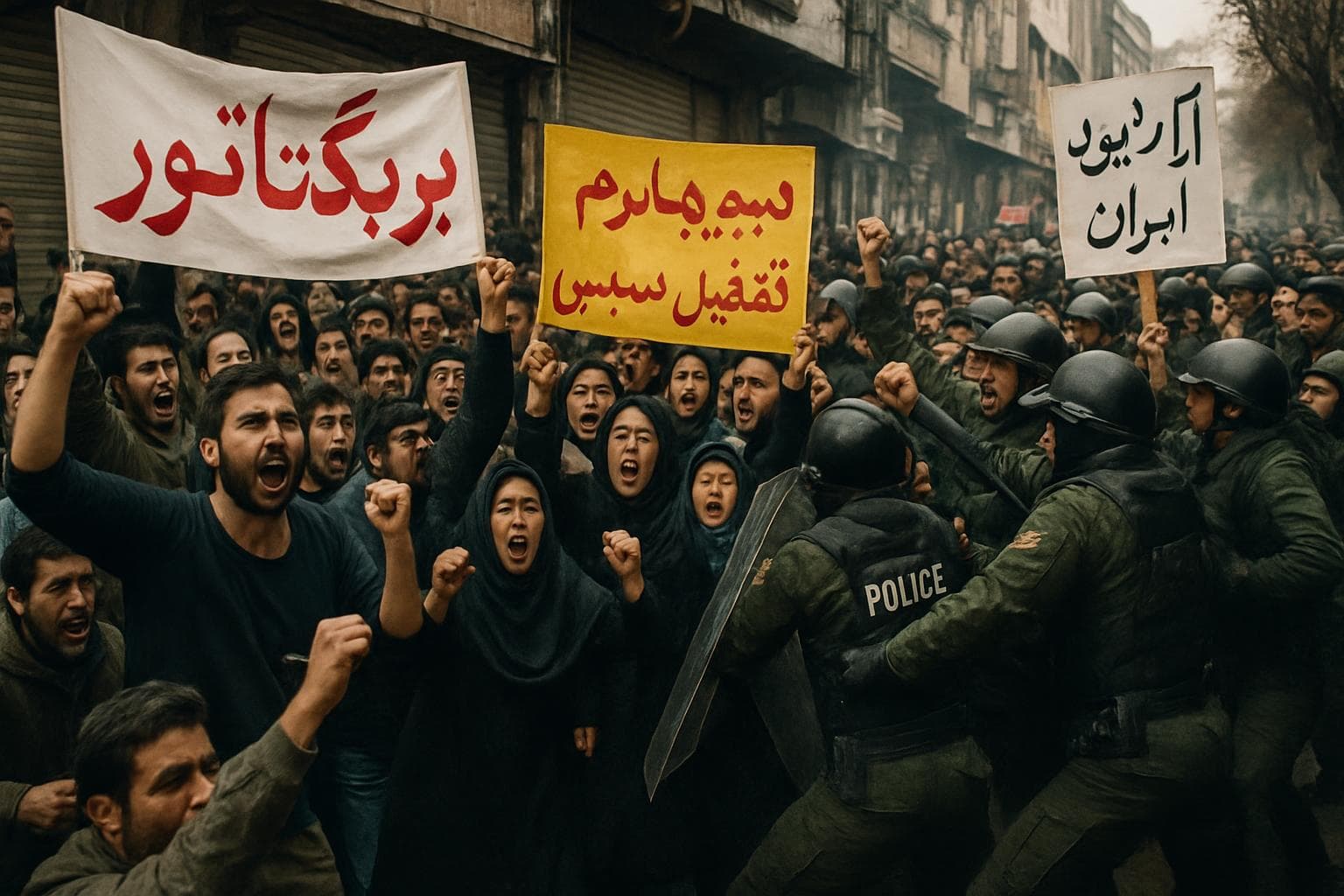
Protests have erupted across Iran, spreading to 111 cities and towns as citizens express their discontent over the country's economic crisis and government corruption. The unrest, which began on December 28, has resulted in at least 36 deaths and over 2,200 arrests, according to the US-based Human Rights Activist News Agency (HRANA).
Economic Turmoil Sparks Unrest
The protests were initially triggered by a sharp decline in the value of the Iranian rial against the US dollar, exacerbating inflation and economic hardship. Shopkeepers in Tehran were the first to take to the streets, soon joined by university students and citizens from various cities. The demonstrations have since evolved into a broader movement against the Iranian regime, with slogans targeting Supreme Leader Ayatollah Ali Khamenei and calls for the return of Reza Pahlavi, the exiled son of Iran's former shah.
Violent Clashes with Security Forces
Iranian security forces have responded with force, using tear gas, pellet guns, and live ammunition to disperse crowds. In the southwestern town of Lordegan, two policemen were reportedly killed by armed individuals. Eyewitnesses in the Kurdish city of Kermanshah described severe violence, with one protester recounting a woman being beaten by authorities. The Norway-based Hengaw organization confirmed the use of Kalashnikov rifles against demonstrators.
Kurdish Regions and Calls for a General Strike
The protests have been particularly intense in Iran's Kurdish regions, where shopkeepers have closed their businesses in solidarity. Seven Kurdish opposition parties have called for a general strike, urging nationwide participation. Hiwa Bahrami, head of foreign relations for the Democratic Party of Iranian Kurdistan, emphasized the peaceful nature of the strike, hoping it would demonstrate the strength of resistance in Kurdistan.
Growing Calls for Change
As the protests continue, demonstrators are increasingly vocal about their demands for political change. Videos from Kermanshah University show students calling for Reza Pahlavi's return, while others resist tear gas and chant against the regime. The movement has yet to reach the scale of the 2022 Mahsa Amini protests, but the growing unrest signals a significant challenge to the Iranian government.
WHAT THIS MIGHT MEAN
The ongoing protests in Iran could lead to further instability if the government fails to address the underlying economic issues and public grievances. The call for a general strike by Kurdish opposition parties may galvanize more widespread participation, potentially escalating tensions. If the Iranian regime continues its violent crackdown, international condemnation and pressure could increase, further isolating the country. Experts suggest that unless meaningful reforms are implemented, the protests may persist, posing a significant threat to the current leadership.
Images from the Web
Related Articles
Intensified US-Israel Strikes on Iran Spark Global Outcry
Iran Postpones Khamenei Funeral Amid Escalating US-Israeli Strikes
US-Iran Tensions Escalate Amid Renewed Nuclear Talks and Protests
Iranian Students Lead Major Protests Amid Rising US-Iran Tensions
US and Israel Intensify Military Campaign as Iran's Capabilities Dwindle
Senate Blocks Resolution to Limit Trump's Military Actions in Iran
Widespread Protests Erupt Across Iran Amid Economic Crisis and Government Crackdown
In This Article
 Ethan Brooks| Published
 HIGHLIGHTS
- Protests in Iran, sparked by economic turmoil, have spread to 111 cities, with at least 36 people killed and over 2,200 arrested.
- Demonstrations began on December 28 due to the Iranian rial's sharp decline, leading to widespread unrest against government corruption.
- Security forces have used tear gas, pellet guns, and live ammunition against protesters, with reports of violence in Kurdish regions.
- Protesters are calling for the return of Reza Pahlavi and the removal of Supreme Leader Ayatollah Ali Khamenei.
- Kurdish opposition parties have called for a general strike, signaling continued resistance against the Iranian regime.
Protests have erupted across Iran, spreading to 111 cities and towns as citizens express their discontent over the country's economic crisis and government corruption. The unrest, which began on December 28, has resulted in at least 36 deaths and over 2,200 arrests, according to the US-based Human Rights Activist News Agency (HRANA).
Economic Turmoil Sparks Unrest
The protests were initially triggered by a sharp decline in the value of the Iranian rial against the US dollar, exacerbating inflation and economic hardship. Shopkeepers in Tehran were the first to take to the streets, soon joined by university students and citizens from various cities. The demonstrations have since evolved into a broader movement against the Iranian regime, with slogans targeting Supreme Leader Ayatollah Ali Khamenei and calls for the return of Reza Pahlavi, the exiled son of Iran's former shah.
Violent Clashes with Security Forces
Iranian security forces have responded with force, using tear gas, pellet guns, and live ammunition to disperse crowds. In the southwestern town of Lordegan, two policemen were reportedly killed by armed individuals. Eyewitnesses in the Kurdish city of Kermanshah described severe violence, with one protester recounting a woman being beaten by authorities. The Norway-based Hengaw organization confirmed the use of Kalashnikov rifles against demonstrators.
Kurdish Regions and Calls for a General Strike
The protests have been particularly intense in Iran's Kurdish regions, where shopkeepers have closed their businesses in solidarity. Seven Kurdish opposition parties have called for a general strike, urging nationwide participation. Hiwa Bahrami, head of foreign relations for the Democratic Party of Iranian Kurdistan, emphasized the peaceful nature of the strike, hoping it would demonstrate the strength of resistance in Kurdistan.
Growing Calls for Change
As the protests continue, demonstrators are increasingly vocal about their demands for political change. Videos from Kermanshah University show students calling for Reza Pahlavi's return, while others resist tear gas and chant against the regime. The movement has yet to reach the scale of the 2022 Mahsa Amini protests, but the growing unrest signals a significant challenge to the Iranian government.
WHAT THIS MIGHT MEAN
The ongoing protests in Iran could lead to further instability if the government fails to address the underlying economic issues and public grievances. The call for a general strike by Kurdish opposition parties may galvanize more widespread participation, potentially escalating tensions. If the Iranian regime continues its violent crackdown, international condemnation and pressure could increase, further isolating the country. Experts suggest that unless meaningful reforms are implemented, the protests may persist, posing a significant threat to the current leadership.
Images from the Web
Related Articles
Intensified US-Israel Strikes on Iran Spark Global Outcry
Iran Postpones Khamenei Funeral Amid Escalating US-Israeli Strikes
US-Iran Tensions Escalate Amid Renewed Nuclear Talks and Protests
Iranian Students Lead Major Protests Amid Rising US-Iran Tensions
US and Israel Intensify Military Campaign as Iran's Capabilities Dwindle
Senate Blocks Resolution to Limit Trump's Military Actions in Iran