
Humanitarian Groups Accuse Israel of 'Weaponising Aid' Amid Gaza Crisis
In This Article
HIGHLIGHTS
- Over 100 humanitarian organisations accuse Israel of "weaponising aid" through new registration rules, impacting aid delivery to Gaza.
- Israel's regulations, introduced in March, require NGOs to disclose donor and staff details, risking aid blockage if deemed to delegitimise Israel.
- Aid groups report significant delays, with over 60 requests denied in July, leaving essential supplies stranded and worsening the humanitarian crisis.
- Israel maintains that the rules ensure aid reaches civilians, not Hamas, with 300 trucks entering Gaza daily, though the UN estimates 600 are needed.
- The crisis intensifies as Israel plans military action in Gaza, with international calls for urgent intervention to prevent famine.
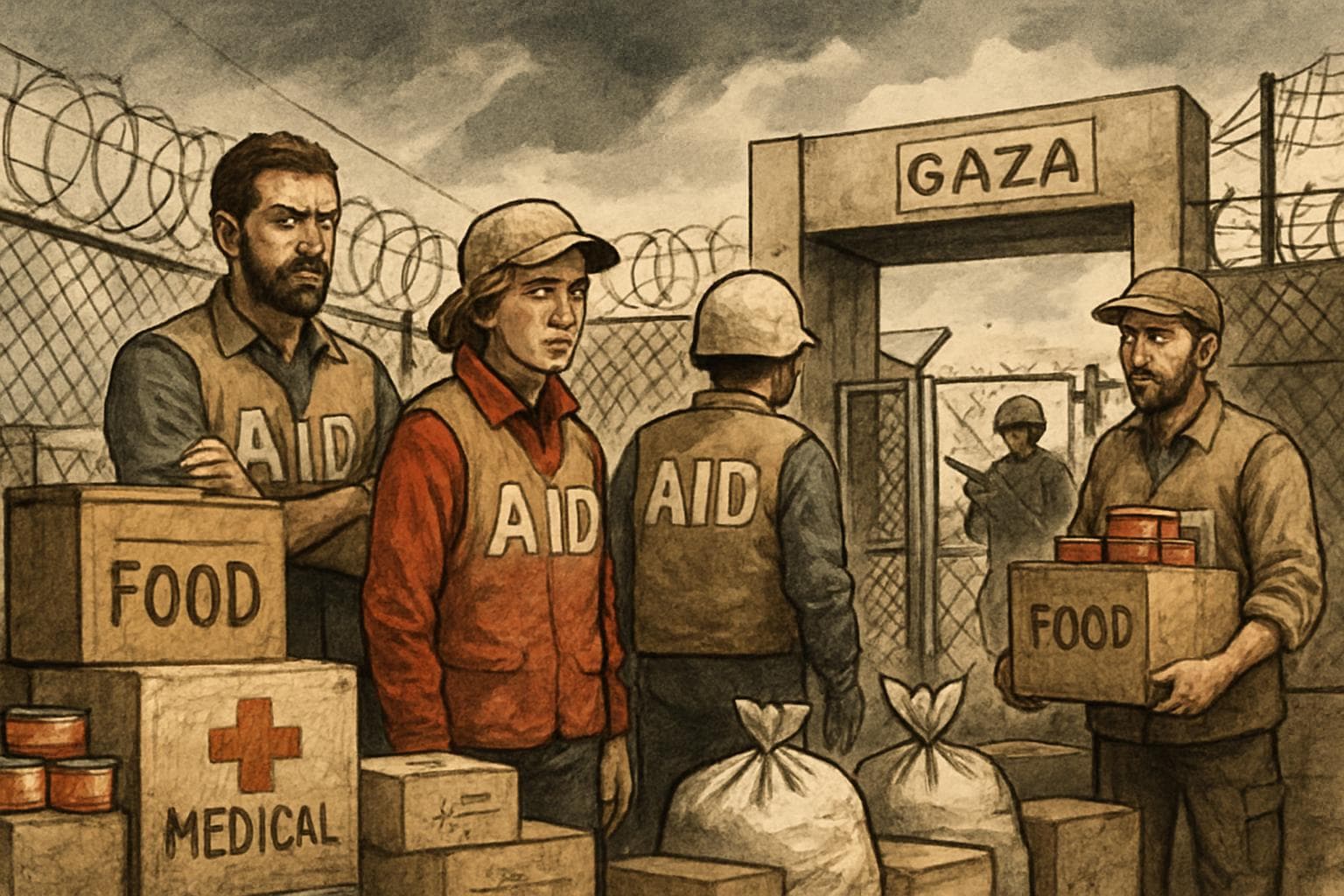
In a growing humanitarian crisis, over 100 aid organisations have accused Israel of "weaponising aid" through stringent new regulations that hinder the delivery of essential supplies to the Gaza Strip. The joint letter, signed by prominent groups such as Oxfam and Médecins Sans Frontières, highlights the severe impact of these rules, which require non-governmental organisations (NGOs) to provide detailed information about their donors and Palestinian staff. Failure to comply can result in aid blockage, a move the organisations argue compromises their independence and safety.
New Regulations and Their Impact
Introduced in March, Israel's regulations have been criticised for effectively stalling the flow of humanitarian aid into Gaza. The rules stipulate that NGOs must not engage in activities that could be perceived as delegitimising Israel. This has led to over 60 aid requests being denied in July alone, leaving millions of dollars' worth of food, medicine, and other essentials stranded in warehouses across Jordan and Egypt. Sean Carroll, CEO of American Near East Refugee Aid, expressed frustration, noting that $7 million worth of supplies, including 744 tons of rice, remain blocked just kilometers from Gaza.
Israel's Stance and International Response
Israel defends the regulations, asserting they are necessary to ensure aid reaches civilians rather than Hamas. The Israeli military body Cogat claims that nearly 20 organisations have successfully registered and are delivering aid, with approximately 300 trucks entering Gaza daily. However, the UN estimates that 600 trucks are required to meet the needs of the besieged population. The international community, including the EU, Britain, and Japan, has called for urgent action to prevent famine in Gaza, as reports of malnutrition-related deaths continue to emerge.
Military Tensions and Humanitarian Concerns
The situation is further complicated by Israel's military plans to take control of Gaza City, with reports suggesting the mobilisation of up to 100,000 reservists. As Israel steps up its bombardment, it promises to provide humanitarian aid to civilians outside combat zones, though specifics remain unclear. Bushra Khalidi, Oxfam's Policy Lead, warns that the registration process threatens the operational independence of NGOs, potentially silencing advocacy and humanitarian reporting.
WHAT THIS MIGHT MEAN
The ongoing restrictions on aid delivery to Gaza could exacerbate the humanitarian crisis, with potential political and legal ramifications. If Israel continues its military operations, the international community may increase pressure for a resolution to prevent further civilian suffering. Experts suggest that diplomatic interventions could be necessary to negotiate a compromise that allows for the safe and efficient delivery of aid. Additionally, the situation may prompt a reevaluation of international humanitarian law and its application in conflict zones, particularly concerning the balance between security and humanitarian needs.
Related Articles

Palestinian-American Teen Killed by Israeli Settlers in West Bank Sparks Calls for Accountability

US and Israel Intensify Military Campaign as Iran's Capabilities Dwindle

Intensified US-Israel Strikes on Iran Spark Global Outcry
Senate Blocks Resolution to Limit Trump's Military Actions in Iran
Iran Postpones Khamenei Funeral Amid Escalating US-Israeli Strikes
US Supreme Court Ruling Sparks Trade Uncertainty in Asia and Beyond
Humanitarian Groups Accuse Israel of 'Weaponising Aid' Amid Gaza Crisis
In This Article
 Ethan Brooks| Published
 HIGHLIGHTS
- Over 100 humanitarian organisations accuse Israel of "weaponising aid" through new registration rules, impacting aid delivery to Gaza.
- Israel's regulations, introduced in March, require NGOs to disclose donor and staff details, risking aid blockage if deemed to delegitimise Israel.
- Aid groups report significant delays, with over 60 requests denied in July, leaving essential supplies stranded and worsening the humanitarian crisis.
- Israel maintains that the rules ensure aid reaches civilians, not Hamas, with 300 trucks entering Gaza daily, though the UN estimates 600 are needed.
- The crisis intensifies as Israel plans military action in Gaza, with international calls for urgent intervention to prevent famine.
In a growing humanitarian crisis, over 100 aid organisations have accused Israel of "weaponising aid" through stringent new regulations that hinder the delivery of essential supplies to the Gaza Strip. The joint letter, signed by prominent groups such as Oxfam and Médecins Sans Frontières, highlights the severe impact of these rules, which require non-governmental organisations (NGOs) to provide detailed information about their donors and Palestinian staff. Failure to comply can result in aid blockage, a move the organisations argue compromises their independence and safety.
New Regulations and Their Impact
Introduced in March, Israel's regulations have been criticised for effectively stalling the flow of humanitarian aid into Gaza. The rules stipulate that NGOs must not engage in activities that could be perceived as delegitimising Israel. This has led to over 60 aid requests being denied in July alone, leaving millions of dollars' worth of food, medicine, and other essentials stranded in warehouses across Jordan and Egypt. Sean Carroll, CEO of American Near East Refugee Aid, expressed frustration, noting that $7 million worth of supplies, including 744 tons of rice, remain blocked just kilometers from Gaza.
Israel's Stance and International Response
Israel defends the regulations, asserting they are necessary to ensure aid reaches civilians rather than Hamas. The Israeli military body Cogat claims that nearly 20 organisations have successfully registered and are delivering aid, with approximately 300 trucks entering Gaza daily. However, the UN estimates that 600 trucks are required to meet the needs of the besieged population. The international community, including the EU, Britain, and Japan, has called for urgent action to prevent famine in Gaza, as reports of malnutrition-related deaths continue to emerge.
Military Tensions and Humanitarian Concerns
The situation is further complicated by Israel's military plans to take control of Gaza City, with reports suggesting the mobilisation of up to 100,000 reservists. As Israel steps up its bombardment, it promises to provide humanitarian aid to civilians outside combat zones, though specifics remain unclear. Bushra Khalidi, Oxfam's Policy Lead, warns that the registration process threatens the operational independence of NGOs, potentially silencing advocacy and humanitarian reporting.
WHAT THIS MIGHT MEAN
The ongoing restrictions on aid delivery to Gaza could exacerbate the humanitarian crisis, with potential political and legal ramifications. If Israel continues its military operations, the international community may increase pressure for a resolution to prevent further civilian suffering. Experts suggest that diplomatic interventions could be necessary to negotiate a compromise that allows for the safe and efficient delivery of aid. Additionally, the situation may prompt a reevaluation of international humanitarian law and its application in conflict zones, particularly concerning the balance between security and humanitarian needs.
Related Articles
Palestinian-American Teen Killed by Israeli Settlers in West Bank Sparks Calls for Accountability
US and Israel Intensify Military Campaign as Iran's Capabilities Dwindle
Intensified US-Israel Strikes on Iran Spark Global Outcry
Senate Blocks Resolution to Limit Trump's Military Actions in Iran
Iran Postpones Khamenei Funeral Amid Escalating US-Israeli Strikes
US Supreme Court Ruling Sparks Trade Uncertainty in Asia and Beyond