
Israel-Iran Conflict Sparks Oil Price Surge, Raising Concerns Over UK Energy Costs
In This Article
HIGHLIGHTS
- The Israel-Iran conflict has caused a significant spike in global oil prices, with Brent crude reaching $78 a barrel.
- UK Chancellor Rachel Reeves has pledged to protect the UK economy from the conflict's impact, emphasizing energy security investments.
- The Strait of Hormuz, a critical oil transit route, remains open, but tensions could disrupt global oil supplies.
- Analysts suggest oil prices could rise to $120 a barrel if the conflict escalates, though current forecasts remain around $75.
- UK petrol prices are expected to increase, potentially reversing a three-month decline, due to the rising cost of oil.
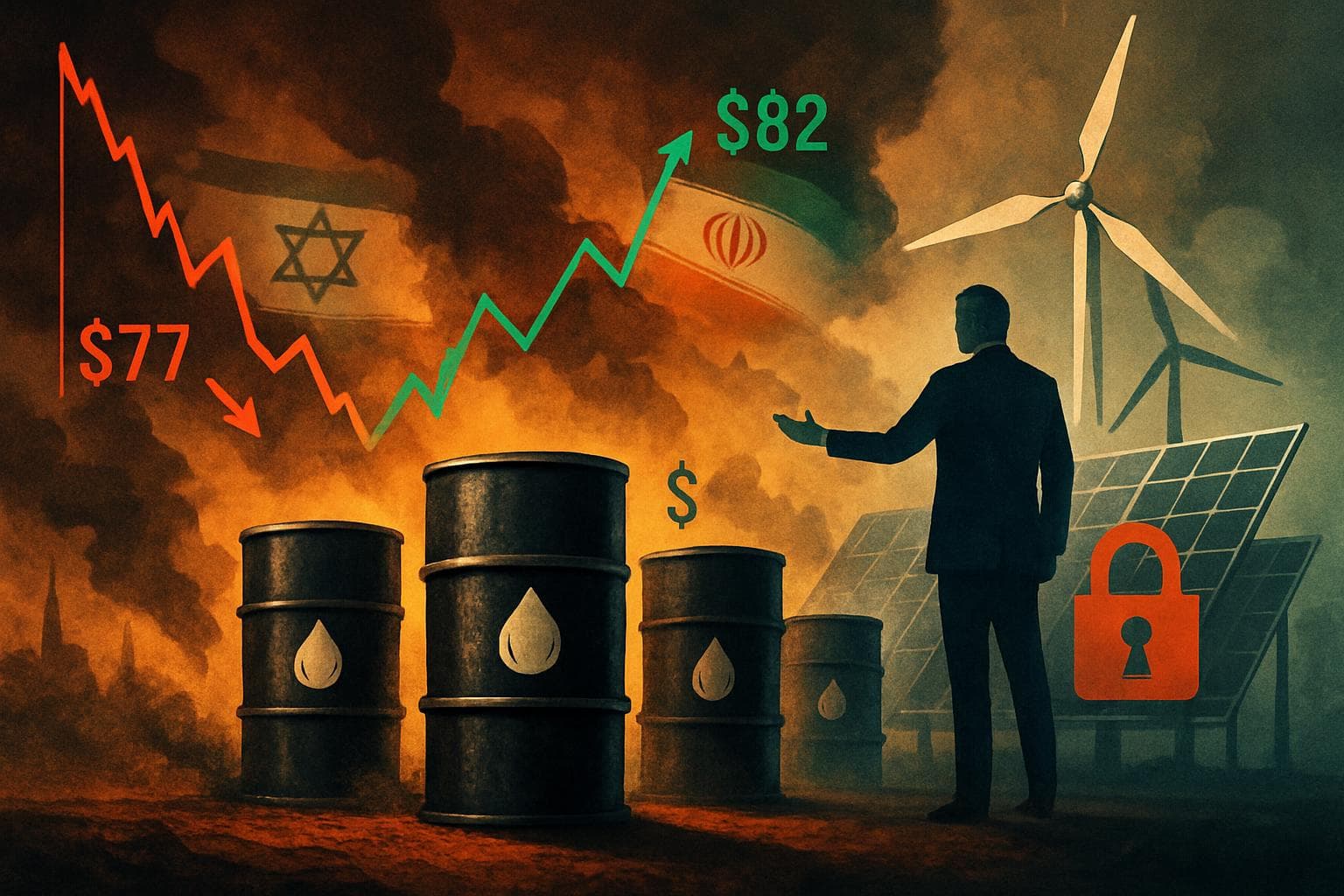
The escalating conflict between Israel and Iran has triggered a sharp rise in global oil prices, prompting UK Chancellor Rachel Reeves to assure the public that the government will take all necessary measures to shield the economy from potential repercussions. The price of Brent crude oil surged to $78 a barrel, marking the largest single-day increase in three years, as fears of a broader regional conflict loom.
Impact on UK Economy
Speaking on the BBC's Sunday with Laura Kuenssberg, Reeves emphasized the government's commitment to energy security, highlighting recent investments in nuclear energy, offshore wind, and carbon capture technologies. "A lack of investment in our own domestic energy production has left us exposed," Reeves stated, underscoring the need for self-sufficiency. She assured that while the current situation does not yet warrant emergency measures, the government remains vigilant.
Global Oil Market Reactions
The Strait of Hormuz, a vital passage for global oil supplies, remains open despite heightened tensions. However, any disruption could significantly impact oil flows, given that 20% of the world's oil passes through this narrow waterway. Analysts from Deutsche Bank and Rystad Energy caution that oil prices could soar to $120 a barrel if the conflict intensifies, although current market conditions suggest prices may stabilize around $75.
Rising Petrol Prices in the UK
The conflict's impact is already being felt at UK petrol stations, where prices are poised to rise. The AA reports a slight increase in petrol costs, potentially ending a three-month decline. Thomas Pugh, an economist at RSM UK, predicts a 5p increase in petrol and diesel prices over the coming months, driven by the recent $10 per barrel rise in oil prices.
Former BP chief executive Lord John Browne has called for a stronger push towards energy security and a transition away from fossil fuels. He noted that while some government plans are ambitious, they may take longer to implement than anticipated.
WHAT THIS MIGHT MEAN
The ongoing Israel-Iran conflict presents a complex challenge for global energy markets. Should tensions escalate, the potential closure of the Strait of Hormuz could severely disrupt oil supplies, leading to a dramatic increase in prices. However, diplomatic efforts, particularly involving the US, could help stabilize the situation and prevent further escalation.
For the UK, the focus remains on bolstering energy security and reducing reliance on foreign oil. The government's investments in renewable energy sources and domestic production are crucial steps towards mitigating future shocks. As the situation develops, the UK may need to consider additional measures to support households and businesses facing rising energy costs.
Related Articles
Middle East Conflict Drives UK Energy Prices to New Highs

US and Israel Intensify Military Campaign as Iran's Capabilities Dwindle
UK Reinforces Military Presence in Cyprus Amid Middle East Tensions
Canada and Australia Forge Strategic Partnership Amid Global Uncertainty

UK Faces Dilemmas Amid Iran Conflict and China Spying Allegations

Intensified US-Israel Strikes on Iran Spark Global Outcry
Israel-Iran Conflict Sparks Oil Price Surge, Raising Concerns Over UK Energy Costs
In This Article
 James Okoro| Published
 HIGHLIGHTS
- The Israel-Iran conflict has caused a significant spike in global oil prices, with Brent crude reaching $78 a barrel.
- UK Chancellor Rachel Reeves has pledged to protect the UK economy from the conflict's impact, emphasizing energy security investments.
- The Strait of Hormuz, a critical oil transit route, remains open, but tensions could disrupt global oil supplies.
- Analysts suggest oil prices could rise to $120 a barrel if the conflict escalates, though current forecasts remain around $75.
- UK petrol prices are expected to increase, potentially reversing a three-month decline, due to the rising cost of oil.
The escalating conflict between Israel and Iran has triggered a sharp rise in global oil prices, prompting UK Chancellor Rachel Reeves to assure the public that the government will take all necessary measures to shield the economy from potential repercussions. The price of Brent crude oil surged to $78 a barrel, marking the largest single-day increase in three years, as fears of a broader regional conflict loom.
Impact on UK Economy
Speaking on the BBC's Sunday with Laura Kuenssberg, Reeves emphasized the government's commitment to energy security, highlighting recent investments in nuclear energy, offshore wind, and carbon capture technologies. "A lack of investment in our own domestic energy production has left us exposed," Reeves stated, underscoring the need for self-sufficiency. She assured that while the current situation does not yet warrant emergency measures, the government remains vigilant.
Global Oil Market Reactions
The Strait of Hormuz, a vital passage for global oil supplies, remains open despite heightened tensions. However, any disruption could significantly impact oil flows, given that 20% of the world's oil passes through this narrow waterway. Analysts from Deutsche Bank and Rystad Energy caution that oil prices could soar to $120 a barrel if the conflict intensifies, although current market conditions suggest prices may stabilize around $75.
Rising Petrol Prices in the UK
The conflict's impact is already being felt at UK petrol stations, where prices are poised to rise. The AA reports a slight increase in petrol costs, potentially ending a three-month decline. Thomas Pugh, an economist at RSM UK, predicts a 5p increase in petrol and diesel prices over the coming months, driven by the recent $10 per barrel rise in oil prices.
Former BP chief executive Lord John Browne has called for a stronger push towards energy security and a transition away from fossil fuels. He noted that while some government plans are ambitious, they may take longer to implement than anticipated.
WHAT THIS MIGHT MEAN
The ongoing Israel-Iran conflict presents a complex challenge for global energy markets. Should tensions escalate, the potential closure of the Strait of Hormuz could severely disrupt oil supplies, leading to a dramatic increase in prices. However, diplomatic efforts, particularly involving the US, could help stabilize the situation and prevent further escalation.
For the UK, the focus remains on bolstering energy security and reducing reliance on foreign oil. The government's investments in renewable energy sources and domestic production are crucial steps towards mitigating future shocks. As the situation develops, the UK may need to consider additional measures to support households and businesses facing rising energy costs.
Related Articles
Middle East Conflict Drives UK Energy Prices to New Highs
US and Israel Intensify Military Campaign as Iran's Capabilities Dwindle
UK Reinforces Military Presence in Cyprus Amid Middle East Tensions
Canada and Australia Forge Strategic Partnership Amid Global Uncertainty
UK Faces Dilemmas Amid Iran Conflict and China Spying Allegations
Intensified US-Israel Strikes on Iran Spark Global Outcry