
Israel Targets Senior Hamas Commander in Gaza City Strike
In This Article
HIGHLIGHTS
- Israel claims to have killed senior Hamas commander Raed Saad in a Gaza City strike, targeting his vehicle.
- The attack resulted in four deaths and at least 25 injuries, according to Gaza health authorities.
- Raed Saad was a key figure in Hamas's military operations and was involved in the October 7 attacks on Israel.
- The strike occurred amid ongoing tensions despite a ceasefire agreement in place since October 10.
- The incident highlights the fragile nature of the current ceasefire and the challenges in implementing a lasting peace plan.
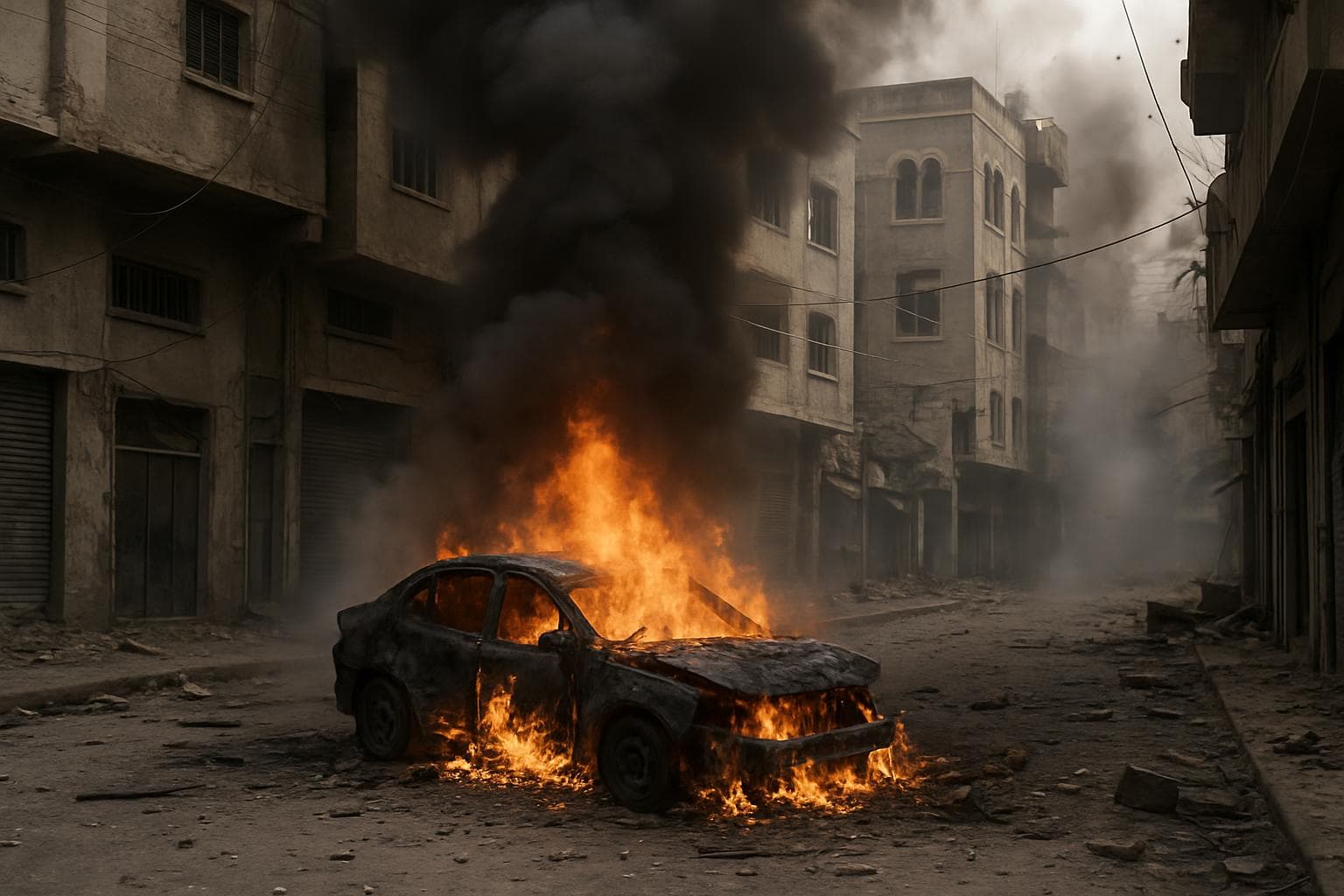
In a significant escalation of the ongoing Israel-Hamas conflict, Israeli forces announced the targeted killing of Raed Saad, a senior Hamas commander, in a strike on a vehicle in Gaza City on Saturday. The operation, confirmed by the Israeli military and security agency Shin Bet, resulted in the deaths of four individuals and injuries to at least 25 others, according to Gaza health authorities.
Background and Context
Raed Saad, identified as the head of weapons production for Hamas's military wing, the Qassam Brigades, was a pivotal figure in the group's operations. He played a crucial role in the October 7 attacks on Israeli communities, which resulted in the deaths of 1,200 people and the capture of 251 hostages. Saad's elimination marks the most significant assassination of a Hamas leader since the ceasefire agreement took effect on October 10.
Details of the Strike
The strike, which took place on the Palestinian-controlled side of the Yellow Line dividing Gaza, also claimed the lives of Saad's aide and another lower-ranking official. Israeli Prime Minister Benjamin Netanyahu and Defense Minister Israel Katz stated that the operation was in response to a Hamas explosive device that had injured Israeli soldiers earlier that day. Saad was described as "one of the architects" of the October 7 attack, and his death is seen as a critical blow to Hamas's military capabilities.
Ongoing Tensions and Ceasefire Challenges
Despite the ceasefire, violence has persisted in the region. Since the truce, Israeli forces have reportedly killed at least 386 Palestinians in Gaza, while three Israeli soldiers have died in ongoing skirmishes. The ceasefire, part of a broader peace plan proposed by former U.S. President Donald Trump, aims to disarm Hamas and establish a transitional governance structure in Gaza. However, the recent strike underscores the fragile nature of the ceasefire and the complexities involved in achieving lasting peace.
WHAT THIS MIGHT MEAN
The targeted killing of Raed Saad could lead to further escalations in the Israel-Hamas conflict, potentially undermining the current ceasefire. As tensions remain high, the international community may need to intensify diplomatic efforts to prevent a resurgence of violence. The success of the proposed peace plan hinges on the ability to maintain stability and address the underlying issues fueling the conflict. Experts suggest that without significant progress in disarmament and governance reforms, the region may continue to experience sporadic violence and instability.
Related Articles

Middle East Conflict Drives UK Energy Prices to New Highs

UK Faces Dilemmas Amid Iran Conflict and China Spying Allegations
US and Israel Intensify Military Campaign as Iran's Capabilities Dwindle

Senate Blocks Resolution to Limit Trump's Military Actions in Iran
Iran Postpones Khamenei Funeral Amid Escalating US-Israeli Strikes

Tech Giants Pledge to Cover AI Data Center Energy Costs Amid Rising Electricity Concerns
Israel Targets Senior Hamas Commander in Gaza City Strike
In This Article
 James Okoro| Published
 HIGHLIGHTS
- Israel claims to have killed senior Hamas commander Raed Saad in a Gaza City strike, targeting his vehicle.
- The attack resulted in four deaths and at least 25 injuries, according to Gaza health authorities.
- Raed Saad was a key figure in Hamas's military operations and was involved in the October 7 attacks on Israel.
- The strike occurred amid ongoing tensions despite a ceasefire agreement in place since October 10.
- The incident highlights the fragile nature of the current ceasefire and the challenges in implementing a lasting peace plan.
In a significant escalation of the ongoing Israel-Hamas conflict, Israeli forces announced the targeted killing of Raed Saad, a senior Hamas commander, in a strike on a vehicle in Gaza City on Saturday. The operation, confirmed by the Israeli military and security agency Shin Bet, resulted in the deaths of four individuals and injuries to at least 25 others, according to Gaza health authorities.
Background and Context
Raed Saad, identified as the head of weapons production for Hamas's military wing, the Qassam Brigades, was a pivotal figure in the group's operations. He played a crucial role in the October 7 attacks on Israeli communities, which resulted in the deaths of 1,200 people and the capture of 251 hostages. Saad's elimination marks the most significant assassination of a Hamas leader since the ceasefire agreement took effect on October 10.
Details of the Strike
The strike, which took place on the Palestinian-controlled side of the Yellow Line dividing Gaza, also claimed the lives of Saad's aide and another lower-ranking official. Israeli Prime Minister Benjamin Netanyahu and Defense Minister Israel Katz stated that the operation was in response to a Hamas explosive device that had injured Israeli soldiers earlier that day. Saad was described as "one of the architects" of the October 7 attack, and his death is seen as a critical blow to Hamas's military capabilities.
Ongoing Tensions and Ceasefire Challenges
Despite the ceasefire, violence has persisted in the region. Since the truce, Israeli forces have reportedly killed at least 386 Palestinians in Gaza, while three Israeli soldiers have died in ongoing skirmishes. The ceasefire, part of a broader peace plan proposed by former U.S. President Donald Trump, aims to disarm Hamas and establish a transitional governance structure in Gaza. However, the recent strike underscores the fragile nature of the ceasefire and the complexities involved in achieving lasting peace.
WHAT THIS MIGHT MEAN
The targeted killing of Raed Saad could lead to further escalations in the Israel-Hamas conflict, potentially undermining the current ceasefire. As tensions remain high, the international community may need to intensify diplomatic efforts to prevent a resurgence of violence. The success of the proposed peace plan hinges on the ability to maintain stability and address the underlying issues fueling the conflict. Experts suggest that without significant progress in disarmament and governance reforms, the region may continue to experience sporadic violence and instability.
Related Articles
Middle East Conflict Drives UK Energy Prices to New Highs
UK Faces Dilemmas Amid Iran Conflict and China Spying Allegations
US and Israel Intensify Military Campaign as Iran's Capabilities Dwindle
Senate Blocks Resolution to Limit Trump's Military Actions in Iran
Iran Postpones Khamenei Funeral Amid Escalating US-Israeli Strikes
Tech Giants Pledge to Cover AI Data Center Energy Costs Amid Rising Electricity Concerns