
Israel Strikes Yemen's Capital in Response to Houthi Cluster Bomb Attack
In This Article
HIGHLIGHTS
- Israel launched airstrikes on Houthi targets in Yemen's capital, Sanaa, following a Houthi missile attack using cluster munitions.
- The Israeli operation targeted key sites, resulting in six deaths and 86 injuries, according to Houthi officials.
- The Houthis, backed by Iran, have been launching missiles at Israel since the Gaza conflict began in October 2023.
- Israeli Prime Minister Benjamin Netanyahu emphasized Israel's retaliatory stance, stating, "Anyone who attacks us - we attack them."
- The use of cluster munitions by the Houthis marks a significant escalation, as these weapons are banned by over 100 countries.
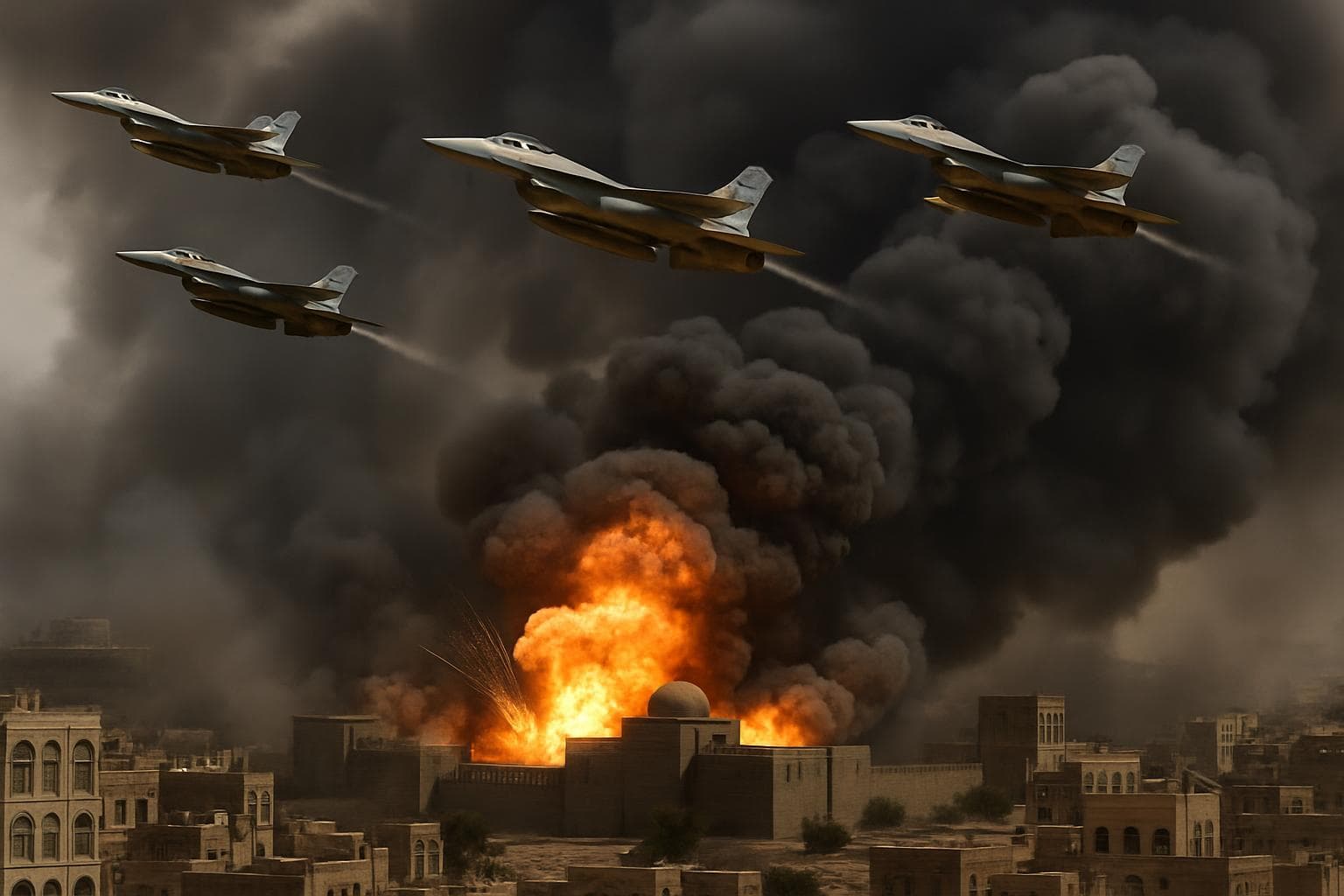
In a significant escalation of Middle East tensions, Israel has conducted airstrikes on Houthi targets in Yemen's capital, Sanaa, following a missile attack by the Iran-backed group that reportedly involved cluster munitions. The Israeli military confirmed that the operation targeted a military complex, a fuel depot, and power stations, resulting in six fatalities and 86 injuries, according to Houthi health officials.
The Israeli Defense Forces (IDF) stated that the Houthi missile attack on Friday marked the first use of cluster bombs by the group in the ongoing conflict with Israel. These munitions, which disperse numerous bomblets over a wide area, are banned by more than 100 countries due to their long-term danger to civilians. One such bomblet landed in the yard of a home in Ginaton, Israel, causing minor damage.
Prime Minister Benjamin Netanyahu, overseeing the retaliatory strikes alongside Defense Minister Israel Katz, reiterated Israel's stance on defense. "Anyone who attacks us - we attack them," Netanyahu declared, emphasizing the nation's resolve.
The Houthis, who have controlled much of north-western Yemen since 2014, have been launching missiles at Israel and attacking commercial ships in the Red Sea since the outbreak of the Gaza war in October 2023. They claim these actions are in solidarity with Palestinians. Abdul Qader al-Murtada, a senior Houthi official, vowed continued support for Gaza, stating, "We will not abandon our brothers in Gaza, whatever the sacrifices."
WHAT THIS MIGHT MEAN
The recent use of cluster munitions by the Houthis could lead to increased international scrutiny and pressure on the group and their Iranian backers. Israel's firm retaliatory stance, as articulated by Prime Minister Netanyahu, suggests that further Houthi attacks could provoke even more severe responses, potentially escalating the conflict.
The ongoing hostilities between Israel and the Houthis are part of a broader regional tension exacerbated by the Gaza conflict. As both sides continue to engage in military actions, the risk of a wider regional conflict looms, drawing in more international actors and complicating diplomatic efforts for peace.
Experts suggest that unless diplomatic channels are opened to address the underlying issues, the cycle of retaliation could continue, further destabilizing the already volatile Middle East region.
Related Articles

Middle East Conflict Drives UK Energy Prices to New Highs
US and Israel Intensify Military Campaign as Iran's Capabilities Dwindle
Iran Postpones Khamenei Funeral Amid Escalating US-Israeli Strikes

US Ambassador's Biblical Land Remarks Spark Outcry from Arab Nations
Iranian Students Lead Major Protests Amid Rising US-Iran Tensions

UK Faces Dilemmas Amid Iran Conflict and China Spying Allegations
Israel Strikes Yemen's Capital in Response to Houthi Cluster Bomb Attack
In This Article
 James Okoro| Published
 HIGHLIGHTS
- Israel launched airstrikes on Houthi targets in Yemen's capital, Sanaa, following a Houthi missile attack using cluster munitions.
- The Israeli operation targeted key sites, resulting in six deaths and 86 injuries, according to Houthi officials.
- The Houthis, backed by Iran, have been launching missiles at Israel since the Gaza conflict began in October 2023.
- Israeli Prime Minister Benjamin Netanyahu emphasized Israel's retaliatory stance, stating, "Anyone who attacks us - we attack them."
- The use of cluster munitions by the Houthis marks a significant escalation, as these weapons are banned by over 100 countries.
In a significant escalation of Middle East tensions, Israel has conducted airstrikes on Houthi targets in Yemen's capital, Sanaa, following a missile attack by the Iran-backed group that reportedly involved cluster munitions. The Israeli military confirmed that the operation targeted a military complex, a fuel depot, and power stations, resulting in six fatalities and 86 injuries, according to Houthi health officials.
The Israeli Defense Forces (IDF) stated that the Houthi missile attack on Friday marked the first use of cluster bombs by the group in the ongoing conflict with Israel. These munitions, which disperse numerous bomblets over a wide area, are banned by more than 100 countries due to their long-term danger to civilians. One such bomblet landed in the yard of a home in Ginaton, Israel, causing minor damage.
Prime Minister Benjamin Netanyahu, overseeing the retaliatory strikes alongside Defense Minister Israel Katz, reiterated Israel's stance on defense. "Anyone who attacks us - we attack them," Netanyahu declared, emphasizing the nation's resolve.
The Houthis, who have controlled much of north-western Yemen since 2014, have been launching missiles at Israel and attacking commercial ships in the Red Sea since the outbreak of the Gaza war in October 2023. They claim these actions are in solidarity with Palestinians. Abdul Qader al-Murtada, a senior Houthi official, vowed continued support for Gaza, stating, "We will not abandon our brothers in Gaza, whatever the sacrifices."
WHAT THIS MIGHT MEAN
The recent use of cluster munitions by the Houthis could lead to increased international scrutiny and pressure on the group and their Iranian backers. Israel's firm retaliatory stance, as articulated by Prime Minister Netanyahu, suggests that further Houthi attacks could provoke even more severe responses, potentially escalating the conflict.
The ongoing hostilities between Israel and the Houthis are part of a broader regional tension exacerbated by the Gaza conflict. As both sides continue to engage in military actions, the risk of a wider regional conflict looms, drawing in more international actors and complicating diplomatic efforts for peace.
Experts suggest that unless diplomatic channels are opened to address the underlying issues, the cycle of retaliation could continue, further destabilizing the already volatile Middle East region.
Related Articles
Middle East Conflict Drives UK Energy Prices to New Highs
US and Israel Intensify Military Campaign as Iran's Capabilities Dwindle
Iran Postpones Khamenei Funeral Amid Escalating US-Israeli Strikes
US Ambassador's Biblical Land Remarks Spark Outcry from Arab Nations
Iranian Students Lead Major Protests Amid Rising US-Iran Tensions
UK Faces Dilemmas Amid Iran Conflict and China Spying Allegations