
Israeli Airstrike in Gaza Kills Three Journalists Amid Ceasefire Tensions
In This Article
HIGHLIGHTS
- An Israeli airstrike in Gaza killed three Palestinian journalists, identified as Mohammed Salah Qashta, Anas Ghneim, and Abdul Raouf Shaat, while they were on a humanitarian mission.
- The strike targeted a vehicle marked with the Egyptian Relief Committee's logo, which was reportedly known to the Israeli military.
- The Palestinian Journalists Syndicate condemned the attack as a war crime and an attempt to silence Palestinian voices.
- At least 466 Palestinians have died in Gaza since the ceasefire began in October, with ongoing violence undermining the truce.
- The Committee to Protect Journalists and other media organizations have called for a full investigation into the deaths of the journalists.
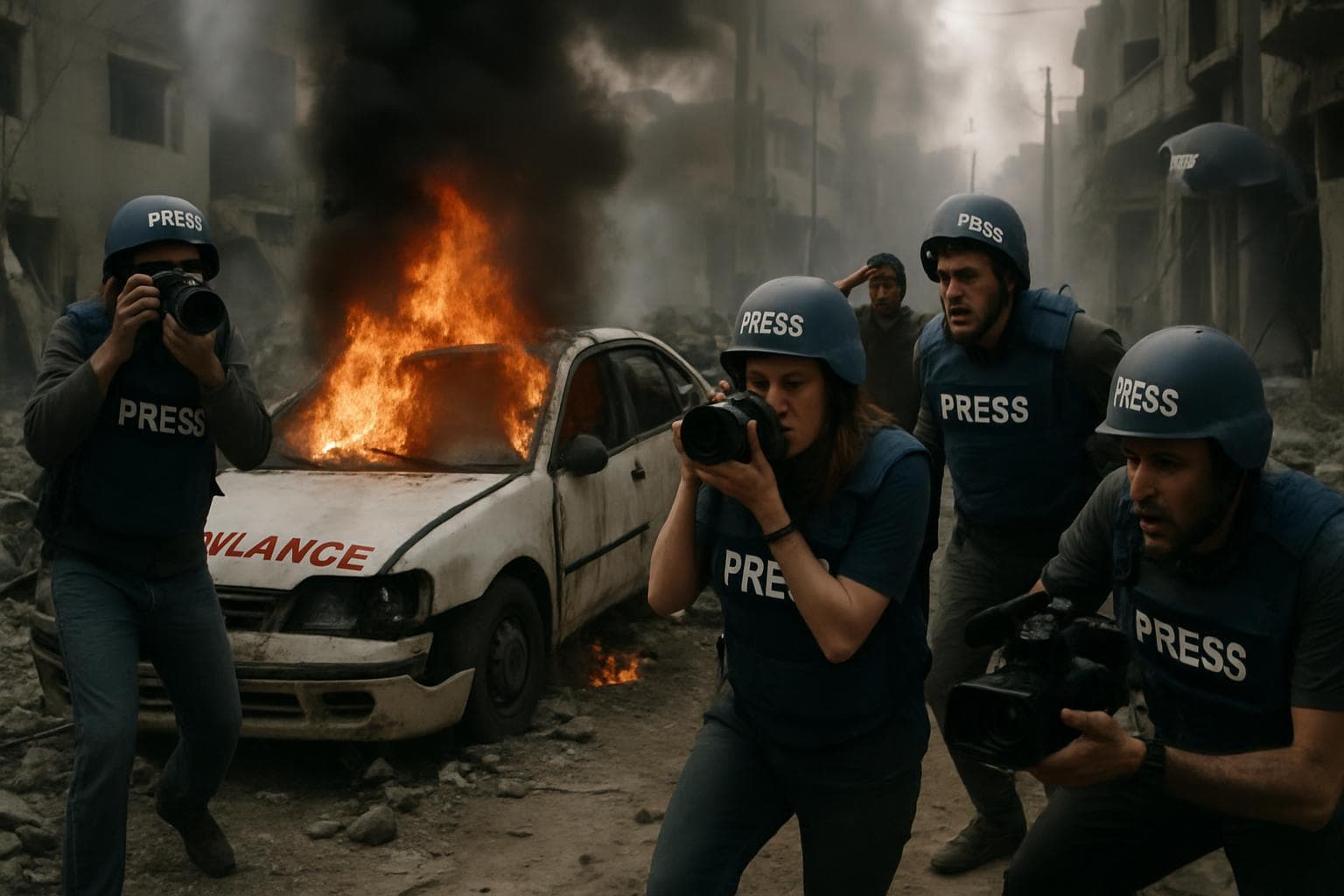
In a tragic escalation of violence in Gaza, an Israeli airstrike claimed the lives of three Palestinian journalists on Wednesday. The journalists, Mohammed Salah Qashta, Anas Ghneim, and Abdul Raouf Shaat, were reportedly on a humanitarian mission to document the conditions in displacement camps when their vehicle was struck in the al-Zahra area. The vehicle, marked with the logo of the Egyptian Relief Committee, was known to the Israeli military, according to committee spokesperson Mohammed Mansour.
The Israeli Defense Forces (IDF) stated that the strike targeted "several suspects" operating a Hamas-affiliated drone that posed a threat to its troops. However, the incident has sparked outrage among media organizations and human rights groups. The Palestinian Journalists Syndicate labeled the attack a war crime, accusing Israel of attempting to silence Palestinian voices and obstruct the dissemination of information.
The deaths of the journalists have drawn widespread condemnation. The Committee to Protect Journalists (CPJ) expressed its dismay, emphasizing Israel's obligation under international law to protect journalists. "Israel, which possesses advanced technology capable of identifying its targets, must ensure the safety of media personnel," said CPJ's regional director, Sara Qudah.
The violence on Wednesday also resulted in the deaths of eight other Palestinians, including two children, as Israeli artillery and gunfire continued to impact various parts of Gaza. The ongoing hostilities have severely undermined the ceasefire agreement that took effect in October, with at least 466 Palestinians killed since then, according to health authorities.
The international community, including major news outlets, relies heavily on local journalists in Gaza due to restrictions on foreign media access. The loss of these journalists not only highlights the dangers faced by media workers in conflict zones but also raises concerns about the broader implications for media freedom and the right to information.
WHAT THIS MIGHT MEAN
The deaths of the three journalists could lead to increased scrutiny of Israel's military operations in Gaza, particularly concerning the targeting of media personnel. Calls for an independent investigation into the incident may intensify, potentially involving international human rights organizations and the United Nations.
The ongoing violence threatens to unravel the fragile ceasefire, with both sides accusing each other of violations. If the ceasefire collapses, it could lead to a renewed cycle of violence, further endangering civilians and complicating humanitarian efforts in the region.
The international community may face mounting pressure to intervene diplomatically to prevent further escalation and to ensure the protection of journalists and civilians in conflict zones. The situation underscores the urgent need for a sustainable resolution to the Gaza conflict that addresses the underlying issues and ensures lasting peace.
Related Articles
Trump's Board of Peace Pledges $7 Billion for Gaza Amidst International Skepticism
Intensified US-Israel Strikes on Iran Spark Global Outcry
Palestinian-American Teen Killed by Israeli Settlers in West Bank Sparks Calls for Accountability
US-Iran Tensions Escalate Amid Military Buildup and Diplomatic Deadlock
US and Israel Intensify Military Campaign as Iran's Capabilities Dwindle

Senate Blocks Resolution to Limit Trump's Military Actions in Iran
Israeli Airstrike in Gaza Kills Three Journalists Amid Ceasefire Tensions
In This Article
 Ethan Brooks| Published
 HIGHLIGHTS
- An Israeli airstrike in Gaza killed three Palestinian journalists, identified as Mohammed Salah Qashta, Anas Ghneim, and Abdul Raouf Shaat, while they were on a humanitarian mission.
- The strike targeted a vehicle marked with the Egyptian Relief Committee's logo, which was reportedly known to the Israeli military.
- The Palestinian Journalists Syndicate condemned the attack as a war crime and an attempt to silence Palestinian voices.
- At least 466 Palestinians have died in Gaza since the ceasefire began in October, with ongoing violence undermining the truce.
- The Committee to Protect Journalists and other media organizations have called for a full investigation into the deaths of the journalists.
In a tragic escalation of violence in Gaza, an Israeli airstrike claimed the lives of three Palestinian journalists on Wednesday. The journalists, Mohammed Salah Qashta, Anas Ghneim, and Abdul Raouf Shaat, were reportedly on a humanitarian mission to document the conditions in displacement camps when their vehicle was struck in the al-Zahra area. The vehicle, marked with the logo of the Egyptian Relief Committee, was known to the Israeli military, according to committee spokesperson Mohammed Mansour.
The Israeli Defense Forces (IDF) stated that the strike targeted "several suspects" operating a Hamas-affiliated drone that posed a threat to its troops. However, the incident has sparked outrage among media organizations and human rights groups. The Palestinian Journalists Syndicate labeled the attack a war crime, accusing Israel of attempting to silence Palestinian voices and obstruct the dissemination of information.
The deaths of the journalists have drawn widespread condemnation. The Committee to Protect Journalists (CPJ) expressed its dismay, emphasizing Israel's obligation under international law to protect journalists. "Israel, which possesses advanced technology capable of identifying its targets, must ensure the safety of media personnel," said CPJ's regional director, Sara Qudah.
The violence on Wednesday also resulted in the deaths of eight other Palestinians, including two children, as Israeli artillery and gunfire continued to impact various parts of Gaza. The ongoing hostilities have severely undermined the ceasefire agreement that took effect in October, with at least 466 Palestinians killed since then, according to health authorities.
The international community, including major news outlets, relies heavily on local journalists in Gaza due to restrictions on foreign media access. The loss of these journalists not only highlights the dangers faced by media workers in conflict zones but also raises concerns about the broader implications for media freedom and the right to information.
WHAT THIS MIGHT MEAN
The deaths of the three journalists could lead to increased scrutiny of Israel's military operations in Gaza, particularly concerning the targeting of media personnel. Calls for an independent investigation into the incident may intensify, potentially involving international human rights organizations and the United Nations.
The ongoing violence threatens to unravel the fragile ceasefire, with both sides accusing each other of violations. If the ceasefire collapses, it could lead to a renewed cycle of violence, further endangering civilians and complicating humanitarian efforts in the region.
The international community may face mounting pressure to intervene diplomatically to prevent further escalation and to ensure the protection of journalists and civilians in conflict zones. The situation underscores the urgent need for a sustainable resolution to the Gaza conflict that addresses the underlying issues and ensures lasting peace.
Related Articles
Trump's Board of Peace Pledges $7 Billion for Gaza Amidst International Skepticism
Intensified US-Israel Strikes on Iran Spark Global Outcry
Palestinian-American Teen Killed by Israeli Settlers in West Bank Sparks Calls for Accountability
US-Iran Tensions Escalate Amid Military Buildup and Diplomatic Deadlock
US and Israel Intensify Military Campaign as Iran's Capabilities Dwindle
Senate Blocks Resolution to Limit Trump's Military Actions in Iran