
Israeli Airstrikes in Syria Escalate Tensions Amid Security Talks
In This Article
HIGHLIGHTS
- Israeli airstrikes near Damascus reportedly killed six Syrian soldiers, escalating tensions in the region.
- The strikes targeted a former air defense base, previously used by Iranian militias, amid ongoing security talks between Israel and Syria.
- Syria condemned the attacks as violations of international law and breaches of its sovereignty.
- Israel's Defense Minister stated that military operations are ongoing to ensure national security.
- High-level security discussions are underway to establish a demilitarized zone and protect the Druze community in southern Syria.
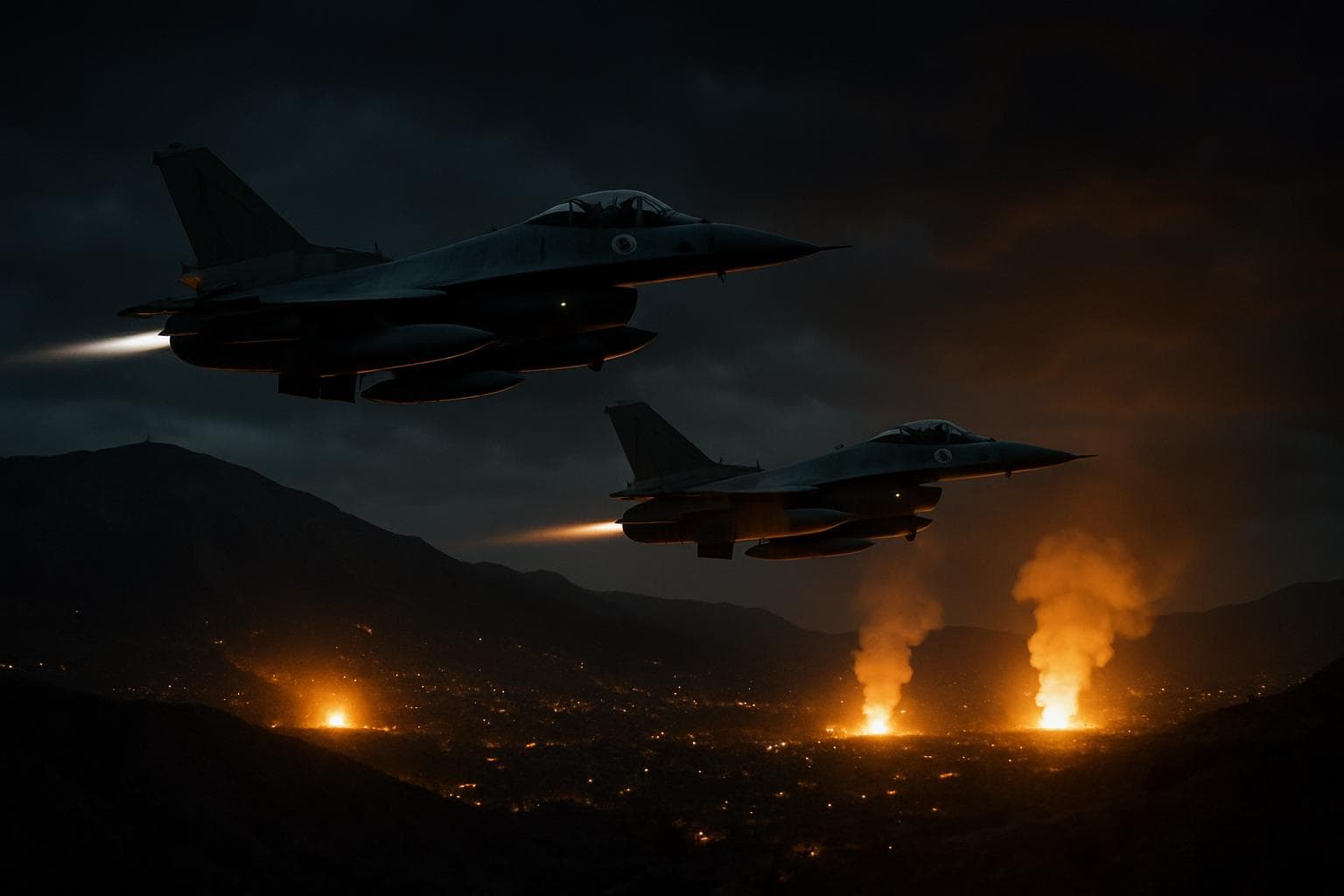
Israeli airstrikes near Damascus have intensified regional tensions, with reports indicating that six Syrian soldiers were killed in the latest series of attacks. The strikes, which occurred on Tuesday and Wednesday, targeted a former air defense base near al-Kiswah, a site previously utilized by Iranian militias during the rule of former President Bashar al-Assad.
The Syrian government has condemned the attacks, labeling them as violations of international law and breaches of sovereignty. Syrian state media reported that the soldiers were dismantling Israeli surveillance devices when they were killed. The Israeli military, however, has not commented on these reports.
Military Operations and Security Concerns
Israel's Defense Minister, Israel Katz, emphasized the ongoing nature of military operations, stating on social media that forces are active "in all combat zones day and night for the security of Israel." This year alone, Israel has conducted 95 attacks in Syria, according to the Syrian Observatory for Human Rights, a UK-based monitor.
The recent airstrikes coincide with high-level security discussions between Israeli and Syrian officials. These talks, which have included meetings in Paris and Azerbaijan, aim to establish a security agreement to halt Israeli aggression and ensure the protection of the Druze community in southern Syria.
Diplomatic Efforts and Regional Implications
Israeli Prime Minister Benjamin Netanyahu has acknowledged these discussions, noting efforts to create a demilitarized zone extending from the Golan Heights to Sweida. He also highlighted the importance of establishing a humanitarian corridor to facilitate aid delivery.
Despite these diplomatic efforts, the situation remains volatile. The strikes have occurred amid ongoing sectarian tensions in the region, particularly concerning the Druze, a religious minority with a significant presence in both Syria and Israel.
WHAT THIS MIGHT MEAN
The continuation of Israeli airstrikes in Syria could further strain relations between the two countries, potentially derailing ongoing security talks. If a security agreement is not reached, the risk of broader conflict remains high, particularly given the strategic importance of the areas targeted by Israel.
The protection of the Druze community is a critical aspect of these discussions, and failure to address their security could exacerbate sectarian tensions. Experts suggest that successful negotiations could lead to a reduction in hostilities and a more stable regional environment.
However, the complex geopolitical landscape, involving multiple stakeholders with competing interests, poses significant challenges to achieving lasting peace. The international community's role in mediating these discussions will be crucial in determining the outcome of this ongoing conflict.
Related Articles

Hamas Leadership Vote Amidst Critical Crossroads for the Movement

Trump's Board of Peace Pledges $7 Billion for Gaza Amidst International Skepticism

US Ambassador's Biblical Land Remarks Spark Outcry from Arab Nations
Israeli Airstrikes in Lebanon's Bekaa Valley Leave 10 Dead Amid Rising Tensions

Middle East Conflict Drives UK Energy Prices to New Highs

US and Israel Intensify Military Campaign as Iran's Capabilities Dwindle
Israeli Airstrikes in Syria Escalate Tensions Amid Security Talks
In This Article
 James Okoro| Published
 HIGHLIGHTS
- Israeli airstrikes near Damascus reportedly killed six Syrian soldiers, escalating tensions in the region.
- The strikes targeted a former air defense base, previously used by Iranian militias, amid ongoing security talks between Israel and Syria.
- Syria condemned the attacks as violations of international law and breaches of its sovereignty.
- Israel's Defense Minister stated that military operations are ongoing to ensure national security.
- High-level security discussions are underway to establish a demilitarized zone and protect the Druze community in southern Syria.
Israeli airstrikes near Damascus have intensified regional tensions, with reports indicating that six Syrian soldiers were killed in the latest series of attacks. The strikes, which occurred on Tuesday and Wednesday, targeted a former air defense base near al-Kiswah, a site previously utilized by Iranian militias during the rule of former President Bashar al-Assad.
The Syrian government has condemned the attacks, labeling them as violations of international law and breaches of sovereignty. Syrian state media reported that the soldiers were dismantling Israeli surveillance devices when they were killed. The Israeli military, however, has not commented on these reports.
Military Operations and Security Concerns
Israel's Defense Minister, Israel Katz, emphasized the ongoing nature of military operations, stating on social media that forces are active "in all combat zones day and night for the security of Israel." This year alone, Israel has conducted 95 attacks in Syria, according to the Syrian Observatory for Human Rights, a UK-based monitor.
The recent airstrikes coincide with high-level security discussions between Israeli and Syrian officials. These talks, which have included meetings in Paris and Azerbaijan, aim to establish a security agreement to halt Israeli aggression and ensure the protection of the Druze community in southern Syria.
Diplomatic Efforts and Regional Implications
Israeli Prime Minister Benjamin Netanyahu has acknowledged these discussions, noting efforts to create a demilitarized zone extending from the Golan Heights to Sweida. He also highlighted the importance of establishing a humanitarian corridor to facilitate aid delivery.
Despite these diplomatic efforts, the situation remains volatile. The strikes have occurred amid ongoing sectarian tensions in the region, particularly concerning the Druze, a religious minority with a significant presence in both Syria and Israel.
WHAT THIS MIGHT MEAN
The continuation of Israeli airstrikes in Syria could further strain relations between the two countries, potentially derailing ongoing security talks. If a security agreement is not reached, the risk of broader conflict remains high, particularly given the strategic importance of the areas targeted by Israel.
The protection of the Druze community is a critical aspect of these discussions, and failure to address their security could exacerbate sectarian tensions. Experts suggest that successful negotiations could lead to a reduction in hostilities and a more stable regional environment.
However, the complex geopolitical landscape, involving multiple stakeholders with competing interests, poses significant challenges to achieving lasting peace. The international community's role in mediating these discussions will be crucial in determining the outcome of this ongoing conflict.
Related Articles
Hamas Leadership Vote Amidst Critical Crossroads for the Movement
Trump's Board of Peace Pledges $7 Billion for Gaza Amidst International Skepticism
US Ambassador's Biblical Land Remarks Spark Outcry from Arab Nations
Israeli Airstrikes in Lebanon's Bekaa Valley Leave 10 Dead Amid Rising Tensions
Middle East Conflict Drives UK Energy Prices to New Highs
US and Israel Intensify Military Campaign as Iran's Capabilities Dwindle