
Tensions Escalate as Israeli Gunfire Kills Dozens Near Gaza Aid Sites
In This Article
HIGHLIGHTS
- At least 32 Palestinians were killed by Israeli gunfire near aid distribution centers in southern Gaza, according to the Hamas-run health ministry.
- The Israeli Defense Forces (IDF) claimed they fired warning shots at "suspects" approaching troops before the aid sites opened.
- The Gaza Humanitarian Foundation (GHF) denied any incidents occurred near their sites, attributing the violence to earlier military activity.
- Witnesses described the shootings as indiscriminate, with many victims being young men and children.
- The UN reported a significant rise in malnutrition among children in Gaza due to restricted food supplies.
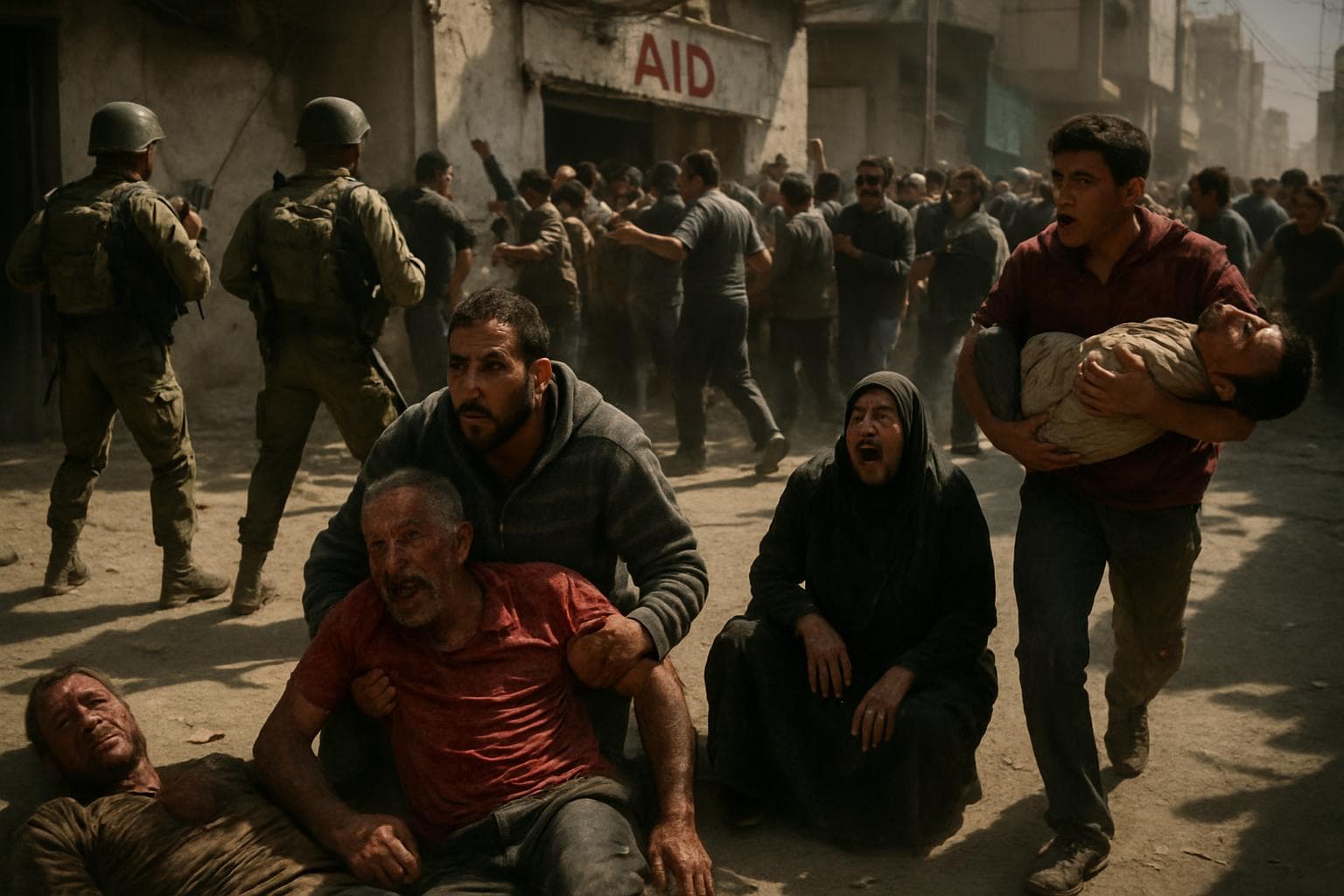
In a tragic escalation of violence, at least 32 Palestinians were killed and over 100 injured by Israeli gunfire near aid distribution centers in southern Gaza, according to the Hamas-run health ministry. The incident occurred on Saturday morning near Khan Younis and Rafah, where crowds had gathered in search of food. The Gaza Humanitarian Foundation (GHF), which operates these centers, denied any incidents at their sites, attributing the violence to earlier military activity.
Eyewitness Accounts and Military Response
Witnesses on the ground described the scene as chaotic and deadly. "It was a massacre," said Mahmoud Mokeimar, who was among the crowds. "The occupation opened fire at us indiscriminately." Many of the victims were reportedly young men and children, with bodies taken to Nasser hospital in Khan Younis. Dr. Atef al-Hout, the hospital's director, warned that the death toll could rise due to the severity of injuries and lack of medical resources.
The Israeli Defense Forces (IDF) stated that they fired warning shots at "suspects" who approached their troops, emphasizing that the incident occurred before the aid sites were operational. The GHF, backed by the US and Israel, reiterated that their centers were not active at the time of the shootings and urged aid seekers to avoid traveling to their sites during early morning hours.
Humanitarian Concerns and International Reactions
The United Nations has expressed grave concerns over the humanitarian situation in Gaza, noting a doubling of acutely malnourished children since Israel began restricting food supplies in March. Despite the establishment of the GHF, significant amounts of aid remain blocked at the border, exacerbating the crisis.
The incident has drawn international attention, with calls for accountability and a reassessment of aid distribution methods in conflict zones. The UN has refused to cooperate with the GHF, citing ethical concerns and a lack of evidence supporting claims that Hamas diverts aid.
WHAT THIS MIGHT MEAN
The recent violence near Gaza's aid distribution centers underscores the fragile nature of the Israeli-Palestinian conflict and the dire humanitarian situation in the region. As ceasefire talks continue in Doha, there is hope for a temporary halt to hostilities, but the path to a lasting peace remains uncertain. Experts suggest that increased international pressure and a reevaluation of aid distribution strategies could play a crucial role in alleviating the humanitarian crisis. However, without significant political will from both sides, the cycle of violence and suffering is likely to persist.
Related Articles
Intensified US-Israel Strikes on Iran Spark Global Outcry
Iran Postpones Khamenei Funeral Amid Escalating US-Israeli Strikes
Canada Calls for De-escalation Amid US-Israel Strikes on Iran

US and Israel Intensify Military Campaign as Iran's Capabilities Dwindle
Senate Blocks Resolution to Limit Trump's Military Actions in Iran

US-Iran Tensions Escalate Amid Renewed Nuclear Talks and Protests
Tensions Escalate as Israeli Gunfire Kills Dozens Near Gaza Aid Sites
In This Article
 Ethan Brooks| Published
 HIGHLIGHTS
- At least 32 Palestinians were killed by Israeli gunfire near aid distribution centers in southern Gaza, according to the Hamas-run health ministry.
- The Israeli Defense Forces (IDF) claimed they fired warning shots at "suspects" approaching troops before the aid sites opened.
- The Gaza Humanitarian Foundation (GHF) denied any incidents occurred near their sites, attributing the violence to earlier military activity.
- Witnesses described the shootings as indiscriminate, with many victims being young men and children.
- The UN reported a significant rise in malnutrition among children in Gaza due to restricted food supplies.
In a tragic escalation of violence, at least 32 Palestinians were killed and over 100 injured by Israeli gunfire near aid distribution centers in southern Gaza, according to the Hamas-run health ministry. The incident occurred on Saturday morning near Khan Younis and Rafah, where crowds had gathered in search of food. The Gaza Humanitarian Foundation (GHF), which operates these centers, denied any incidents at their sites, attributing the violence to earlier military activity.
Eyewitness Accounts and Military Response
Witnesses on the ground described the scene as chaotic and deadly. "It was a massacre," said Mahmoud Mokeimar, who was among the crowds. "The occupation opened fire at us indiscriminately." Many of the victims were reportedly young men and children, with bodies taken to Nasser hospital in Khan Younis. Dr. Atef al-Hout, the hospital's director, warned that the death toll could rise due to the severity of injuries and lack of medical resources.
The Israeli Defense Forces (IDF) stated that they fired warning shots at "suspects" who approached their troops, emphasizing that the incident occurred before the aid sites were operational. The GHF, backed by the US and Israel, reiterated that their centers were not active at the time of the shootings and urged aid seekers to avoid traveling to their sites during early morning hours.
Humanitarian Concerns and International Reactions
The United Nations has expressed grave concerns over the humanitarian situation in Gaza, noting a doubling of acutely malnourished children since Israel began restricting food supplies in March. Despite the establishment of the GHF, significant amounts of aid remain blocked at the border, exacerbating the crisis.
The incident has drawn international attention, with calls for accountability and a reassessment of aid distribution methods in conflict zones. The UN has refused to cooperate with the GHF, citing ethical concerns and a lack of evidence supporting claims that Hamas diverts aid.
WHAT THIS MIGHT MEAN
The recent violence near Gaza's aid distribution centers underscores the fragile nature of the Israeli-Palestinian conflict and the dire humanitarian situation in the region. As ceasefire talks continue in Doha, there is hope for a temporary halt to hostilities, but the path to a lasting peace remains uncertain. Experts suggest that increased international pressure and a reevaluation of aid distribution strategies could play a crucial role in alleviating the humanitarian crisis. However, without significant political will from both sides, the cycle of violence and suffering is likely to persist.
Related Articles
Intensified US-Israel Strikes on Iran Spark Global Outcry
Iran Postpones Khamenei Funeral Amid Escalating US-Israeli Strikes
Canada Calls for De-escalation Amid US-Israel Strikes on Iran
US and Israel Intensify Military Campaign as Iran's Capabilities Dwindle
Senate Blocks Resolution to Limit Trump's Military Actions in Iran
US-Iran Tensions Escalate Amid Renewed Nuclear Talks and Protests