
Japan and China Clash Over Radar Lock Incidents Near Okinawa
In This Article
HIGHLIGHTS
- Japan has protested after Chinese fighter jets locked radar on Japanese planes near the Okinawa islands, escalating tensions.
- The radar lock incidents occurred twice on Saturday, with no injuries or damage reported, according to Japan's defense ministry.
- Japan's Prime Minister Sanae Takaichi vowed a "calm and resolute" response, emphasizing enhanced surveillance of Chinese military activities.
- China rejected Japan's claims, accusing Tokyo of harassing its forces during a routine training exercise.
- The incident follows heightened tensions after Japan's comments on potential military involvement if China attacks Taiwan.
Tensions between Japan and China have intensified following allegations that Chinese fighter jets locked their radar on Japanese aircraft near the Okinawa islands. The incidents, which occurred on Saturday, have prompted a strong diplomatic protest from Japan, further straining relations between the two Asian powers.
Radar Lock Incidents Heighten Tensions
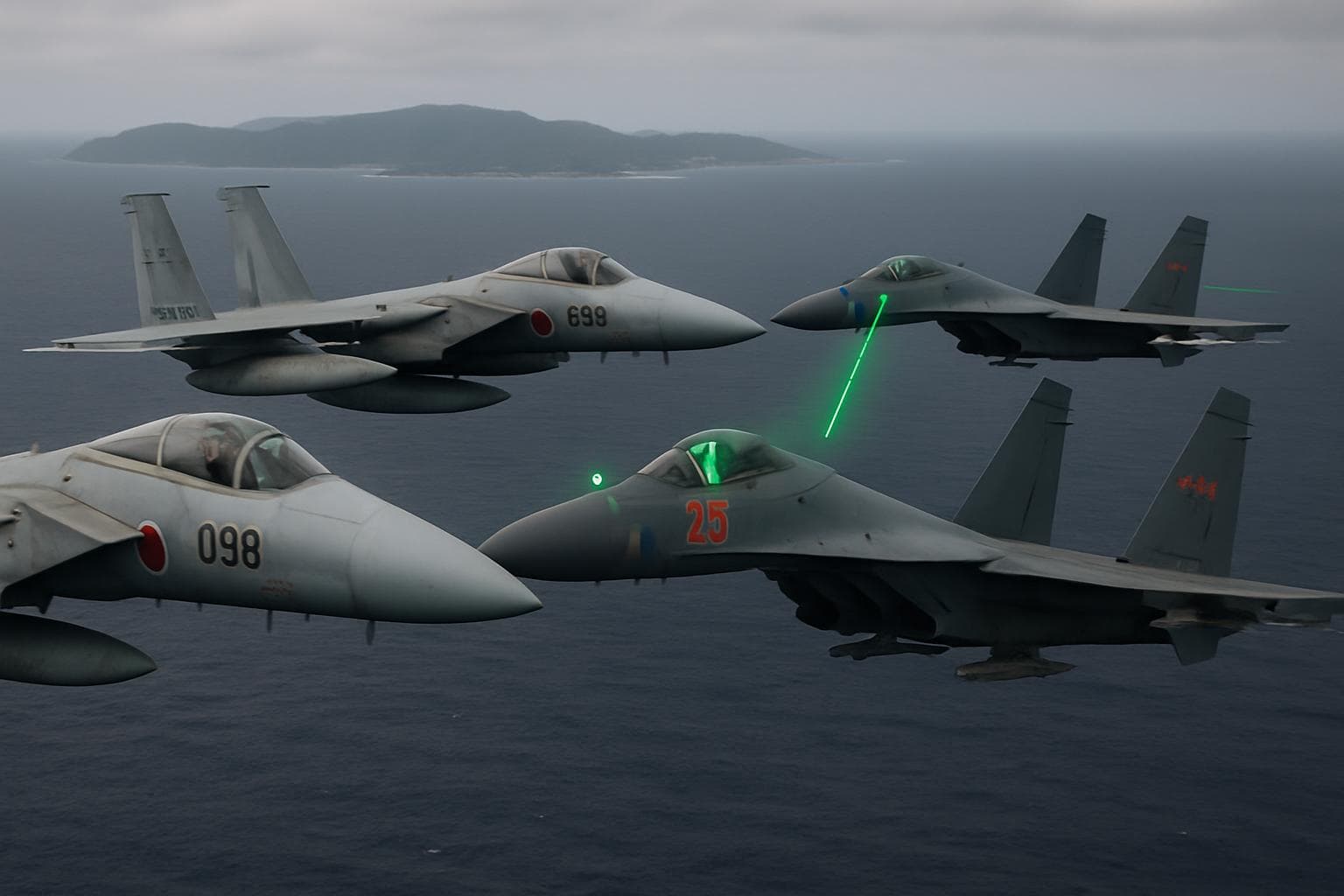
Japan's defense ministry reported that Chinese J-15 fighter jets, launched from the Liaoning aircraft carrier, directed their fire-control radar on Japanese F-15s twice on Saturday afternoon. The radar lock, considered a potential prelude to an attack, forced Japan to scramble its fighter jets in response. Although no injuries or damage were reported, the incidents have been described as "dangerous and extremely regrettable" by Japanese officials.
Diplomatic Fallout and Accusations
Prime Minister Sanae Takaichi has vowed to respond "calmly and resolutely," emphasizing the need for increased maritime and airspace surveillance. Japan's foreign ministry summoned China's ambassador to lodge a formal protest, while China dismissed the allegations as "completely inconsistent with the facts." Beijing accused Japan of harassing its forces during a routine training exercise, claiming that Japanese aircraft intruded into designated training zones.
Broader Context of Escalating Tensions
The radar lock incidents are the latest in a series of diplomatic disputes between Japan and China, exacerbated by recent comments from Prime Minister Takaichi. Her suggestion that Japan might intervene militarily if China attacks Taiwan has sparked outrage in Beijing. China views Taiwan as a breakaway province and has not ruled out the use of force to achieve reunification. The ongoing tensions have led to economic repercussions, with China advising its citizens against traveling to Japan and imposing bans on Japanese seafood imports.
WHAT THIS MIGHT MEAN
The radar lock incidents could further strain Japan-China relations, potentially leading to increased military posturing in the region. Japan's commitment to enhancing surveillance may provoke a similar response from China, escalating the risk of accidental confrontations. The situation also underscores the broader geopolitical tensions surrounding Taiwan, with Japan's potential involvement in a conflict raising concerns about regional stability. Experts suggest that diplomatic channels must remain open to prevent further escalation and to manage the complex dynamics between these two influential nations.
Related Articles
Japan Seizes Chinese Fishing Vessel Amid Rising Diplomatic Tensions

US Supreme Court Ruling Sparks Trade Uncertainty in Asia and Beyond
China Sets Lowest GDP Growth Target in Decades Amid Economic Challenges

UK Faces Dilemmas Amid Iran Conflict and China Spying Allegations

Trump's New Tariff Strategy Sparks Global Trade Uncertainty

Labour MP's Husband Arrested in UK-China Espionage Probe
Japan and China Clash Over Radar Lock Incidents Near Okinawa
In This Article
HIGHLIGHTS
- Japan has protested after Chinese fighter jets locked radar on Japanese planes near the Okinawa islands, escalating tensions.
- The radar lock incidents occurred twice on Saturday, with no injuries or damage reported, according to Japan's defense ministry.
- Japan's Prime Minister Sanae Takaichi vowed a "calm and resolute" response, emphasizing enhanced surveillance of Chinese military activities.
- China rejected Japan's claims, accusing Tokyo of harassing its forces during a routine training exercise.
- The incident follows heightened tensions after Japan's comments on potential military involvement if China attacks Taiwan.
Tensions between Japan and China have intensified following allegations that Chinese fighter jets locked their radar on Japanese aircraft near the Okinawa islands. The incidents, which occurred on Saturday, have prompted a strong diplomatic protest from Japan, further straining relations between the two Asian powers.
Radar Lock Incidents Heighten Tensions
Japan's defense ministry reported that Chinese J-15 fighter jets, launched from the Liaoning aircraft carrier, directed their fire-control radar on Japanese F-15s twice on Saturday afternoon. The radar lock, considered a potential prelude to an attack, forced Japan to scramble its fighter jets in response. Although no injuries or damage were reported, the incidents have been described as "dangerous and extremely regrettable" by Japanese officials.
Diplomatic Fallout and Accusations
Prime Minister Sanae Takaichi has vowed to respond "calmly and resolutely," emphasizing the need for increased maritime and airspace surveillance. Japan's foreign ministry summoned China's ambassador to lodge a formal protest, while China dismissed the allegations as "completely inconsistent with the facts." Beijing accused Japan of harassing its forces during a routine training exercise, claiming that Japanese aircraft intruded into designated training zones.
Broader Context of Escalating Tensions
The radar lock incidents are the latest in a series of diplomatic disputes between Japan and China, exacerbated by recent comments from Prime Minister Takaichi. Her suggestion that Japan might intervene militarily if China attacks Taiwan has sparked outrage in Beijing. China views Taiwan as a breakaway province and has not ruled out the use of force to achieve reunification. The ongoing tensions have led to economic repercussions, with China advising its citizens against traveling to Japan and imposing bans on Japanese seafood imports.
WHAT THIS MIGHT MEAN
The radar lock incidents could further strain Japan-China relations, potentially leading to increased military posturing in the region. Japan's commitment to enhancing surveillance may provoke a similar response from China, escalating the risk of accidental confrontations. The situation also underscores the broader geopolitical tensions surrounding Taiwan, with Japan's potential involvement in a conflict raising concerns about regional stability. Experts suggest that diplomatic channels must remain open to prevent further escalation and to manage the complex dynamics between these two influential nations.
Related Articles
Japan Seizes Chinese Fishing Vessel Amid Rising Diplomatic Tensions
US Supreme Court Ruling Sparks Trade Uncertainty in Asia and Beyond
China Sets Lowest GDP Growth Target in Decades Amid Economic Challenges
UK Faces Dilemmas Amid Iran Conflict and China Spying Allegations
Trump's New Tariff Strategy Sparks Global Trade Uncertainty
Labour MP's Husband Arrested in UK-China Espionage Probe