
Japan's Economic and Diplomatic Challenges Amid Rising Tensions with China
In This Article
HIGHLIGHTS
- Japanese tourism and retail stocks plummeted after China advised its citizens against traveling to Japan amid tensions over Taiwan.
- Japan's GDP contracted by 0.4% in the third quarter of 2025, influenced by US tariffs and declining exports.
- Prime Minister Sanae Takaichi's comments on potential military action if China attacks Taiwan have escalated diplomatic tensions.
- China has urged its citizens to reconsider studying in Japan, affecting over 100,000 Chinese students currently enrolled there.
- Japanese and Chinese officials are scheduled to meet to address the escalating diplomatic rift and stabilize bilateral relations.
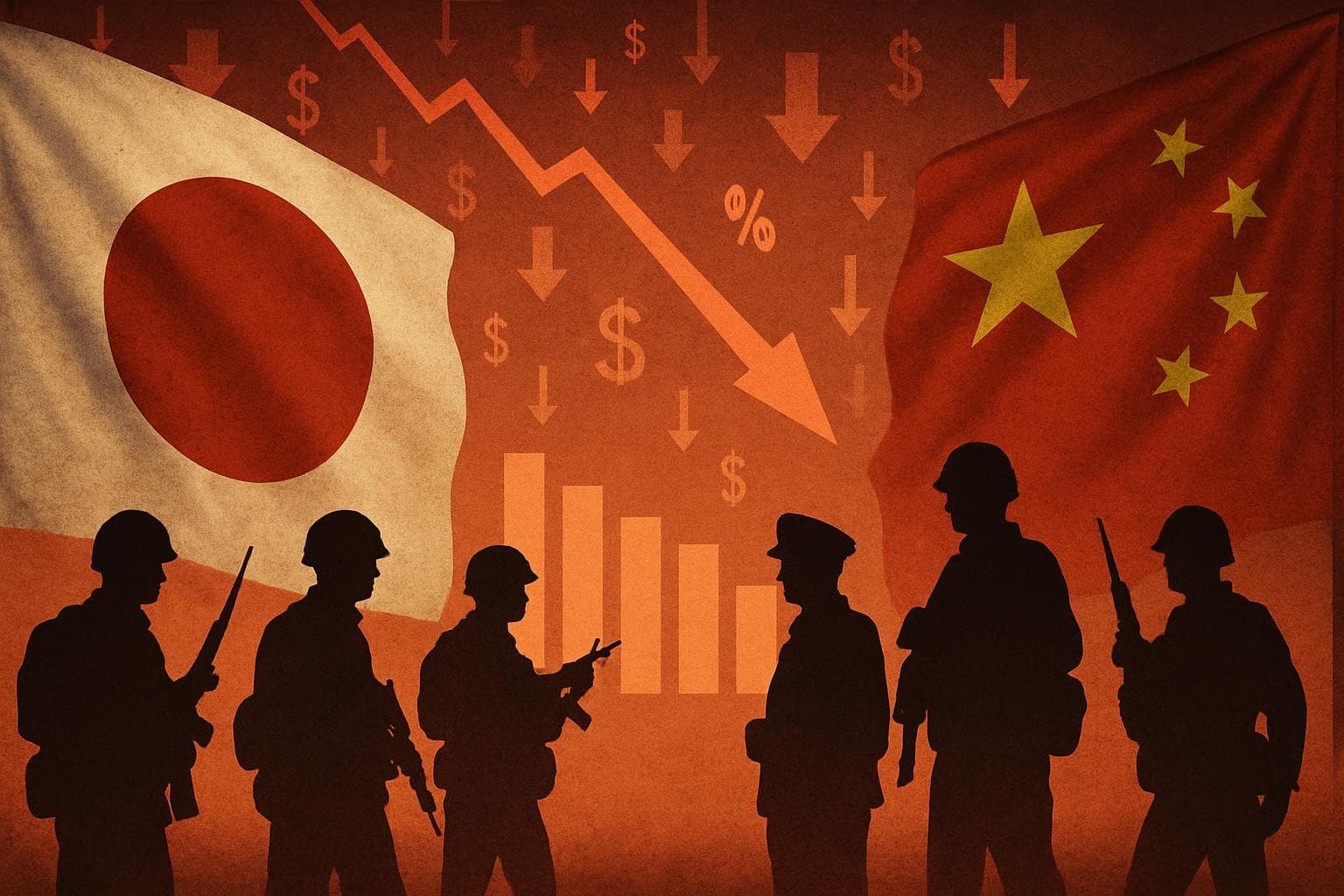
Japan is facing significant economic and diplomatic challenges as tensions with China over Taiwan escalate. The recent advisory from Beijing urging Chinese citizens to avoid traveling to Japan has led to a sharp decline in Japanese tourism and retail stocks. This development comes as Japan's economy contracted by 0.4% in the third quarter of 2025, marking the first shrinkage in six quarters.
Economic Impact of Diplomatic Tensions
The advisory from China, a major source of tourists for Japan, has severely impacted the country's tourism and retail sectors. Shares in companies like the department store chain Isetan Mitsukoshi and cosmetics giant Shiseido fell by 11.3% and 9%, respectively. The theme park operator Oriental Land, which runs Tokyo Disneyland, also saw its shares drop by 5.7%. According to Masahiko Loo, a senior strategist at State Street Investment Management, "The China–Japan dispute over Taiwan introduces near-term headwinds for consumer-facing sectors."
Political Rhetoric and Military Implications
The diplomatic rift intensified following comments by Japan's Prime Minister Sanae Takaichi, who suggested that Japan could deploy its self-defence forces if a Chinese attack on Taiwan posed a "survival-threatening situation" for Japan. This statement, reflecting the views of the conservative faction within Takaichi's Liberal Democratic Party, has drawn a strong reaction from Beijing. The Chinese government has also advised students to reconsider studying in Japan, affecting over 100,000 Chinese students currently enrolled in Japanese institutions.
Diplomatic Efforts to Ease Tensions
In an effort to de-escalate the situation, Masaaki Kanai, director general of the Japanese foreign ministry’s Asia and Oceania bureau, is set to meet his Chinese counterpart, Liu Jinsong. The meeting aims to reassure China that Takaichi's comments do not indicate a shift in Japan's security policy and to urge restraint in actions that could further damage bilateral ties. Chief Cabinet Secretary Minoru Kihara emphasized that Beijing's recent moves are not aligned with the "broader direction confirmed between our leaders" for a stable relationship.
WHAT THIS MIGHT MEAN
The ongoing tensions between Japan and China could have significant implications for regional stability and economic relations. If diplomatic efforts fail to ease the situation, Japan may face prolonged economic challenges, particularly in sectors heavily reliant on Chinese consumers. Additionally, any military escalation over Taiwan could lead to broader geopolitical ramifications, drawing in other regional powers. Experts suggest that Japan may need to balance its security concerns with diplomatic engagement to maintain stability in the Asia-Pacific region.
Related Articles
Japan Seizes Chinese Fishing Vessel Amid Rising Diplomatic Tensions

US Supreme Court Ruling Sparks Trade Uncertainty in Asia and Beyond

Trump's New Tariff Strategy Sparks Global Trade Uncertainty
China Sets Lowest GDP Growth Target in Decades Amid Economic Challenges

UK Faces Dilemmas Amid Iran Conflict and China Spying Allegations

Labour MP's Husband Arrested in UK-China Espionage Probe
Japan's Economic and Diplomatic Challenges Amid Rising Tensions with China
In This Article
HIGHLIGHTS
- Japanese tourism and retail stocks plummeted after China advised its citizens against traveling to Japan amid tensions over Taiwan.
- Japan's GDP contracted by 0.4% in the third quarter of 2025, influenced by US tariffs and declining exports.
- Prime Minister Sanae Takaichi's comments on potential military action if China attacks Taiwan have escalated diplomatic tensions.
- China has urged its citizens to reconsider studying in Japan, affecting over 100,000 Chinese students currently enrolled there.
- Japanese and Chinese officials are scheduled to meet to address the escalating diplomatic rift and stabilize bilateral relations.
Japan is facing significant economic and diplomatic challenges as tensions with China over Taiwan escalate. The recent advisory from Beijing urging Chinese citizens to avoid traveling to Japan has led to a sharp decline in Japanese tourism and retail stocks. This development comes as Japan's economy contracted by 0.4% in the third quarter of 2025, marking the first shrinkage in six quarters.
Economic Impact of Diplomatic Tensions
The advisory from China, a major source of tourists for Japan, has severely impacted the country's tourism and retail sectors. Shares in companies like the department store chain Isetan Mitsukoshi and cosmetics giant Shiseido fell by 11.3% and 9%, respectively. The theme park operator Oriental Land, which runs Tokyo Disneyland, also saw its shares drop by 5.7%. According to Masahiko Loo, a senior strategist at State Street Investment Management, "The China–Japan dispute over Taiwan introduces near-term headwinds for consumer-facing sectors."
Political Rhetoric and Military Implications
The diplomatic rift intensified following comments by Japan's Prime Minister Sanae Takaichi, who suggested that Japan could deploy its self-defence forces if a Chinese attack on Taiwan posed a "survival-threatening situation" for Japan. This statement, reflecting the views of the conservative faction within Takaichi's Liberal Democratic Party, has drawn a strong reaction from Beijing. The Chinese government has also advised students to reconsider studying in Japan, affecting over 100,000 Chinese students currently enrolled in Japanese institutions.
Diplomatic Efforts to Ease Tensions
In an effort to de-escalate the situation, Masaaki Kanai, director general of the Japanese foreign ministry’s Asia and Oceania bureau, is set to meet his Chinese counterpart, Liu Jinsong. The meeting aims to reassure China that Takaichi's comments do not indicate a shift in Japan's security policy and to urge restraint in actions that could further damage bilateral ties. Chief Cabinet Secretary Minoru Kihara emphasized that Beijing's recent moves are not aligned with the "broader direction confirmed between our leaders" for a stable relationship.
WHAT THIS MIGHT MEAN
The ongoing tensions between Japan and China could have significant implications for regional stability and economic relations. If diplomatic efforts fail to ease the situation, Japan may face prolonged economic challenges, particularly in sectors heavily reliant on Chinese consumers. Additionally, any military escalation over Taiwan could lead to broader geopolitical ramifications, drawing in other regional powers. Experts suggest that Japan may need to balance its security concerns with diplomatic engagement to maintain stability in the Asia-Pacific region.
Related Articles
Japan Seizes Chinese Fishing Vessel Amid Rising Diplomatic Tensions
US Supreme Court Ruling Sparks Trade Uncertainty in Asia and Beyond
Trump's New Tariff Strategy Sparks Global Trade Uncertainty
China Sets Lowest GDP Growth Target in Decades Amid Economic Challenges
UK Faces Dilemmas Amid Iran Conflict and China Spying Allegations
Labour MP's Husband Arrested in UK-China Espionage Probe