
Japan's Political Landscape Shifts as Ruling Coalition Loses Upper House Majority
In This Article
HIGHLIGHTS
- Japan's ruling coalition lost its majority in the upper house, securing only 47 of the needed 50 seats.
- Prime Minister Shigeru Ishiba vows to remain in office despite the election setback, focusing on crucial US-Japan trade negotiations.
- The Sanseito party gained significant traction, reflecting a shift towards right-wing populism in Japanese politics.
- Rising consumer prices, particularly the cost of rice, have fueled public dissatisfaction with the current government.
- The election result could lead to political instability and potential leadership challenges within the Liberal Democratic Party.
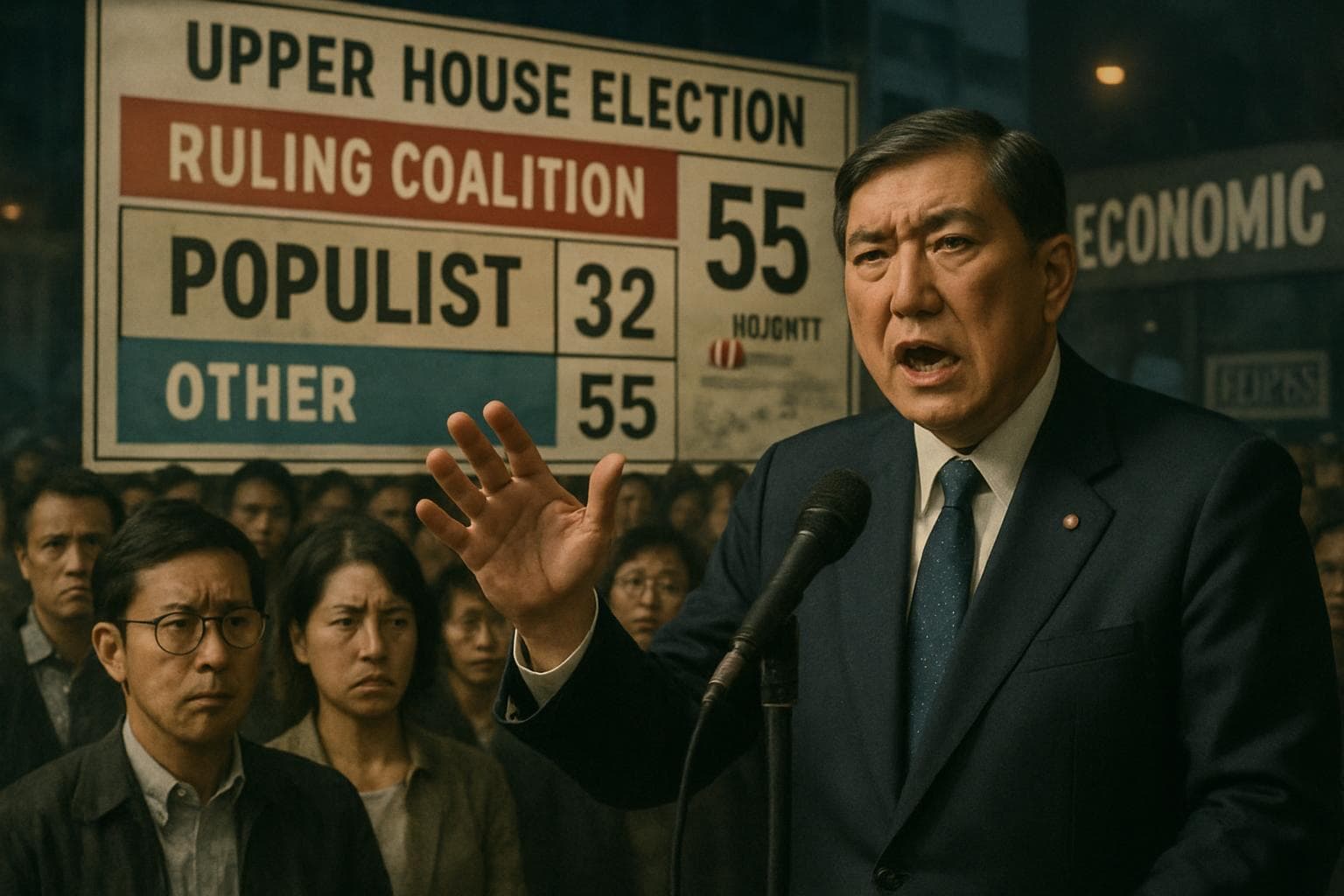
In a pivotal election, Japan's ruling coalition, led by Prime Minister Shigeru Ishiba, has lost its majority in the upper house, securing only 47 of the 50 seats needed to maintain control. This outcome intensifies pressure on Ishiba, who has already faced challenges after losing the lower house majority last year. Despite the setback, Ishiba has vowed to stay on, emphasizing the importance of ongoing US-Japan trade negotiations.
Election Results and Political Implications
The election, held amid public frustration over rising consumer prices and looming US tariffs, saw a notable shift in Japan's political landscape. The Liberal Democratic Party (LDP) and its coalition partner Komeito fell short of the majority, while the opposition Constitutional Democratic Party secured 22 seats. The far-right Sanseito party emerged as a significant force, increasing its presence in the upper house from one to 14 seats.
Economic Concerns and Public Discontent
Economic issues dominated the election discourse, with voters expressing dissatisfaction over stagnant wages and inflation. The cost of rice, a staple in Japanese households, has nearly doubled, exacerbating the public's discontent. The government's inability to address these economic challenges has eroded trust among voters, contributing to the coalition's electoral defeat.
Rising Populism and Political Shifts
The Sanseito party's success highlights a growing populist sentiment in Japan. With its "Japanese First" campaign, the party has attracted support from disillusioned voters, particularly younger demographics, through social media. Its hardline stance on immigration and skepticism towards globalism have resonated with a segment of the population feeling neglected by mainstream parties.
Leadership Challenges and Future Prospects
The election results have sparked speculation about potential leadership challenges within the LDP. Analysts suggest that figures such as Sanae Takaichi and Takayuki Kobayashi could vie for leadership if Ishiba's position weakens further. The outcome of these internal dynamics will be crucial as Japan navigates critical trade negotiations with the United States, facing an August 1 deadline to avert punitive tariffs.
WHAT THIS MIGHT MEAN
The loss of the upper house majority could lead to significant political instability in Japan. Prime Minister Ishiba's leadership is under scrutiny, and any further erosion of support could trigger a leadership contest within the LDP. This internal turmoil might complicate Japan's ability to negotiate effectively with the United States on trade matters, potentially impacting the country's economic stability.
The rise of the Sanseito party signals a shift towards right-wing populism, which could influence future policy directions, particularly on immigration and economic nationalism. As Japan grapples with these political and economic challenges, the coming months will be critical in determining the country's trajectory on both domestic and international fronts.
Related Articles
China Sets Lowest GDP Growth Target in Decades Amid Economic Challenges
Cuba Faces Widespread Blackout Amid Deepening Fuel Crisis

UK Faces Dilemmas Amid Iran Conflict and China Spying Allegations

Google Faces Legal Battle Over AI Chatbot's Alleged Role in Tragic Death

Iran Postpones Khamenei Funeral Amid Escalating US-Israeli Strikes

Canada Calls for De-escalation Amid US-Israel Strikes on Iran
Japan's Political Landscape Shifts as Ruling Coalition Loses Upper House Majority
In This Article
 Alex Carter| Published
 HIGHLIGHTS
- Japan's ruling coalition lost its majority in the upper house, securing only 47 of the needed 50 seats.
- Prime Minister Shigeru Ishiba vows to remain in office despite the election setback, focusing on crucial US-Japan trade negotiations.
- The Sanseito party gained significant traction, reflecting a shift towards right-wing populism in Japanese politics.
- Rising consumer prices, particularly the cost of rice, have fueled public dissatisfaction with the current government.
- The election result could lead to political instability and potential leadership challenges within the Liberal Democratic Party.
In a pivotal election, Japan's ruling coalition, led by Prime Minister Shigeru Ishiba, has lost its majority in the upper house, securing only 47 of the 50 seats needed to maintain control. This outcome intensifies pressure on Ishiba, who has already faced challenges after losing the lower house majority last year. Despite the setback, Ishiba has vowed to stay on, emphasizing the importance of ongoing US-Japan trade negotiations.
Election Results and Political Implications
The election, held amid public frustration over rising consumer prices and looming US tariffs, saw a notable shift in Japan's political landscape. The Liberal Democratic Party (LDP) and its coalition partner Komeito fell short of the majority, while the opposition Constitutional Democratic Party secured 22 seats. The far-right Sanseito party emerged as a significant force, increasing its presence in the upper house from one to 14 seats.
Economic Concerns and Public Discontent
Economic issues dominated the election discourse, with voters expressing dissatisfaction over stagnant wages and inflation. The cost of rice, a staple in Japanese households, has nearly doubled, exacerbating the public's discontent. The government's inability to address these economic challenges has eroded trust among voters, contributing to the coalition's electoral defeat.
Rising Populism and Political Shifts
The Sanseito party's success highlights a growing populist sentiment in Japan. With its "Japanese First" campaign, the party has attracted support from disillusioned voters, particularly younger demographics, through social media. Its hardline stance on immigration and skepticism towards globalism have resonated with a segment of the population feeling neglected by mainstream parties.
Leadership Challenges and Future Prospects
The election results have sparked speculation about potential leadership challenges within the LDP. Analysts suggest that figures such as Sanae Takaichi and Takayuki Kobayashi could vie for leadership if Ishiba's position weakens further. The outcome of these internal dynamics will be crucial as Japan navigates critical trade negotiations with the United States, facing an August 1 deadline to avert punitive tariffs.
WHAT THIS MIGHT MEAN
The loss of the upper house majority could lead to significant political instability in Japan. Prime Minister Ishiba's leadership is under scrutiny, and any further erosion of support could trigger a leadership contest within the LDP. This internal turmoil might complicate Japan's ability to negotiate effectively with the United States on trade matters, potentially impacting the country's economic stability.
The rise of the Sanseito party signals a shift towards right-wing populism, which could influence future policy directions, particularly on immigration and economic nationalism. As Japan grapples with these political and economic challenges, the coming months will be critical in determining the country's trajectory on both domestic and international fronts.
Related Articles
China Sets Lowest GDP Growth Target in Decades Amid Economic Challenges
Cuba Faces Widespread Blackout Amid Deepening Fuel Crisis
UK Faces Dilemmas Amid Iran Conflict and China Spying Allegations
Google Faces Legal Battle Over AI Chatbot's Alleged Role in Tragic Death
Iran Postpones Khamenei Funeral Amid Escalating US-Israeli Strikes
Canada Calls for De-escalation Amid US-Israel Strikes on Iran