
Federal Judge Blocks Trump's Birthright Citizenship Order Amid Legal Battle
In This Article
HIGHLIGHTS
- A federal judge in New Hampshire blocked President Trump's executive order ending birthright citizenship, allowing a class action lawsuit to proceed.
- The lawsuit, filed by the ACLU, argues the order violates the 14th Amendment, which grants citizenship to all born in the U.S.
- The ruling follows a Supreme Court decision limiting nationwide injunctions, making class actions a key legal tool.
- The Trump administration plans to appeal, arguing the order is necessary for national security and economic stability.
- The judge's decision pauses the order, which was set to take effect on July 27, pending further legal proceedings.
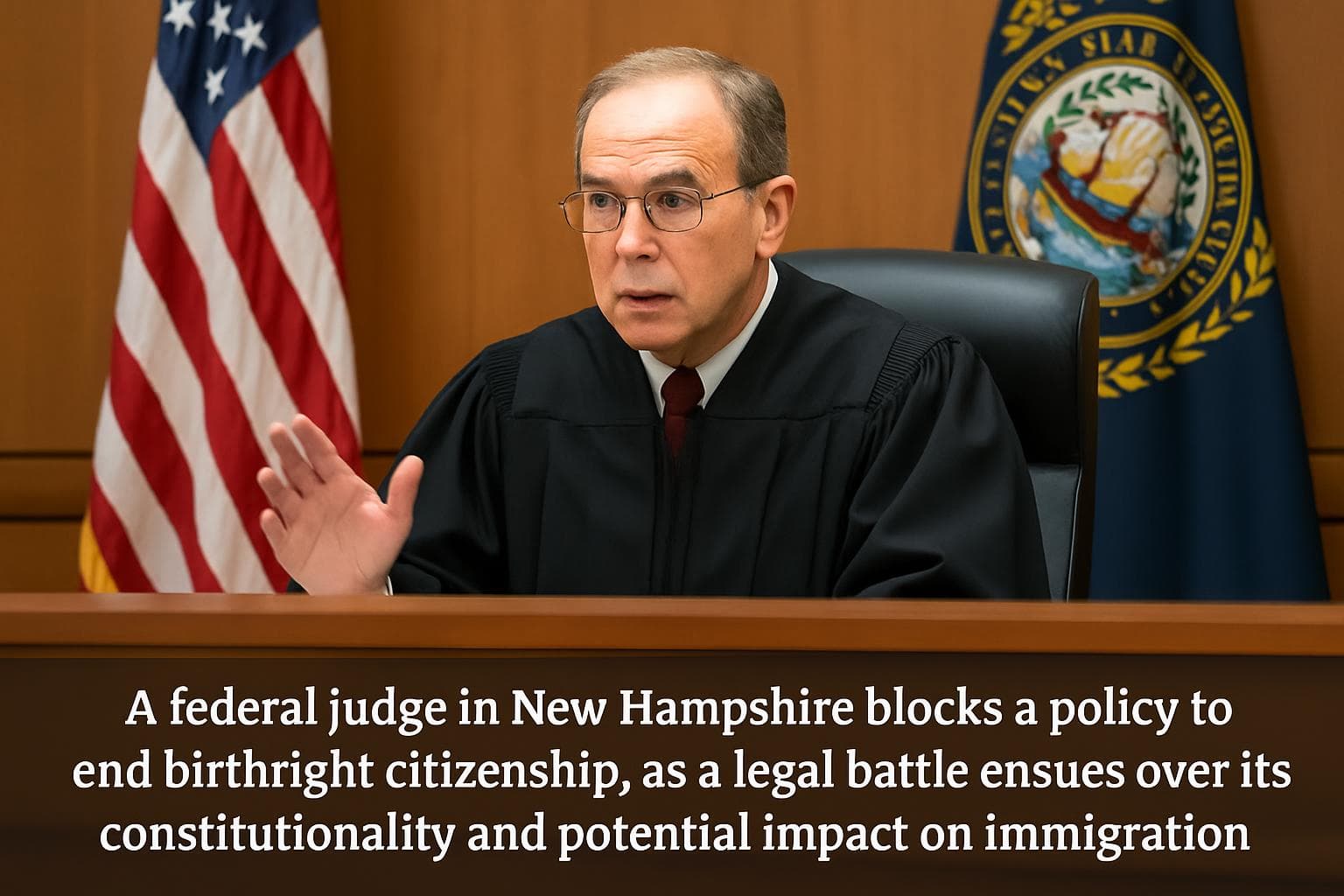
In a significant legal development, a federal judge in New Hampshire has blocked President Donald Trump's executive order aimed at ending birthright citizenship for certain U.S. residents. This decision allows a class action lawsuit, spearheaded by the American Civil Liberties Union (ACLU), to move forward, challenging the constitutionality of the order.
Legal Context and Implications
The lawsuit, representing immigrant parents and their infants, argues that Trump's order contravenes the 14th Amendment of the U.S. Constitution. This amendment guarantees citizenship to all individuals born or naturalized in the United States. The Trump administration contends that the phrase "subject to the jurisdiction thereof" permits the denial of citizenship to children born to undocumented immigrants.
Judge Joseph LaPlante, who issued the ruling, emphasized that depriving individuals of U.S. citizenship constitutes irreparable harm. His decision comes in the wake of a recent Supreme Court ruling that restricted the issuance of nationwide injunctions, thereby elevating class action lawsuits as a primary legal recourse for challenging federal policies.
Government's Response and Next Steps
The White House has expressed strong opposition to the ruling, with spokesman Harrison Fields labeling it an "unlawful attempt" to bypass the Supreme Court's directives. The administration plans to appeal the decision, maintaining that the executive order is crucial for safeguarding national security and economic interests.
The blocked order was initially set to take effect on July 27, following the Supreme Court's June 27 decision that curtailed judicial power to issue broad injunctions. The Trump administration had previously appealed temporary holds on the order, arguing that district courts lacked the authority to impede presidential directives on a national scale.
Broader Legal and Political Ramifications
This legal battle is part of a broader constitutional dispute over immigration policy that has persisted into the second term of Trump's presidency. The case highlights the ongoing tension between the executive branch's policy initiatives and judicial oversight, particularly in the realm of immigration.
WHAT THIS MIGHT MEAN
The New Hampshire ruling represents a pivotal moment in the ongoing legal contest over birthright citizenship. Should the Trump administration succeed in its appeal, it could set a precedent for further executive actions targeting immigration policies. Conversely, if the class action lawsuit prevails, it may reinforce the constitutional protections afforded by the 14th Amendment, potentially influencing future immigration debates.
Legal experts suggest that this case could eventually reach the Supreme Court, where a definitive ruling on the constitutionality of Trump's order might be rendered. Such a decision would have far-reaching implications for immigration law and the interpretation of constitutional citizenship rights in the United States.
Related Articles
Congress Subpoenas Attorney General Bondi in Epstein Investigation

Senate Blocks Resolution to Limit Trump's Military Actions in Iran

Trump's New Tariff Strategy Sparks Global Trade Uncertainty
Trump Raises Import Tariffs to 15% After Supreme Court Setback

Tech Giants Pledge to Cover AI Data Center Energy Costs Amid Rising Electricity Concerns
Cuba Faces Widespread Blackout Amid Deepening Fuel Crisis
Federal Judge Blocks Trump's Birthright Citizenship Order Amid Legal Battle
In This Article
 Alex Carter| Published
 HIGHLIGHTS
- A federal judge in New Hampshire blocked President Trump's executive order ending birthright citizenship, allowing a class action lawsuit to proceed.
- The lawsuit, filed by the ACLU, argues the order violates the 14th Amendment, which grants citizenship to all born in the U.S.
- The ruling follows a Supreme Court decision limiting nationwide injunctions, making class actions a key legal tool.
- The Trump administration plans to appeal, arguing the order is necessary for national security and economic stability.
- The judge's decision pauses the order, which was set to take effect on July 27, pending further legal proceedings.
In a significant legal development, a federal judge in New Hampshire has blocked President Donald Trump's executive order aimed at ending birthright citizenship for certain U.S. residents. This decision allows a class action lawsuit, spearheaded by the American Civil Liberties Union (ACLU), to move forward, challenging the constitutionality of the order.
Legal Context and Implications
The lawsuit, representing immigrant parents and their infants, argues that Trump's order contravenes the 14th Amendment of the U.S. Constitution. This amendment guarantees citizenship to all individuals born or naturalized in the United States. The Trump administration contends that the phrase "subject to the jurisdiction thereof" permits the denial of citizenship to children born to undocumented immigrants.
Judge Joseph LaPlante, who issued the ruling, emphasized that depriving individuals of U.S. citizenship constitutes irreparable harm. His decision comes in the wake of a recent Supreme Court ruling that restricted the issuance of nationwide injunctions, thereby elevating class action lawsuits as a primary legal recourse for challenging federal policies.
Government's Response and Next Steps
The White House has expressed strong opposition to the ruling, with spokesman Harrison Fields labeling it an "unlawful attempt" to bypass the Supreme Court's directives. The administration plans to appeal the decision, maintaining that the executive order is crucial for safeguarding national security and economic interests.
The blocked order was initially set to take effect on July 27, following the Supreme Court's June 27 decision that curtailed judicial power to issue broad injunctions. The Trump administration had previously appealed temporary holds on the order, arguing that district courts lacked the authority to impede presidential directives on a national scale.
Broader Legal and Political Ramifications
This legal battle is part of a broader constitutional dispute over immigration policy that has persisted into the second term of Trump's presidency. The case highlights the ongoing tension between the executive branch's policy initiatives and judicial oversight, particularly in the realm of immigration.
WHAT THIS MIGHT MEAN
The New Hampshire ruling represents a pivotal moment in the ongoing legal contest over birthright citizenship. Should the Trump administration succeed in its appeal, it could set a precedent for further executive actions targeting immigration policies. Conversely, if the class action lawsuit prevails, it may reinforce the constitutional protections afforded by the 14th Amendment, potentially influencing future immigration debates.
Legal experts suggest that this case could eventually reach the Supreme Court, where a definitive ruling on the constitutionality of Trump's order might be rendered. Such a decision would have far-reaching implications for immigration law and the interpretation of constitutional citizenship rights in the United States.
Related Articles
Congress Subpoenas Attorney General Bondi in Epstein Investigation
Senate Blocks Resolution to Limit Trump's Military Actions in Iran
Trump's New Tariff Strategy Sparks Global Trade Uncertainty
Trump Raises Import Tariffs to 15% After Supreme Court Setback
Tech Giants Pledge to Cover AI Data Center Energy Costs Amid Rising Electricity Concerns
Cuba Faces Widespread Blackout Amid Deepening Fuel Crisis