
Kyiv Faces Severe Power Outages Amid Russian Strikes as Ukraine Innovates Air Defense
In This Article
HIGHLIGHTS
- Russian aerial strikes have left half of Kyiv without heating or power, affecting one million residents amid freezing temperatures.
- President Zelensky announced new air defense strategies involving interceptor drones to counter future Russian attacks.
- Ukrainian officials reported that Russian forces launched 145 drones, with 126 intercepted, causing power outages in multiple regions.
- Kyiv's mayor confirmed that emergency repair work is ongoing, but many areas remain without essential services.
- Ukraine's energy minister has alerted the IAEA about potential Russian strikes on energy facilities, including nuclear power plants.
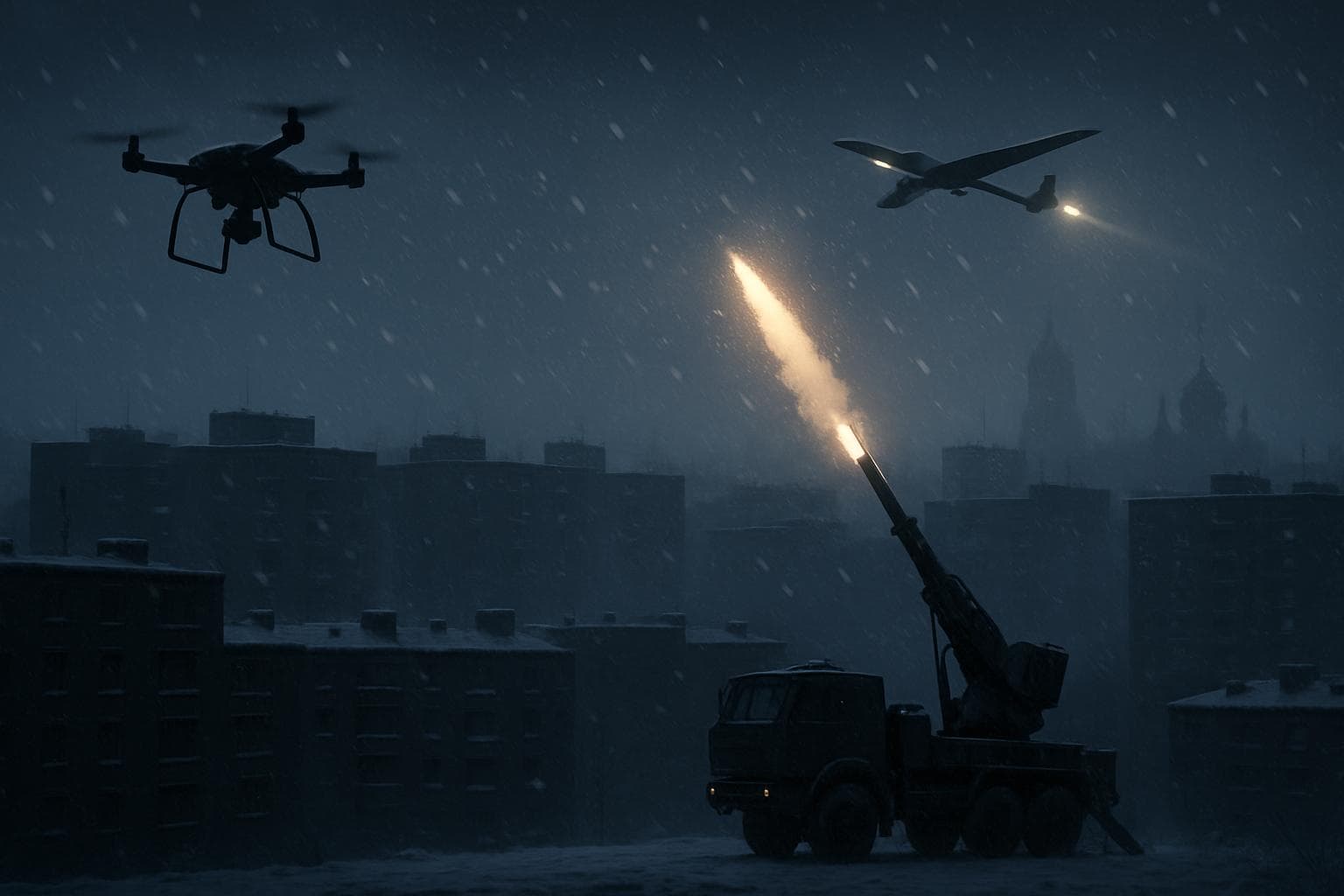
Ukraine is grappling with severe power and heating outages following a large-scale Russian aerial assault that has left half of Kyiv's residential buildings without essential services. As temperatures plummet to -10°C, President Volodymyr Zelensky reported that one million people in the capital are enduring these harsh conditions without power.
The overnight strikes, involving drones, ballistic, and cruise missiles, targeted key locations across Ukraine, including Kyiv, Dnipro, and Odesa. Despite Ukraine's air defenses intercepting a significant number of these threats, the financial toll of repelling such attacks is substantial, with costs reaching approximately €80 million.
Innovative Air Defense Measures
In response to the ongoing threat, President Zelensky has unveiled a new approach to Ukraine's air defense strategy. This includes the deployment of mobile fire groups and interceptor drones, aimed at transforming the country's defense capabilities. Pavlo Yelizarov has been appointed as the new deputy air force commander to spearhead these innovations.
Zelensky has urged citizens to remain vigilant, warning of potential new Russian attacks. Ukrainian intelligence has identified reconnaissance activities targeting critical infrastructure, particularly substations supplying nuclear power plants.
Impact on Kyiv and Beyond
The recent strikes have exacerbated the already dire situation in Kyiv, where residents are finding creative solutions to cope with the lack of power and heating. Many are resorting to portable stoves and generators, though financial constraints limit these options for some.
Kyiv's mayor, Vitalii Klitschko, confirmed that emergency repair efforts are underway, yet many areas remain without electricity and water. The Ukrainian energy ministry reported power outages in five regions, with emergency repairs contingent on security conditions.
International Concerns and Responses
Ukrainian energy minister Denys Shmyhal has communicated with the International Atomic Energy Agency (IAEA) regarding the threat to energy facilities, including nuclear plants. The IAEA facilitated the reconnection of a backup power line to the Zaporizhzhia nuclear power plant, highlighting the precarious situation.
WHAT THIS MIGHT MEAN
As Ukraine continues to face relentless Russian attacks, the country's ability to maintain essential services remains a critical concern. The introduction of innovative air defense strategies could bolster Ukraine's resilience, though the financial and logistical challenges are significant.
The international community's response, particularly in terms of providing security guarantees and support for Ukraine's energy infrastructure, will be pivotal. The potential for further Russian strikes on nuclear facilities raises serious safety concerns, necessitating vigilant monitoring and preparedness.
Looking ahead, Ukraine's efforts to stabilize its energy supply and protect its citizens will require sustained international cooperation and support, as well as continued innovation in military and civil defense strategies.
Related Articles
Geneva Peace Talks Between Russia and Ukraine End Without Breakthrough
Geneva Talks See 'Meaningful Progress' Amid Tensions Over Ukraine-Russia Conflict

Geneva Peace Talks: Russia and Ukraine Seek Resolution Amid Ongoing Conflict
Russian LNG Tanker Sinks in Mediterranean Amid Accusations of Ukrainian Drone Attack

Russia-Ukraine Conflict: Four Years of Unyielding Struggle and Human Resilience

Kenyan Nationals Recruited for Russia-Ukraine War Amid Allegations of Human Trafficking
Kyiv Faces Severe Power Outages Amid Russian Strikes as Ukraine Innovates Air Defense
In This Article
 Leila Hassan| Published
 HIGHLIGHTS
- Russian aerial strikes have left half of Kyiv without heating or power, affecting one million residents amid freezing temperatures.
- President Zelensky announced new air defense strategies involving interceptor drones to counter future Russian attacks.
- Ukrainian officials reported that Russian forces launched 145 drones, with 126 intercepted, causing power outages in multiple regions.
- Kyiv's mayor confirmed that emergency repair work is ongoing, but many areas remain without essential services.
- Ukraine's energy minister has alerted the IAEA about potential Russian strikes on energy facilities, including nuclear power plants.
Ukraine is grappling with severe power and heating outages following a large-scale Russian aerial assault that has left half of Kyiv's residential buildings without essential services. As temperatures plummet to -10°C, President Volodymyr Zelensky reported that one million people in the capital are enduring these harsh conditions without power.
The overnight strikes, involving drones, ballistic, and cruise missiles, targeted key locations across Ukraine, including Kyiv, Dnipro, and Odesa. Despite Ukraine's air defenses intercepting a significant number of these threats, the financial toll of repelling such attacks is substantial, with costs reaching approximately €80 million.
Innovative Air Defense Measures
In response to the ongoing threat, President Zelensky has unveiled a new approach to Ukraine's air defense strategy. This includes the deployment of mobile fire groups and interceptor drones, aimed at transforming the country's defense capabilities. Pavlo Yelizarov has been appointed as the new deputy air force commander to spearhead these innovations.
Zelensky has urged citizens to remain vigilant, warning of potential new Russian attacks. Ukrainian intelligence has identified reconnaissance activities targeting critical infrastructure, particularly substations supplying nuclear power plants.
Impact on Kyiv and Beyond
The recent strikes have exacerbated the already dire situation in Kyiv, where residents are finding creative solutions to cope with the lack of power and heating. Many are resorting to portable stoves and generators, though financial constraints limit these options for some.
Kyiv's mayor, Vitalii Klitschko, confirmed that emergency repair efforts are underway, yet many areas remain without electricity and water. The Ukrainian energy ministry reported power outages in five regions, with emergency repairs contingent on security conditions.
International Concerns and Responses
Ukrainian energy minister Denys Shmyhal has communicated with the International Atomic Energy Agency (IAEA) regarding the threat to energy facilities, including nuclear plants. The IAEA facilitated the reconnection of a backup power line to the Zaporizhzhia nuclear power plant, highlighting the precarious situation.
WHAT THIS MIGHT MEAN
As Ukraine continues to face relentless Russian attacks, the country's ability to maintain essential services remains a critical concern. The introduction of innovative air defense strategies could bolster Ukraine's resilience, though the financial and logistical challenges are significant.
The international community's response, particularly in terms of providing security guarantees and support for Ukraine's energy infrastructure, will be pivotal. The potential for further Russian strikes on nuclear facilities raises serious safety concerns, necessitating vigilant monitoring and preparedness.
Looking ahead, Ukraine's efforts to stabilize its energy supply and protect its citizens will require sustained international cooperation and support, as well as continued innovation in military and civil defense strategies.
Related Articles
Geneva Peace Talks Between Russia and Ukraine End Without Breakthrough
Geneva Talks See 'Meaningful Progress' Amid Tensions Over Ukraine-Russia Conflict
Geneva Peace Talks: Russia and Ukraine Seek Resolution Amid Ongoing Conflict
Russian LNG Tanker Sinks in Mediterranean Amid Accusations of Ukrainian Drone Attack
Russia-Ukraine Conflict: Four Years of Unyielding Struggle and Human Resilience
Kenyan Nationals Recruited for Russia-Ukraine War Amid Allegations of Human Trafficking