
Macron's Greenland Visit Highlights European Unity Amid US Acquisition Threats
In This Article
HIGHLIGHTS
- French President Emmanuel Macron visited Greenland, marking the first visit by a foreign head of state since US President Trump's acquisition threats.
- Macron's visit underscores European unity and solidarity with Greenland, emphasizing the island's strategic importance and territorial integrity.
- Greenland, a semi-autonomous Danish territory, has been under pressure from the US, with Trump citing national security as a reason for acquisition.
- Macron's discussions with Greenlandic and Danish leaders focused on Arctic security, climate change, and economic development.
- The visit is seen as a response to growing geopolitical tensions and a message that Greenland is not for sale.
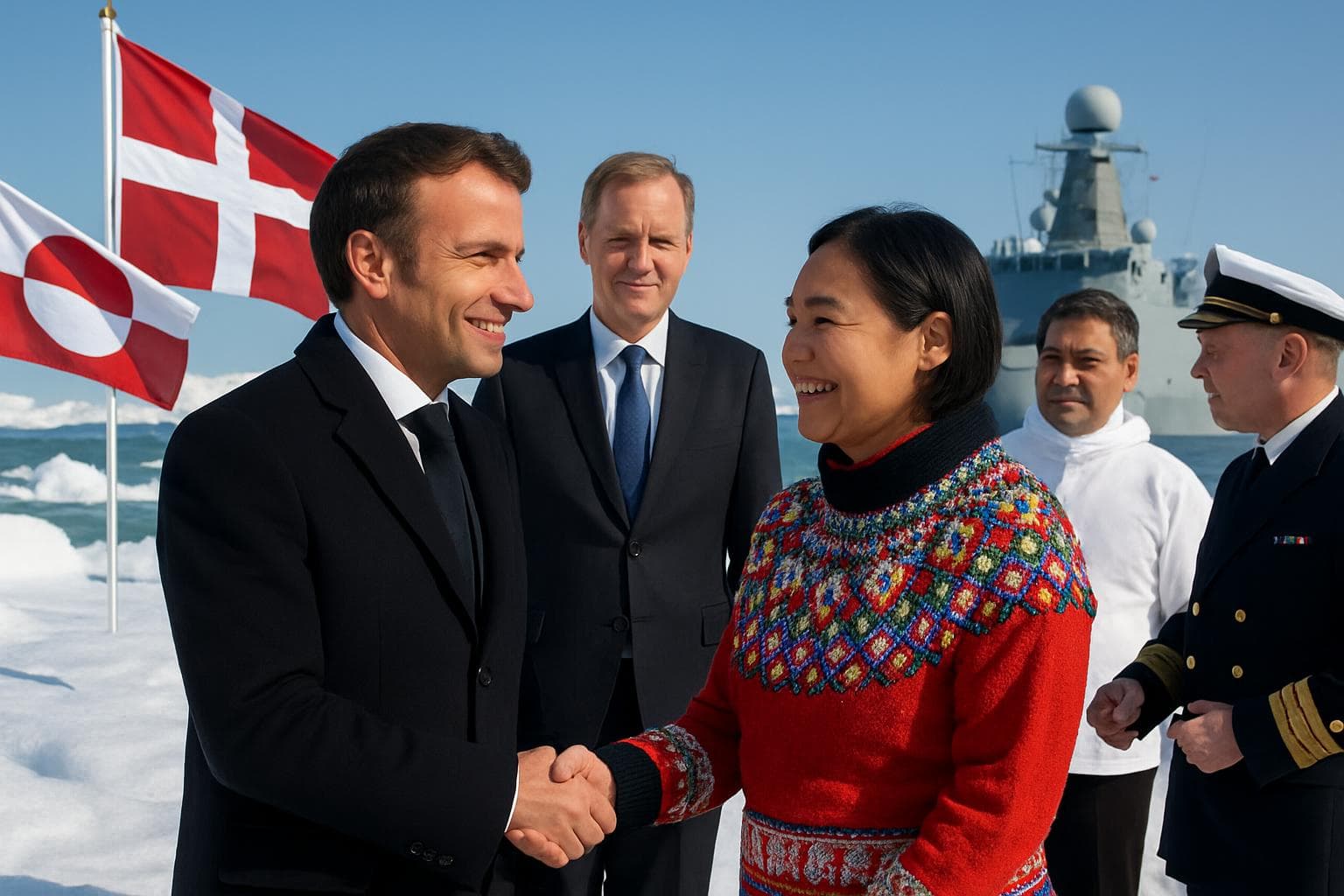
In a significant diplomatic gesture, French President Emmanuel Macron has made a historic visit to Greenland, becoming the first foreign head of state to step foot on the Arctic island since US President Donald Trump expressed interest in acquiring it. Macron's visit is widely interpreted as a demonstration of European unity and a firm stance against the US's territorial ambitions.
Upon his arrival in Nuuk, Greenland's capital, Macron was warmly welcomed despite the chilly weather. His visit, at the invitation of Greenland's new Prime Minister Jens-Frederik Nielsen, is a major event for the small city of fewer than 20,000 residents. Macron's presence is seen as a message of solidarity from Europe, reinforcing that Greenland is not for sale, a sentiment echoed by Danish Prime Minister Mette Frederiksen.
The French president's agenda included discussions on North Atlantic and Arctic security, climate change, and economic development, with a particular focus on the island's rich mineral resources. Macron's visit comes ahead of the G7 summit in Canada, further highlighting the strategic importance of Greenland in global geopolitics.
Greenland, a semi-autonomous territory of Denmark with a population of 56,000, has been at the center of international attention following Trump's repeated assertions that the US needs the island for national security purposes. The US president has not ruled out the use of force to secure Greenland, a move that has been met with resistance from both Denmark and Greenland.
Macron's visit included talks with Danish and Greenlandic leaders aboard a Danish naval frigate, emphasizing the need for European commitment to the territory. The French president also planned to visit a glacier to witness the effects of climate change firsthand, although a scheduled visit to a hydroelectric plant was canceled.
The visit is seen as a response to the geopolitical tensions surrounding Greenland, with Macron reiterating that the island's territorial integrity must be respected. His remarks were welcomed by Greenland's leadership, who have expressed gratitude for France's support against US acquisition threats.
WHAT THIS MIGHT MEAN
Macron's visit to Greenland could have significant implications for international relations in the Arctic region. By reinforcing European unity and support for Greenland's sovereignty, Macron is positioning Europe as a counterbalance to US ambitions. This move could strengthen ties between Denmark and the EU, potentially leading to increased European involvement in Arctic affairs.
The visit also highlights the growing strategic importance of Greenland, not only for its mineral resources but also for its role in global security dynamics. As climate change continues to open new shipping routes and access to resources, Greenland's geopolitical significance is likely to increase, prompting further international interest and potential conflicts.
In the coming months, the focus will likely remain on how Greenland navigates its relationships with major powers like the US and Europe. The island's push for independence could gain momentum, with its leaders seeking to balance economic development with the preservation of sovereignty and environmental sustainability.
Related Articles
Canada and Australia Forge Strategic Partnership Amid Global Uncertainty
Tech Giants Pledge to Cover AI Data Center Energy Costs Amid Rising Electricity Concerns

UK Government to Reform Asylum Seeker Support and Employment Policies
Congress Subpoenas Attorney General Bondi in Epstein Investigation
Cuba Faces Widespread Blackout Amid Deepening Fuel Crisis

UK Faces Dilemmas Amid Iran Conflict and China Spying Allegations
Macron's Greenland Visit Highlights European Unity Amid US Acquisition Threats
In This Article
 Alex Carter| Published
 HIGHLIGHTS
- French President Emmanuel Macron visited Greenland, marking the first visit by a foreign head of state since US President Trump's acquisition threats.
- Macron's visit underscores European unity and solidarity with Greenland, emphasizing the island's strategic importance and territorial integrity.
- Greenland, a semi-autonomous Danish territory, has been under pressure from the US, with Trump citing national security as a reason for acquisition.
- Macron's discussions with Greenlandic and Danish leaders focused on Arctic security, climate change, and economic development.
- The visit is seen as a response to growing geopolitical tensions and a message that Greenland is not for sale.
In a significant diplomatic gesture, French President Emmanuel Macron has made a historic visit to Greenland, becoming the first foreign head of state to step foot on the Arctic island since US President Donald Trump expressed interest in acquiring it. Macron's visit is widely interpreted as a demonstration of European unity and a firm stance against the US's territorial ambitions.
Upon his arrival in Nuuk, Greenland's capital, Macron was warmly welcomed despite the chilly weather. His visit, at the invitation of Greenland's new Prime Minister Jens-Frederik Nielsen, is a major event for the small city of fewer than 20,000 residents. Macron's presence is seen as a message of solidarity from Europe, reinforcing that Greenland is not for sale, a sentiment echoed by Danish Prime Minister Mette Frederiksen.
The French president's agenda included discussions on North Atlantic and Arctic security, climate change, and economic development, with a particular focus on the island's rich mineral resources. Macron's visit comes ahead of the G7 summit in Canada, further highlighting the strategic importance of Greenland in global geopolitics.
Greenland, a semi-autonomous territory of Denmark with a population of 56,000, has been at the center of international attention following Trump's repeated assertions that the US needs the island for national security purposes. The US president has not ruled out the use of force to secure Greenland, a move that has been met with resistance from both Denmark and Greenland.
Macron's visit included talks with Danish and Greenlandic leaders aboard a Danish naval frigate, emphasizing the need for European commitment to the territory. The French president also planned to visit a glacier to witness the effects of climate change firsthand, although a scheduled visit to a hydroelectric plant was canceled.
The visit is seen as a response to the geopolitical tensions surrounding Greenland, with Macron reiterating that the island's territorial integrity must be respected. His remarks were welcomed by Greenland's leadership, who have expressed gratitude for France's support against US acquisition threats.
WHAT THIS MIGHT MEAN
Macron's visit to Greenland could have significant implications for international relations in the Arctic region. By reinforcing European unity and support for Greenland's sovereignty, Macron is positioning Europe as a counterbalance to US ambitions. This move could strengthen ties between Denmark and the EU, potentially leading to increased European involvement in Arctic affairs.
The visit also highlights the growing strategic importance of Greenland, not only for its mineral resources but also for its role in global security dynamics. As climate change continues to open new shipping routes and access to resources, Greenland's geopolitical significance is likely to increase, prompting further international interest and potential conflicts.
In the coming months, the focus will likely remain on how Greenland navigates its relationships with major powers like the US and Europe. The island's push for independence could gain momentum, with its leaders seeking to balance economic development with the preservation of sovereignty and environmental sustainability.
Related Articles
Canada and Australia Forge Strategic Partnership Amid Global Uncertainty
Tech Giants Pledge to Cover AI Data Center Energy Costs Amid Rising Electricity Concerns
UK Government to Reform Asylum Seeker Support and Employment Policies
Congress Subpoenas Attorney General Bondi in Epstein Investigation
Cuba Faces Widespread Blackout Amid Deepening Fuel Crisis
UK Faces Dilemmas Amid Iran Conflict and China Spying Allegations