
Massive Earthquake Off Russia Triggers Pacific-Wide Tsunami Alerts
In This Article
HIGHLIGHTS
- A powerful 8.8 magnitude earthquake struck near Russia's Kamchatka Peninsula, triggering widespread tsunami warnings across the Pacific.
- Tsunami waves reached Japan, Hawaii, and the US west coast, prompting evacuations for over two million people.
- Initial fears of severe damage were mitigated as most tsunami warnings were downgraded to advisories.
- In Russia, waves up to 4 meters caused flooding and infrastructure damage, but no fatalities were reported.
- Experts emphasize the importance of ongoing vigilance as the situation continues to evolve.
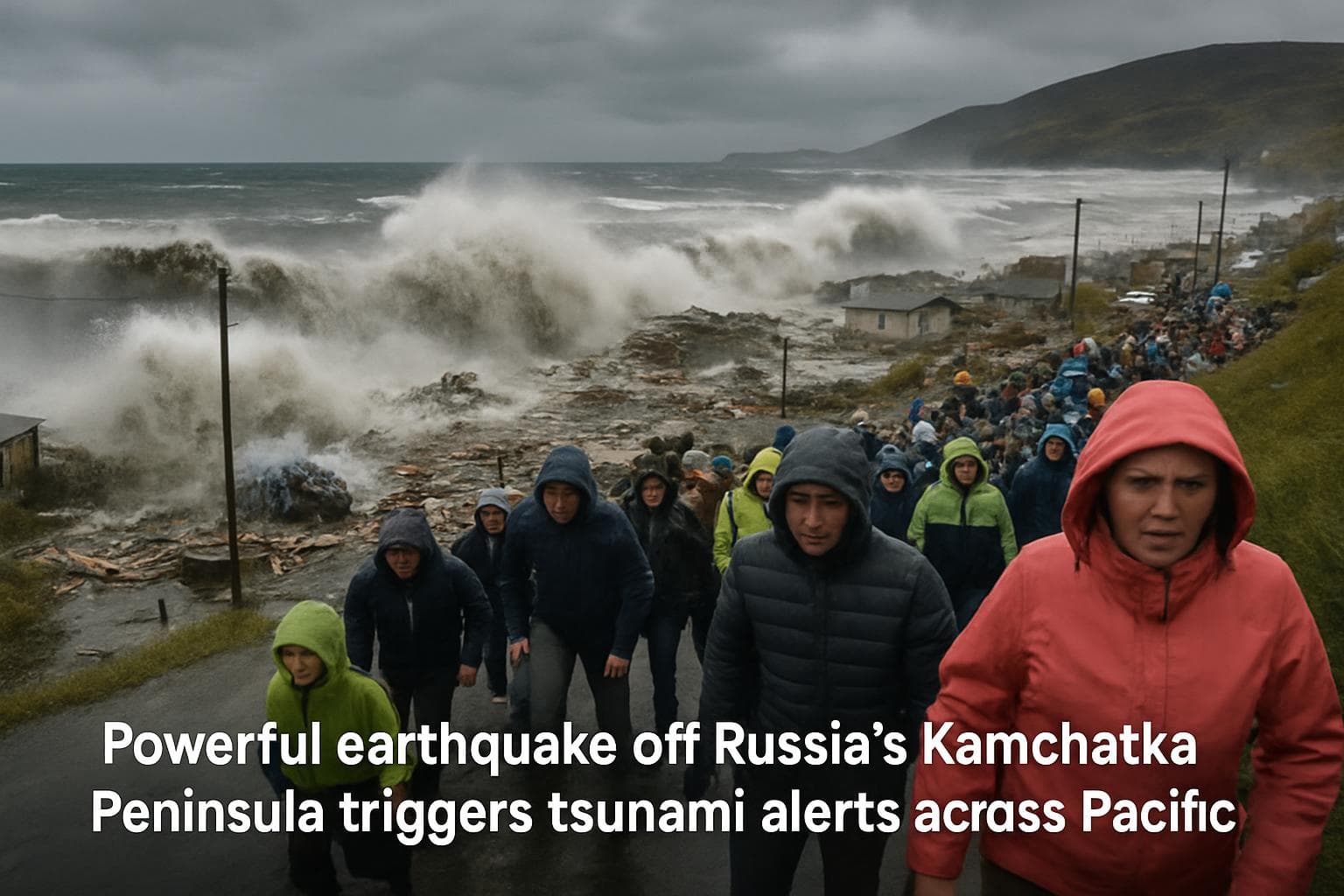
A colossal 8.8 magnitude earthquake struck off the coast of Russia's Kamchatka Peninsula early Wednesday, setting off a series of tsunami warnings across the Pacific region. The seismic event, recorded at 11:25 local time (00:25 BST), is among the most powerful ever documented, prompting immediate evacuations and widespread alerts.
Tsunami Impact Across the Pacific
The earthquake's epicenter was located 126 kilometers southeast of Petropavlovsk-Kamchatsky, at a depth of 19.3 kilometers, according to the US Geological Survey. Tsunami waves quickly reached Japan, Hawaii, and the US west coast, leading to the evacuation of over two million residents. In Japan, nearly 1.9 million people were advised to seek higher ground, while Hawaii initially braced for waves up to 10 feet high.
Localized Damage in Russia
In Russia, the town of Severo-Kurilsk experienced waves up to 4 meters, resulting in flooding of a port and damage to a fish processing facility. The Sakhalin region also reported power grid disruptions. Despite the significant impact, no fatalities have been reported, and Russia has since lifted its tsunami warnings for affected areas.
Downgraded Warnings and Continued Vigilance
As the situation unfolded, many tsunami warnings were downgraded to advisories. In Hawaii, the Pacific Tsunami Warning Center reduced its alert level, allowing evacuated residents to return home. However, authorities continue to urge caution, as strong currents and minor flooding remain possible.
Expert Insights on Tsunami Dynamics
Experts highlight the complex nature of tsunami forecasting. "Each country, each port, and each coastline will experience a very site-specific response," explained Chris Goldfinger, Professor of Marine Geology at Oregon State University. The path of energy from the Kamchatka Peninsula plays a crucial role in determining the impact on various regions.
WHAT THIS MIGHT MEAN
As the immediate threat subsides, attention turns to the ongoing assessment of damage and the refinement of tsunami prediction models. The event underscores the importance of international cooperation in disaster preparedness and response. Experts will continue to analyze data to improve future warning systems, while affected communities begin the recovery process. The incident also serves as a stark reminder of the unpredictable nature of seismic activity and the need for vigilance in vulnerable coastal areas.
Images from the Web

Related Articles

US Supreme Court Ruling Sparks Trade Uncertainty in Asia and Beyond
Japan Seizes Chinese Fishing Vessel Amid Rising Diplomatic Tensions
Russian LNG Tanker Sinks in Mediterranean Amid Accusations of Ukrainian Drone Attack

Trump's New Tariff Strategy Sparks Global Trade Uncertainty

Russia-Ukraine Conflict: Four Years of Unyielding Struggle and Human Resilience

Osaka's Water Infrastructure Boosted by Anonymous Gold Donation
Massive Earthquake Off Russia Triggers Pacific-Wide Tsunami Alerts
In This Article
HIGHLIGHTS
- A powerful 8.8 magnitude earthquake struck near Russia's Kamchatka Peninsula, triggering widespread tsunami warnings across the Pacific.
- Tsunami waves reached Japan, Hawaii, and the US west coast, prompting evacuations for over two million people.
- Initial fears of severe damage were mitigated as most tsunami warnings were downgraded to advisories.
- In Russia, waves up to 4 meters caused flooding and infrastructure damage, but no fatalities were reported.
- Experts emphasize the importance of ongoing vigilance as the situation continues to evolve.
A colossal 8.8 magnitude earthquake struck off the coast of Russia's Kamchatka Peninsula early Wednesday, setting off a series of tsunami warnings across the Pacific region. The seismic event, recorded at 11:25 local time (00:25 BST), is among the most powerful ever documented, prompting immediate evacuations and widespread alerts.
Tsunami Impact Across the Pacific
The earthquake's epicenter was located 126 kilometers southeast of Petropavlovsk-Kamchatsky, at a depth of 19.3 kilometers, according to the US Geological Survey. Tsunami waves quickly reached Japan, Hawaii, and the US west coast, leading to the evacuation of over two million residents. In Japan, nearly 1.9 million people were advised to seek higher ground, while Hawaii initially braced for waves up to 10 feet high.
Localized Damage in Russia
In Russia, the town of Severo-Kurilsk experienced waves up to 4 meters, resulting in flooding of a port and damage to a fish processing facility. The Sakhalin region also reported power grid disruptions. Despite the significant impact, no fatalities have been reported, and Russia has since lifted its tsunami warnings for affected areas.
Downgraded Warnings and Continued Vigilance
As the situation unfolded, many tsunami warnings were downgraded to advisories. In Hawaii, the Pacific Tsunami Warning Center reduced its alert level, allowing evacuated residents to return home. However, authorities continue to urge caution, as strong currents and minor flooding remain possible.
Expert Insights on Tsunami Dynamics
Experts highlight the complex nature of tsunami forecasting. "Each country, each port, and each coastline will experience a very site-specific response," explained Chris Goldfinger, Professor of Marine Geology at Oregon State University. The path of energy from the Kamchatka Peninsula plays a crucial role in determining the impact on various regions.
WHAT THIS MIGHT MEAN
As the immediate threat subsides, attention turns to the ongoing assessment of damage and the refinement of tsunami prediction models. The event underscores the importance of international cooperation in disaster preparedness and response. Experts will continue to analyze data to improve future warning systems, while affected communities begin the recovery process. The incident also serves as a stark reminder of the unpredictable nature of seismic activity and the need for vigilance in vulnerable coastal areas.
Images from the Web
Related Articles
US Supreme Court Ruling Sparks Trade Uncertainty in Asia and Beyond
Japan Seizes Chinese Fishing Vessel Amid Rising Diplomatic Tensions
Russian LNG Tanker Sinks in Mediterranean Amid Accusations of Ukrainian Drone Attack
Trump's New Tariff Strategy Sparks Global Trade Uncertainty
Russia-Ukraine Conflict: Four Years of Unyielding Struggle and Human Resilience
Osaka's Water Infrastructure Boosted by Anonymous Gold Donation