
Mobile Dental Vans Aim to Bridge NHS Access Gap in Rural England
In This Article
HIGHLIGHTS
- Mobile dental vans are being deployed in Cornwall to improve access to NHS dental services, targeting underserved groups like veterans and schoolchildren.
- The Smile Together initiative highlights the severe shortage of NHS dentists in the South West, with 99% not accepting new adult patients.
- Areas like Middlesborough face "dental deserts," with significantly fewer NHS dental practices compared to wealthier regions.
- The Local Government Association's analysis reveals disparities in NHS dental service availability between deprived and affluent areas.
- Personal stories underscore the challenges families face in accessing dental care, with some relying on emergency services due to lack of regular appointments.
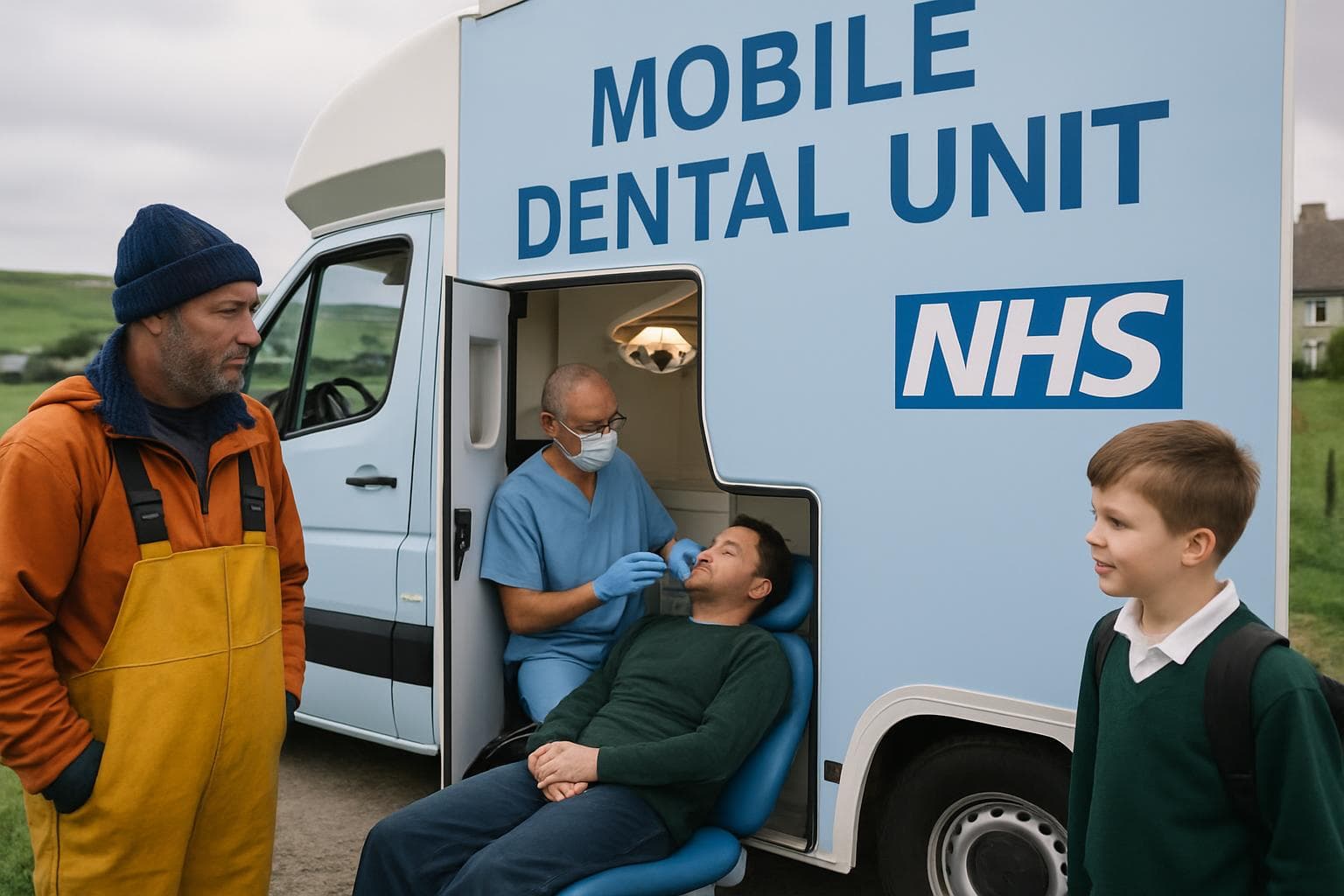
In a bid to address the pressing shortage of NHS dental services, mobile dental vans have been introduced in Cornwall, targeting communities with limited access to dental care. This initiative, spearheaded by Smile Together, focuses on providing essential services to veterans, the fishing community, and schoolchildren who have long awaited dental appointments.
The deployment of these mobile units comes as a response to the alarming statistic that 99% of dentists in the South West are not accepting new adult patients for NHS-funded treatment. Matthew Jerreat, the regional chief dental officer for the NHS in the South West, emphasized the importance of this initiative, stating, "This is one part of the puzzle to try and actually get access to NHS dentists."
The Smile Together initiative is currently invite-only, prioritizing specific groups such as fishermen and children from waiting lists. Dave Bustin, the commercial manager for Smile Together, noted, "We've been commissioned to provide services to fishermen, veterans, and children from the waiting list, so we're making direct contact with those groups."
The issue of dental access is not confined to Cornwall. A recent analysis by the Local Government Association revealed stark disparities in NHS dental service availability across England. Middlesborough, one of the most deprived areas, has only 10 NHS dental practices per 100,000 people, compared to 28 in the affluent Richmond upon Thames. These "dental deserts" highlight the broader challenges faced by rural and deprived communities in accessing essential dental care.
Personal accounts further illustrate the impact of these disparities. Becky, a mother from Penzance, shared her struggle to find dental care for her children after their local practice stopped accepting NHS patients post-COVID. "I jumped at the chance when I heard about this mobile service from the school," she said, highlighting the relief brought by the mobile units.
WHAT THIS MIGHT MEAN
The introduction of mobile dental vans in Cornwall represents a significant step towards improving access to NHS dental services in underserved areas. However, the broader issue of "dental deserts" across England suggests that more comprehensive solutions are needed. Policymakers may need to consider increasing funding and support for dental services in deprived regions to ensure equitable access.
In the long term, initiatives like Smile Together could serve as a model for other regions facing similar challenges. By targeting specific communities and providing mobile services, these programs can help bridge the gap in dental care access. However, sustained efforts and strategic planning will be crucial to address the systemic issues underlying the NHS dentist shortage.
Related Articles

England Proposes Vaping Ban in Cars with Children to Protect Public Health
Persistent Safety Concerns in Nottingham Maternity Services Amidst Calls for Systemic Reform
Birmingham's Proactive Approach to Measles Outbreak Offers Lessons for North London

Supreme Court Ruling Expands Compensation for Children Injured at Birth

UK Government to Reform Asylum Seeker Support and Employment Policies
Nottingham Attacks Inquiry: Families Demand Accountability and Truth
Mobile Dental Vans Aim to Bridge NHS Access Gap in Rural England
In This Article
 Maya Singh| Published
 HIGHLIGHTS
- Mobile dental vans are being deployed in Cornwall to improve access to NHS dental services, targeting underserved groups like veterans and schoolchildren.
- The Smile Together initiative highlights the severe shortage of NHS dentists in the South West, with 99% not accepting new adult patients.
- Areas like Middlesborough face "dental deserts," with significantly fewer NHS dental practices compared to wealthier regions.
- The Local Government Association's analysis reveals disparities in NHS dental service availability between deprived and affluent areas.
- Personal stories underscore the challenges families face in accessing dental care, with some relying on emergency services due to lack of regular appointments.
In a bid to address the pressing shortage of NHS dental services, mobile dental vans have been introduced in Cornwall, targeting communities with limited access to dental care. This initiative, spearheaded by Smile Together, focuses on providing essential services to veterans, the fishing community, and schoolchildren who have long awaited dental appointments.
The deployment of these mobile units comes as a response to the alarming statistic that 99% of dentists in the South West are not accepting new adult patients for NHS-funded treatment. Matthew Jerreat, the regional chief dental officer for the NHS in the South West, emphasized the importance of this initiative, stating, "This is one part of the puzzle to try and actually get access to NHS dentists."
The Smile Together initiative is currently invite-only, prioritizing specific groups such as fishermen and children from waiting lists. Dave Bustin, the commercial manager for Smile Together, noted, "We've been commissioned to provide services to fishermen, veterans, and children from the waiting list, so we're making direct contact with those groups."
The issue of dental access is not confined to Cornwall. A recent analysis by the Local Government Association revealed stark disparities in NHS dental service availability across England. Middlesborough, one of the most deprived areas, has only 10 NHS dental practices per 100,000 people, compared to 28 in the affluent Richmond upon Thames. These "dental deserts" highlight the broader challenges faced by rural and deprived communities in accessing essential dental care.
Personal accounts further illustrate the impact of these disparities. Becky, a mother from Penzance, shared her struggle to find dental care for her children after their local practice stopped accepting NHS patients post-COVID. "I jumped at the chance when I heard about this mobile service from the school," she said, highlighting the relief brought by the mobile units.
WHAT THIS MIGHT MEAN
The introduction of mobile dental vans in Cornwall represents a significant step towards improving access to NHS dental services in underserved areas. However, the broader issue of "dental deserts" across England suggests that more comprehensive solutions are needed. Policymakers may need to consider increasing funding and support for dental services in deprived regions to ensure equitable access.
In the long term, initiatives like Smile Together could serve as a model for other regions facing similar challenges. By targeting specific communities and providing mobile services, these programs can help bridge the gap in dental care access. However, sustained efforts and strategic planning will be crucial to address the systemic issues underlying the NHS dentist shortage.
Related Articles
England Proposes Vaping Ban in Cars with Children to Protect Public Health
Persistent Safety Concerns in Nottingham Maternity Services Amidst Calls for Systemic Reform
Birmingham's Proactive Approach to Measles Outbreak Offers Lessons for North London
Supreme Court Ruling Expands Compensation for Children Injured at Birth
UK Government to Reform Asylum Seeker Support and Employment Policies
Nottingham Attacks Inquiry: Families Demand Accountability and Truth