
Nagasaki Commemorates 80th Anniversary of Atomic Bombing with Calls for Peace
In This Article
HIGHLIGHTS
- Nagasaki commemorated the 80th anniversary of the atomic bombing with a solemn ceremony, emphasizing the need for global peace and nuclear disarmament.
- Mayor Shiro Suzuki warned of the escalating threat of nuclear war amid ongoing global conflicts, urging an end to armed confrontations.
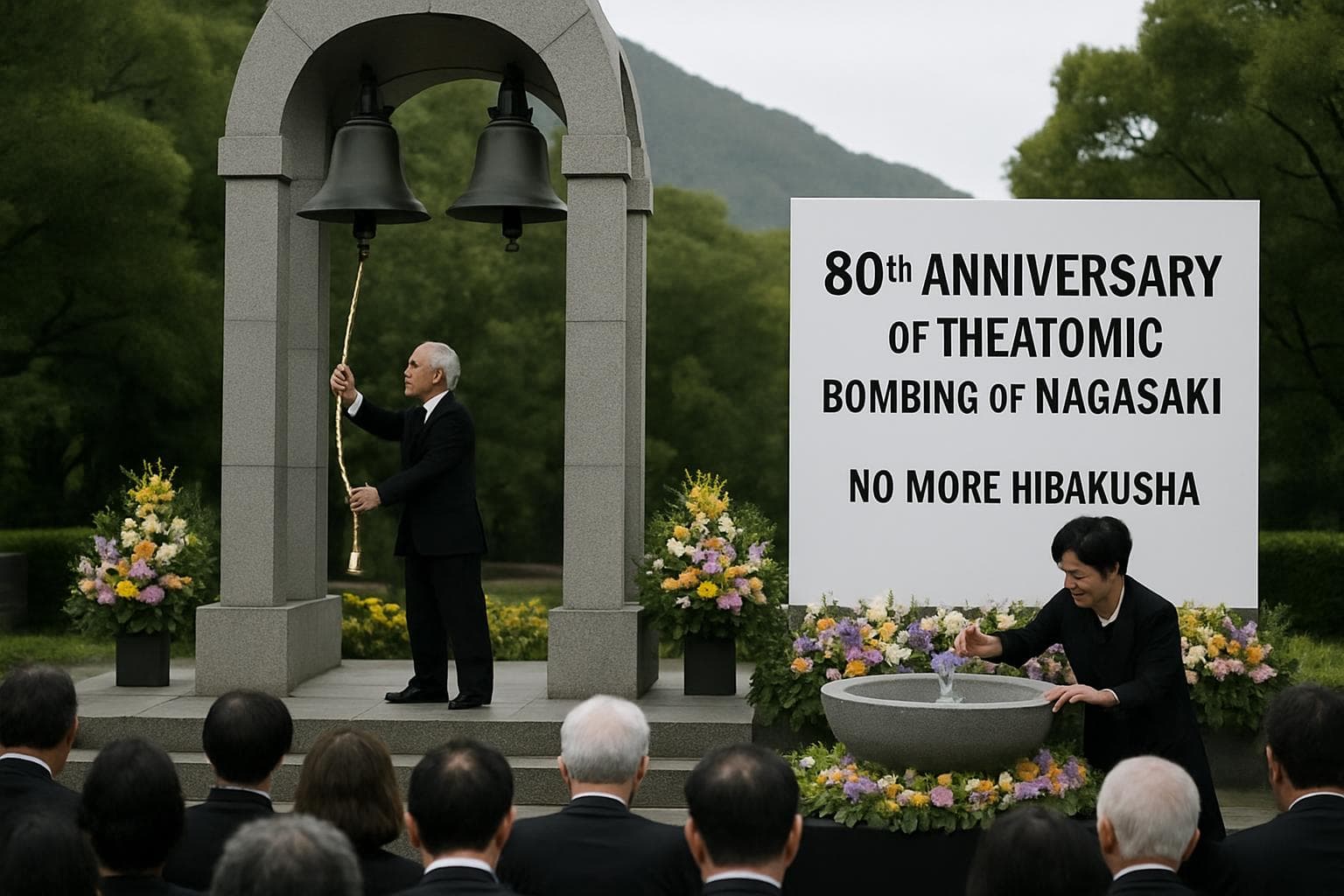
- The twin bells of Nagasaki's Urakami Cathedral rang together for the first time since the 1945 bombing, symbolizing hope and resilience.
- Survivors, known as hibakusha, shared harrowing memories of the bombing's aftermath, highlighting the enduring impact of nuclear warfare.
- The ceremony included symbolic water offerings, honoring victims who suffered from severe radiation effects and died begging for water.
On the 80th anniversary of the atomic bombing of Nagasaki, the city held a poignant ceremony to honor the victims and renew calls for global peace and nuclear disarmament. The event, marked by the ringing of the twin bells of Urakami Cathedral for the first time since the 1945 attack, served as a powerful reminder of the devastation caused by nuclear weapons.
A Solemn Ceremony of Remembrance
The ceremony began with a moment of silence at 11:02 a.m., the exact time the bomb was dropped on August 9, 1945. Nagasaki Mayor Shiro Suzuki delivered a Peace Declaration, urging the international community to halt escalating global conflicts. "If we continue on this trajectory, we will end up thrusting ourselves into a nuclear war," he warned, referencing ongoing tensions such as the Russia-Ukraine war and the Israel-Hamas conflict.
Survivors' Stories and Symbolic Gestures
Hiroshi Nishioka, a 93-year-old survivor, recounted the horror he witnessed as a teenager just three kilometers from the explosion. "Even the lucky ones gradually began to bleed from their gums and lose their hair," he shared, illustrating the long-term effects of radiation exposure. The ceremony also featured water offerings, a tribute to those who perished in the nuclear fire, symbolizing the victims' desperate pleas for water.
The Legacy of the Atomic Bombings
The twin bells of the Urakami Cathedral, rebuilt with the help of American churchgoers, rang in unison for the first time in 80 years. Chief priest Kenichi Yamamura emphasized the importance of acknowledging past wounds and working towards healing and reconciliation. "It's not about forgetting the wounds of the past but recognizing them and taking action to repair and rebuild," he stated.
WHAT THIS MIGHT MEAN
The commemoration of Nagasaki's atomic bombing serves as a stark reminder of the catastrophic consequences of nuclear warfare. As global tensions rise, the calls for nuclear disarmament and peace become increasingly urgent. Experts warn that without significant diplomatic efforts, the threat of nuclear conflict looms large. The international community faces a critical juncture: to heed the lessons of history and work collectively towards a future free from the shadow of nuclear war.
Related Articles

Russian LNG Tanker Sinks in Mediterranean Amid Accusations of Ukrainian Drone Attack
US and Israel Intensify Military Campaign as Iran's Capabilities Dwindle
Intensified US-Israel Strikes on Iran Spark Global Outcry

Senate Blocks Resolution to Limit Trump's Military Actions in Iran
Iran Postpones Khamenei Funeral Amid Escalating US-Israeli Strikes
Russia-Ukraine Conflict: Four Years of Unyielding Struggle and Human Resilience
Nagasaki Commemorates 80th Anniversary of Atomic Bombing with Calls for Peace
In This Article
 Ethan Brooks| Published
 HIGHLIGHTS
- Nagasaki commemorated the 80th anniversary of the atomic bombing with a solemn ceremony, emphasizing the need for global peace and nuclear disarmament.
- Mayor Shiro Suzuki warned of the escalating threat of nuclear war amid ongoing global conflicts, urging an end to armed confrontations.
- The twin bells of Nagasaki's Urakami Cathedral rang together for the first time since the 1945 bombing, symbolizing hope and resilience.
- Survivors, known as hibakusha, shared harrowing memories of the bombing's aftermath, highlighting the enduring impact of nuclear warfare.
- The ceremony included symbolic water offerings, honoring victims who suffered from severe radiation effects and died begging for water.
On the 80th anniversary of the atomic bombing of Nagasaki, the city held a poignant ceremony to honor the victims and renew calls for global peace and nuclear disarmament. The event, marked by the ringing of the twin bells of Urakami Cathedral for the first time since the 1945 attack, served as a powerful reminder of the devastation caused by nuclear weapons.
A Solemn Ceremony of Remembrance
The ceremony began with a moment of silence at 11:02 a.m., the exact time the bomb was dropped on August 9, 1945. Nagasaki Mayor Shiro Suzuki delivered a Peace Declaration, urging the international community to halt escalating global conflicts. "If we continue on this trajectory, we will end up thrusting ourselves into a nuclear war," he warned, referencing ongoing tensions such as the Russia-Ukraine war and the Israel-Hamas conflict.
Survivors' Stories and Symbolic Gestures
Hiroshi Nishioka, a 93-year-old survivor, recounted the horror he witnessed as a teenager just three kilometers from the explosion. "Even the lucky ones gradually began to bleed from their gums and lose their hair," he shared, illustrating the long-term effects of radiation exposure. The ceremony also featured water offerings, a tribute to those who perished in the nuclear fire, symbolizing the victims' desperate pleas for water.
The Legacy of the Atomic Bombings
The twin bells of the Urakami Cathedral, rebuilt with the help of American churchgoers, rang in unison for the first time in 80 years. Chief priest Kenichi Yamamura emphasized the importance of acknowledging past wounds and working towards healing and reconciliation. "It's not about forgetting the wounds of the past but recognizing them and taking action to repair and rebuild," he stated.
WHAT THIS MIGHT MEAN
The commemoration of Nagasaki's atomic bombing serves as a stark reminder of the catastrophic consequences of nuclear warfare. As global tensions rise, the calls for nuclear disarmament and peace become increasingly urgent. Experts warn that without significant diplomatic efforts, the threat of nuclear conflict looms large. The international community faces a critical juncture: to heed the lessons of history and work collectively towards a future free from the shadow of nuclear war.
Related Articles
Russian LNG Tanker Sinks in Mediterranean Amid Accusations of Ukrainian Drone Attack
US and Israel Intensify Military Campaign as Iran's Capabilities Dwindle
Intensified US-Israel Strikes on Iran Spark Global Outcry
Senate Blocks Resolution to Limit Trump's Military Actions in Iran
Iran Postpones Khamenei Funeral Amid Escalating US-Israeli Strikes
Russia-Ukraine Conflict: Four Years of Unyielding Struggle and Human Resilience