
Netanyahu's Gaza Strategy Faces Internal and International Scrutiny
In This Article
HIGHLIGHTS
- Israeli Prime Minister Benjamin Netanyahu plans to take full military control of Gaza, despite warnings from military leaders and international allies.
- The proposed offensive could lead to increased Palestinian casualties and mass displacement, exacerbating the humanitarian crisis.
- Military leaders, including Lt Gen Eyal Zamir, caution that occupying Gaza could endanger hostages and Israeli soldiers.
- Netanyahu suggests transferring governance to Arab forces post-conflict, though details remain unclear.
- International reactions are mixed, with some allies warning against full occupation and others supporting Israel's security decisions.
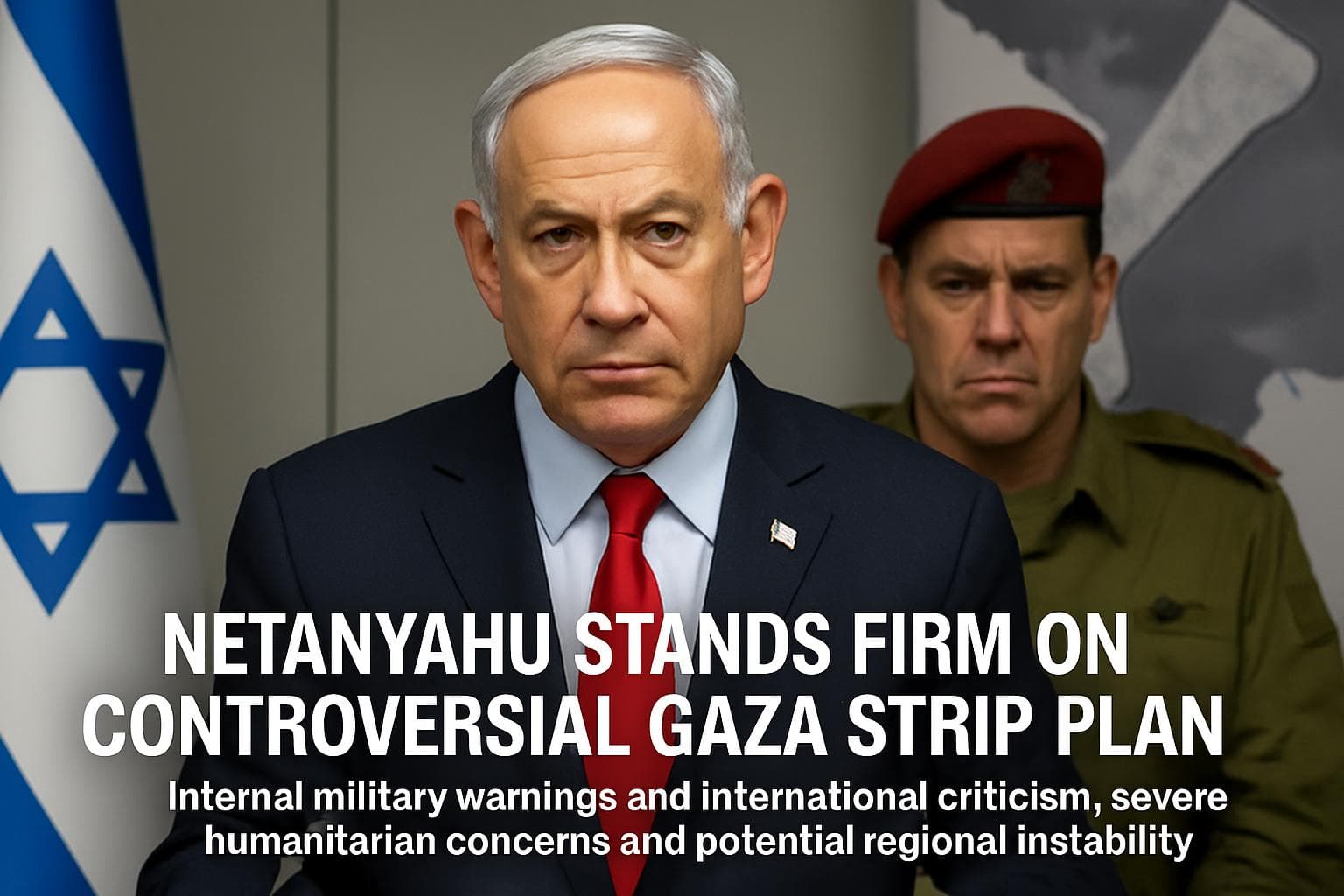
Israeli Prime Minister Benjamin Netanyahu's plan to assert full military control over the Gaza Strip has sparked significant controversy both domestically and internationally. Despite warnings from military leaders and concerns from global allies, Netanyahu remains steadfast in his strategy, which he claims is necessary to ensure Israel's security and dismantle Hamas.
Military and Political Tensions
Ahead of a crucial security cabinet meeting, Netanyahu outlined his intentions in an interview with Fox News, emphasizing that Israel does not wish to govern Gaza long-term. Instead, he envisions transferring control to Arab forces, though specifics remain vague. The Israeli military, currently controlling approximately 75% of Gaza, is poised to expand operations into Gaza City and central camps, potentially displacing up to one million Palestinians.
Lt Gen Eyal Zamir, Israel's army chief of staff, has expressed strong reservations, warning that a full occupation could lead to a protracted conflict and jeopardize the lives of hostages and soldiers. Reports suggest that the military leadership views the plan as a potential "trap," with significant risks of increased casualties and humanitarian responsibilities.
Humanitarian Concerns and International Reactions
The humanitarian situation in Gaza is dire, with tens of thousands already killed and widespread displacement. Local residents, like Maysaa al-Heila and Aya Mohammad, describe the devastating impact of ongoing conflict and displacement on their lives. The prospect of further military action raises fears of exacerbating these conditions.
Internationally, reactions are mixed. The British ambassador to Israel, Simon Walter, has labeled the full occupation as a "huge mistake," while the US envoy, Mike Huckabee, supports Israel's right to decide its security measures. The plan's potential to isolate Israel further on the global stage is a growing concern among its allies.
Future Governance and Diplomatic Implications
Netanyahu's proposal to hand over governance to Arab forces post-conflict remains speculative, with no clear framework or participating countries identified. This ambiguity fuels skepticism about the feasibility and long-term stability of such an arrangement.
WHAT THIS MIGHT MEAN
The unfolding situation in Gaza presents several potential outcomes. Should Netanyahu proceed with the military offensive, the immediate humanitarian impact could be severe, prompting international condemnation and calls for intervention. The risk to hostages and soldiers remains a critical concern, potentially complicating Israel's military objectives.
Diplomatically, Israel's relations with key allies could be strained, particularly if the humanitarian crisis worsens. The proposed transfer of governance to Arab forces, if realized, could reshape regional dynamics, though its success hinges on international cooperation and a viable peace process.
Ultimately, the situation underscores the complex interplay of military strategy, humanitarian considerations, and international diplomacy in the Israeli-Palestinian conflict. As events unfold, the global community will be closely watching for signs of resolution or escalation.
Related Articles
US Ambassador's Biblical Land Remarks Spark Outcry from Arab Nations
US-Iran Tensions Escalate Amid Renewed Nuclear Talks and Protests

Middle East Conflict Drives UK Energy Prices to New Highs

UK Faces Dilemmas Amid Iran Conflict and China Spying Allegations
US and Israel Intensify Military Campaign as Iran's Capabilities Dwindle
Iran Postpones Khamenei Funeral Amid Escalating US-Israeli Strikes
Netanyahu's Gaza Strategy Faces Internal and International Scrutiny
In This Article
 James Okoro| Published
 HIGHLIGHTS
- Israeli Prime Minister Benjamin Netanyahu plans to take full military control of Gaza, despite warnings from military leaders and international allies.
- The proposed offensive could lead to increased Palestinian casualties and mass displacement, exacerbating the humanitarian crisis.
- Military leaders, including Lt Gen Eyal Zamir, caution that occupying Gaza could endanger hostages and Israeli soldiers.
- Netanyahu suggests transferring governance to Arab forces post-conflict, though details remain unclear.
- International reactions are mixed, with some allies warning against full occupation and others supporting Israel's security decisions.
Israeli Prime Minister Benjamin Netanyahu's plan to assert full military control over the Gaza Strip has sparked significant controversy both domestically and internationally. Despite warnings from military leaders and concerns from global allies, Netanyahu remains steadfast in his strategy, which he claims is necessary to ensure Israel's security and dismantle Hamas.
Military and Political Tensions
Ahead of a crucial security cabinet meeting, Netanyahu outlined his intentions in an interview with Fox News, emphasizing that Israel does not wish to govern Gaza long-term. Instead, he envisions transferring control to Arab forces, though specifics remain vague. The Israeli military, currently controlling approximately 75% of Gaza, is poised to expand operations into Gaza City and central camps, potentially displacing up to one million Palestinians.
Lt Gen Eyal Zamir, Israel's army chief of staff, has expressed strong reservations, warning that a full occupation could lead to a protracted conflict and jeopardize the lives of hostages and soldiers. Reports suggest that the military leadership views the plan as a potential "trap," with significant risks of increased casualties and humanitarian responsibilities.
Humanitarian Concerns and International Reactions
The humanitarian situation in Gaza is dire, with tens of thousands already killed and widespread displacement. Local residents, like Maysaa al-Heila and Aya Mohammad, describe the devastating impact of ongoing conflict and displacement on their lives. The prospect of further military action raises fears of exacerbating these conditions.
Internationally, reactions are mixed. The British ambassador to Israel, Simon Walter, has labeled the full occupation as a "huge mistake," while the US envoy, Mike Huckabee, supports Israel's right to decide its security measures. The plan's potential to isolate Israel further on the global stage is a growing concern among its allies.
Future Governance and Diplomatic Implications
Netanyahu's proposal to hand over governance to Arab forces post-conflict remains speculative, with no clear framework or participating countries identified. This ambiguity fuels skepticism about the feasibility and long-term stability of such an arrangement.
WHAT THIS MIGHT MEAN
The unfolding situation in Gaza presents several potential outcomes. Should Netanyahu proceed with the military offensive, the immediate humanitarian impact could be severe, prompting international condemnation and calls for intervention. The risk to hostages and soldiers remains a critical concern, potentially complicating Israel's military objectives.
Diplomatically, Israel's relations with key allies could be strained, particularly if the humanitarian crisis worsens. The proposed transfer of governance to Arab forces, if realized, could reshape regional dynamics, though its success hinges on international cooperation and a viable peace process.
Ultimately, the situation underscores the complex interplay of military strategy, humanitarian considerations, and international diplomacy in the Israeli-Palestinian conflict. As events unfold, the global community will be closely watching for signs of resolution or escalation.
Related Articles
US Ambassador's Biblical Land Remarks Spark Outcry from Arab Nations
US-Iran Tensions Escalate Amid Renewed Nuclear Talks and Protests
Middle East Conflict Drives UK Energy Prices to New Highs
UK Faces Dilemmas Amid Iran Conflict and China Spying Allegations
US and Israel Intensify Military Campaign as Iran's Capabilities Dwindle
Iran Postpones Khamenei Funeral Amid Escalating US-Israeli Strikes