
Mexico Train Derailment in Oaxaca Claims 13 Lives, Sparks Safety Concerns
In This Article
HIGHLIGHTS
- A train derailment in Oaxaca, Mexico, resulted in 13 fatalities and 98 injuries, with five people in critical condition.
- The accident occurred on the Interoceanic Train, a key infrastructure project linking the Gulf of Mexico and the Pacific Ocean.
- Mexican President Claudia Sheinbaum and top officials are investigating the cause of the crash, with safety concerns being a focal point.
- The Interoceanic Train, inaugurated two years ago, is part of a broader initiative to boost economic development in southern Mexico.
- Opposition parties are calling for a pause and audit of similar infrastructure projects due to safety concerns.
A tragic train derailment in Mexico's southeastern state of Oaxaca has left at least 13 people dead and 98 injured, with five individuals in critical condition. The incident occurred on the Interoceanic Train, a significant infrastructure project designed to connect the Gulf of Mexico with the Pacific Ocean, enhancing trade and development across the Isthmus of Tehuantepec.
Details of the Incident
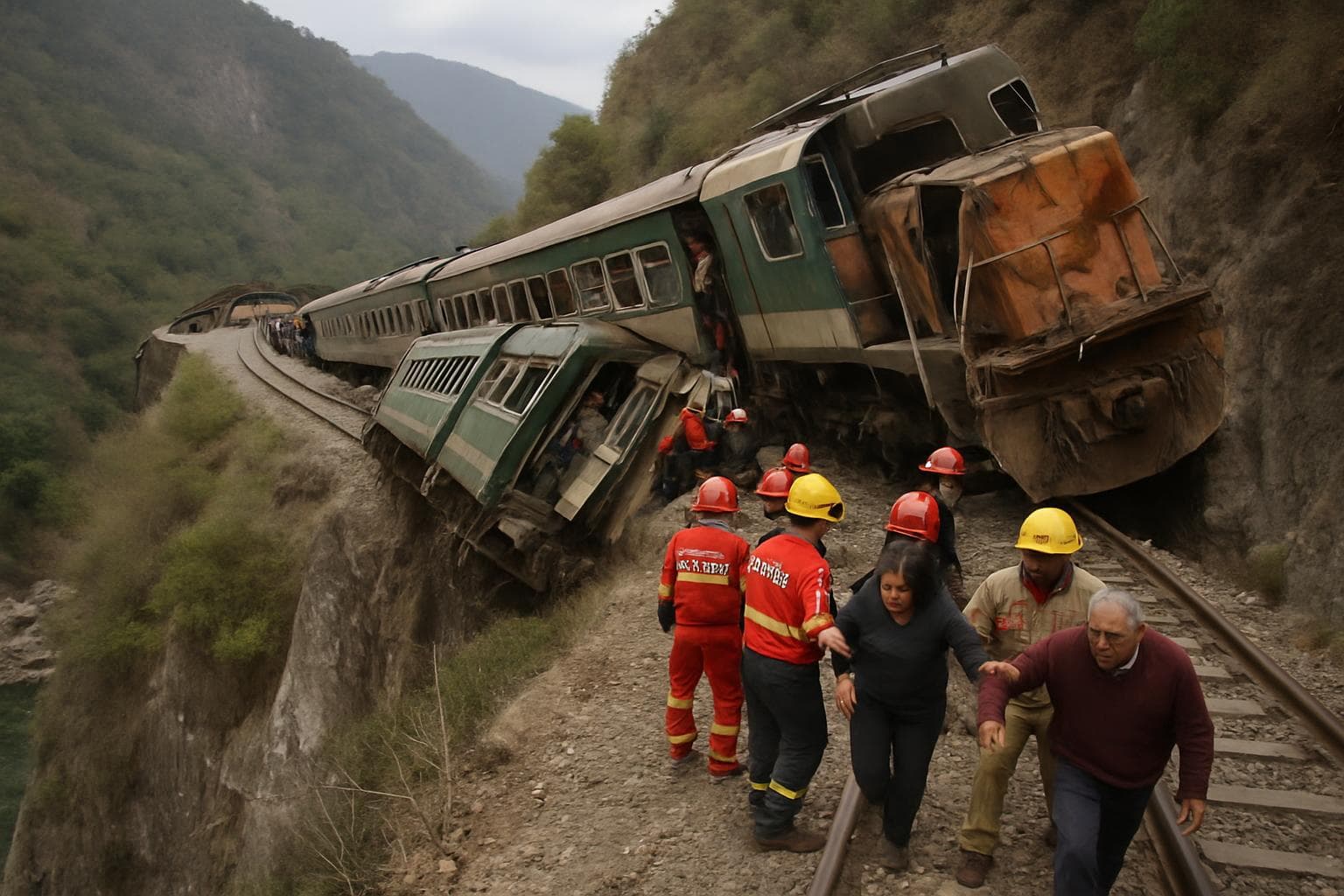
The train, carrying 241 passengers and nine crew members, derailed near the town of Nizanda as it rounded a bend. Photos from the scene depict rescue workers assisting passengers from the train, which had partially tilted over a cliff. The Mexican navy, which operates the country's railway network, confirmed the derailment and stated that 36 of the injured are receiving hospital treatment.
Government Response and Investigation
Mexican President Claudia Sheinbaum has announced a thorough investigation into the accident, emphasizing the need to "rigorously clarify what caused this accident." She, along with other top officials, is traveling to the crash site to oversee the response efforts. The Attorney General's office has also confirmed that an investigation is underway to determine the cause of the derailment.
Infrastructure and Safety Concerns
The Interoceanic Train was inaugurated two years ago under former President Andrés Manuel López Obrador, commonly known as Amlo, as part of a broader strategy to stimulate economic growth in southern Mexico. However, this recent accident, the third on the Interoceanic Train this year, has reignited debates over the safety and speed of such infrastructure projects. Opposition leader Alejandro Moreno has called for a halt and audit of these projects, citing the need for "immediate answers."
Economic and Political Implications
The Interoceanic Train is a flagship project aimed at modernizing the region's transport infrastructure, alongside other initiatives like the Mayan Train. These projects, overseen by the Mexican military, have been expedited to meet ambitious deadlines, raising questions about safety protocols. President Sheinbaum has defended the safety measures in place, asserting that the government remains committed to responsible construction and operation.
WHAT THIS MIGHT MEAN
The derailment in Oaxaca could have significant implications for Mexico's infrastructure projects. If investigations reveal lapses in safety protocols, it may lead to stricter regulations and oversight on future projects. Politically, the incident could fuel criticism of the current administration's handling of public works, potentially impacting public trust and future elections. Economically, any delays or audits could slow down the intended development benefits of these projects, affecting regional growth. As the investigation unfolds, the Mexican government will need to balance transparency and accountability with its development goals.
Related Articles

Trump Escalates Trade Tensions with Canada and Cuba Over Tariffs

Violence Erupts Across Mexico Following Death of Drug Lord El Mencho
Mexico Extradites 37 Cartel Members to US Amid Rising Tensions Over Drug Trafficking

Tensions Rise as Trump Considers Military Action in Latin America Amid Venezuelan Crisis
US Supreme Court Ruling on Trump's Tariffs Sparks Trade Policy Uncertainty

Trump's Tariff Strategy Faces Supreme Court Setback, New Measures Announced
Mexico Train Derailment in Oaxaca Claims 13 Lives, Sparks Safety Concerns
In This Article
 Ethan Brooks| Published
 HIGHLIGHTS
- A train derailment in Oaxaca, Mexico, resulted in 13 fatalities and 98 injuries, with five people in critical condition.
- The accident occurred on the Interoceanic Train, a key infrastructure project linking the Gulf of Mexico and the Pacific Ocean.
- Mexican President Claudia Sheinbaum and top officials are investigating the cause of the crash, with safety concerns being a focal point.
- The Interoceanic Train, inaugurated two years ago, is part of a broader initiative to boost economic development in southern Mexico.
- Opposition parties are calling for a pause and audit of similar infrastructure projects due to safety concerns.
A tragic train derailment in Mexico's southeastern state of Oaxaca has left at least 13 people dead and 98 injured, with five individuals in critical condition. The incident occurred on the Interoceanic Train, a significant infrastructure project designed to connect the Gulf of Mexico with the Pacific Ocean, enhancing trade and development across the Isthmus of Tehuantepec.
Details of the Incident
The train, carrying 241 passengers and nine crew members, derailed near the town of Nizanda as it rounded a bend. Photos from the scene depict rescue workers assisting passengers from the train, which had partially tilted over a cliff. The Mexican navy, which operates the country's railway network, confirmed the derailment and stated that 36 of the injured are receiving hospital treatment.
Government Response and Investigation
Mexican President Claudia Sheinbaum has announced a thorough investigation into the accident, emphasizing the need to "rigorously clarify what caused this accident." She, along with other top officials, is traveling to the crash site to oversee the response efforts. The Attorney General's office has also confirmed that an investigation is underway to determine the cause of the derailment.
Infrastructure and Safety Concerns
The Interoceanic Train was inaugurated two years ago under former President Andrés Manuel López Obrador, commonly known as Amlo, as part of a broader strategy to stimulate economic growth in southern Mexico. However, this recent accident, the third on the Interoceanic Train this year, has reignited debates over the safety and speed of such infrastructure projects. Opposition leader Alejandro Moreno has called for a halt and audit of these projects, citing the need for "immediate answers."
Economic and Political Implications
The Interoceanic Train is a flagship project aimed at modernizing the region's transport infrastructure, alongside other initiatives like the Mayan Train. These projects, overseen by the Mexican military, have been expedited to meet ambitious deadlines, raising questions about safety protocols. President Sheinbaum has defended the safety measures in place, asserting that the government remains committed to responsible construction and operation.
WHAT THIS MIGHT MEAN
The derailment in Oaxaca could have significant implications for Mexico's infrastructure projects. If investigations reveal lapses in safety protocols, it may lead to stricter regulations and oversight on future projects. Politically, the incident could fuel criticism of the current administration's handling of public works, potentially impacting public trust and future elections. Economically, any delays or audits could slow down the intended development benefits of these projects, affecting regional growth. As the investigation unfolds, the Mexican government will need to balance transparency and accountability with its development goals.
Related Articles
Trump Escalates Trade Tensions with Canada and Cuba Over Tariffs
Violence Erupts Across Mexico Following Death of Drug Lord El Mencho
Mexico Extradites 37 Cartel Members to US Amid Rising Tensions Over Drug Trafficking
Tensions Rise as Trump Considers Military Action in Latin America Amid Venezuelan Crisis
US Supreme Court Ruling on Trump's Tariffs Sparks Trade Policy Uncertainty
Trump's Tariff Strategy Faces Supreme Court Setback, New Measures Announced