
Mass Evacuations and Minimal Damage as Pacific Earthquake Triggers Tsunami Warnings
In This Article
HIGHLIGHTS
- A powerful 8.8-magnitude earthquake off Russia's coast triggered tsunami warnings across the Pacific, leading to mass evacuations.
- Japan's Fukushima nuclear plant, site of the 2011 disaster, was temporarily evacuated, but no abnormalities were detected.
- Tsunami warnings were lifted, allowing millions to return home, with minimal damage reported across affected regions.
- The Fukushima plant still faces significant decommissioning challenges, with 880 metric tons of hazardous material remaining.
- The earthquake also caused a tsunami in Russia, damaging the port of Severo-Kurilsk and leading to a volcanic eruption.
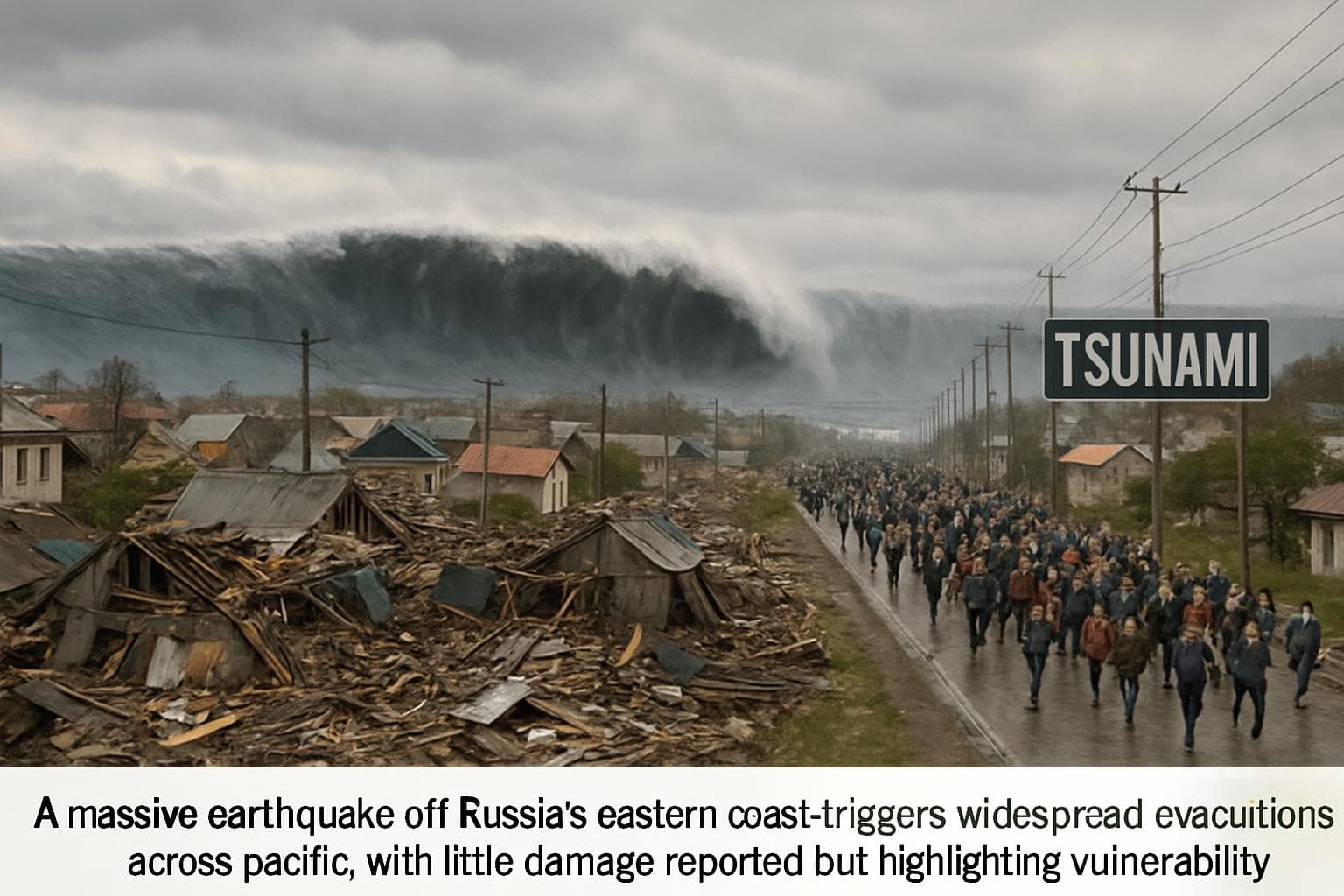
A massive earthquake measuring 8.8 on the Richter scale struck off Russia's far eastern coast on Wednesday, prompting tsunami warnings across the Pacific and leading to widespread evacuations. The seismic event, one of the strongest recorded in recent years, caused temporary chaos but ultimately resulted in minimal damage.
Evacuations and Immediate Response
The earthquake's epicenter was near Russia's sparsely populated Kamchatka Peninsula, triggering tsunami alerts from Japan to the United States. In Japan, nearly two million residents were ordered to evacuate to higher ground, including workers at the Fukushima nuclear plant, which was the site of a catastrophic nuclear disaster in 2011. The plant's operator confirmed that all 4,000 workers were safely evacuated and reported no abnormalities.
Across the Pacific, countries took precautionary measures. In Chile, authorities conducted what was described as the largest evacuation in the nation's history, moving 1.4 million people to safety. Similarly, Peru closed numerous ports, and flights were canceled in Hawaii. However, as the day progressed, warnings were downgraded or lifted, allowing millions to return home.
Impact and Aftermath
Despite initial fears, the tsunami caused limited damage. In Japan, the only reported fatality was a woman who tragically drove off a cliff while attempting to evacuate. In Russia, the tsunami impacted the port of Severo-Kurilsk, submerging a local fishing plant and sweeping debris into the sea. Additionally, the Klyuchevskoy volcano erupted shortly after the quake, spewing lava down its slopes.
The earthquake brought back memories of the 2011 disaster in Fukushima, where a 9.0-magnitude quake and subsequent tsunami led to a nuclear meltdown. Today, the plant still contains 880 metric tons of hazardous material, posing ongoing decommissioning challenges. The cleanup, expected to take decades, has been delayed multiple times, with full-scale removal of melted fuel debris now pushed back to 2037 or later.
WHAT THIS MIGHT MEAN
The recent earthquake underscores the persistent vulnerability of Pacific nations to natural disasters. While the immediate threat has passed, the event highlights the importance of robust evacuation procedures and disaster preparedness. For Japan, the incident serves as a stark reminder of the unresolved challenges at the Fukushima nuclear plant. The ongoing delays in decommissioning could have significant financial and environmental implications, with experts questioning the feasibility of the current timeline. As the region continues to grapple with these challenges, international cooperation and technological innovation will be crucial in mitigating future risks and ensuring safety.
Related Articles

Iran Postpones Khamenei Funeral Amid Escalating US-Israeli Strikes

US-Iran Tensions Escalate Amid Renewed Nuclear Talks and Protests
Russian LNG Tanker Sinks in Mediterranean Amid Accusations of Ukrainian Drone Attack

Canada Calls for De-escalation Amid US-Israel Strikes on Iran

US Supreme Court Ruling Sparks Trade Uncertainty in Asia and Beyond

Trump's New Tariff Strategy Sparks Global Trade Uncertainty
Mass Evacuations and Minimal Damage as Pacific Earthquake Triggers Tsunami Warnings
In This Article
 Ethan Brooks| Published
 HIGHLIGHTS
- A powerful 8.8-magnitude earthquake off Russia's coast triggered tsunami warnings across the Pacific, leading to mass evacuations.
- Japan's Fukushima nuclear plant, site of the 2011 disaster, was temporarily evacuated, but no abnormalities were detected.
- Tsunami warnings were lifted, allowing millions to return home, with minimal damage reported across affected regions.
- The Fukushima plant still faces significant decommissioning challenges, with 880 metric tons of hazardous material remaining.
- The earthquake also caused a tsunami in Russia, damaging the port of Severo-Kurilsk and leading to a volcanic eruption.
A massive earthquake measuring 8.8 on the Richter scale struck off Russia's far eastern coast on Wednesday, prompting tsunami warnings across the Pacific and leading to widespread evacuations. The seismic event, one of the strongest recorded in recent years, caused temporary chaos but ultimately resulted in minimal damage.
Evacuations and Immediate Response
The earthquake's epicenter was near Russia's sparsely populated Kamchatka Peninsula, triggering tsunami alerts from Japan to the United States. In Japan, nearly two million residents were ordered to evacuate to higher ground, including workers at the Fukushima nuclear plant, which was the site of a catastrophic nuclear disaster in 2011. The plant's operator confirmed that all 4,000 workers were safely evacuated and reported no abnormalities.
Across the Pacific, countries took precautionary measures. In Chile, authorities conducted what was described as the largest evacuation in the nation's history, moving 1.4 million people to safety. Similarly, Peru closed numerous ports, and flights were canceled in Hawaii. However, as the day progressed, warnings were downgraded or lifted, allowing millions to return home.
Impact and Aftermath
Despite initial fears, the tsunami caused limited damage. In Japan, the only reported fatality was a woman who tragically drove off a cliff while attempting to evacuate. In Russia, the tsunami impacted the port of Severo-Kurilsk, submerging a local fishing plant and sweeping debris into the sea. Additionally, the Klyuchevskoy volcano erupted shortly after the quake, spewing lava down its slopes.
The earthquake brought back memories of the 2011 disaster in Fukushima, where a 9.0-magnitude quake and subsequent tsunami led to a nuclear meltdown. Today, the plant still contains 880 metric tons of hazardous material, posing ongoing decommissioning challenges. The cleanup, expected to take decades, has been delayed multiple times, with full-scale removal of melted fuel debris now pushed back to 2037 or later.
WHAT THIS MIGHT MEAN
The recent earthquake underscores the persistent vulnerability of Pacific nations to natural disasters. While the immediate threat has passed, the event highlights the importance of robust evacuation procedures and disaster preparedness. For Japan, the incident serves as a stark reminder of the unresolved challenges at the Fukushima nuclear plant. The ongoing delays in decommissioning could have significant financial and environmental implications, with experts questioning the feasibility of the current timeline. As the region continues to grapple with these challenges, international cooperation and technological innovation will be crucial in mitigating future risks and ensuring safety.
Related Articles
Iran Postpones Khamenei Funeral Amid Escalating US-Israeli Strikes
US-Iran Tensions Escalate Amid Renewed Nuclear Talks and Protests
Russian LNG Tanker Sinks in Mediterranean Amid Accusations of Ukrainian Drone Attack
Canada Calls for De-escalation Amid US-Israel Strikes on Iran
US Supreme Court Ruling Sparks Trade Uncertainty in Asia and Beyond
Trump's New Tariff Strategy Sparks Global Trade Uncertainty