
Protesters Breach Security at COP30 in Brazil, Highlighting Indigenous Concerns
In This Article
HIGHLIGHTS
- Protesters, including Indigenous groups, breached security at COP30 in Belém, Brazil, causing minor injuries and damage.
- The demonstration highlighted tensions over Indigenous participation and environmental concerns, with slogans like "our forests are not for sale."
- Brazilian and UN authorities are investigating the security breach, which is unusual for such a high-profile event.
- COP30 is the first climate conference held in Brazil, focusing on Indigenous issues and the Amazon's environmental challenges.
- The event marks a decade since the Paris Agreement, with ongoing debates about fossil fuel licenses and climate funding.
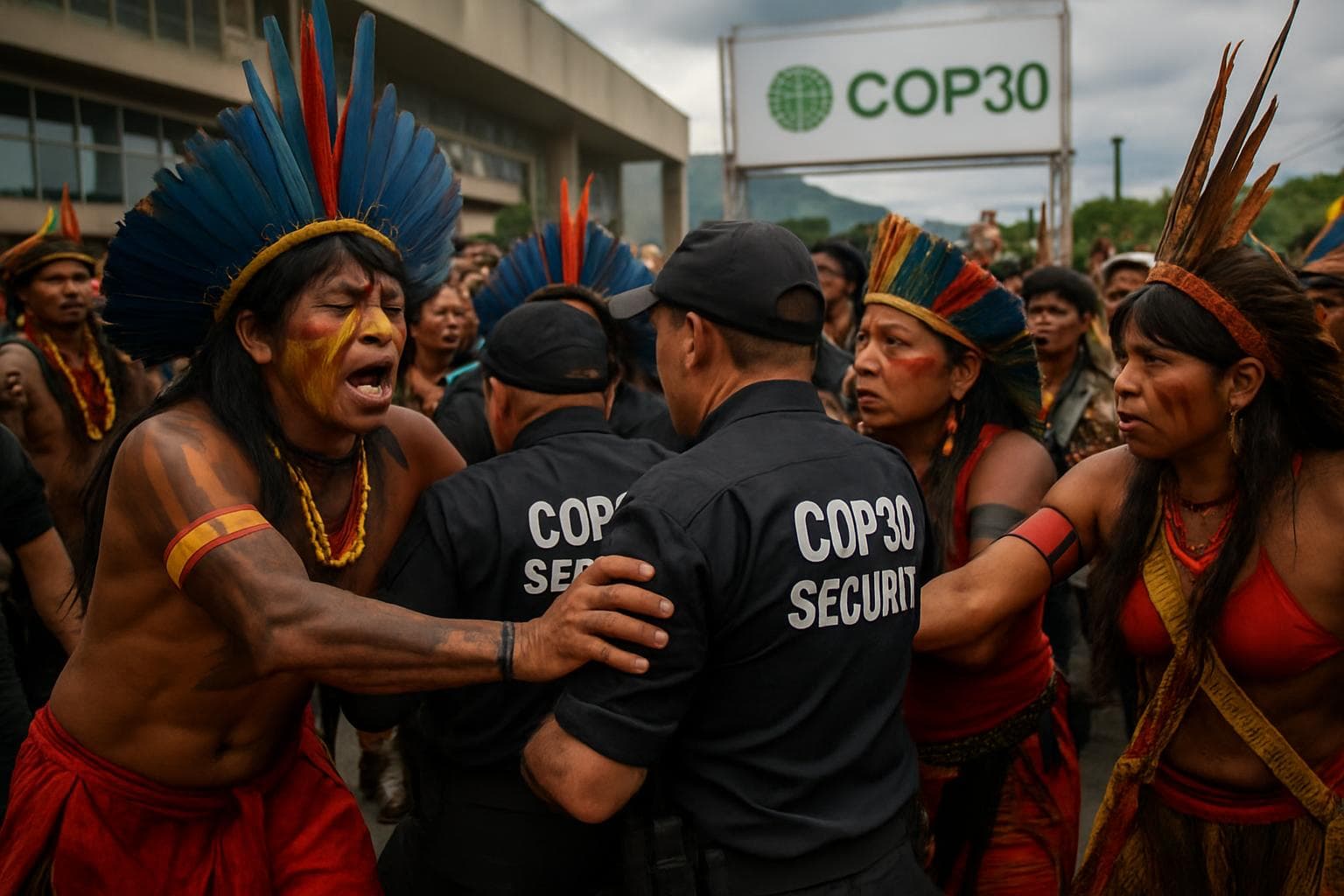
In a dramatic turn of events at the COP30 climate talks in Belém, Brazil, protesters, including Indigenous groups, breached security lines late Tuesday night, drawing attention to ongoing environmental and Indigenous rights issues. The incident resulted in minor injuries to two security personnel and limited damage to the venue, according to UN officials.
Security Breach and Protester Demands
The protest, marked by chants and banners declaring "our forests are not for sale," saw demonstrators, some in traditional Indigenous attire, storm the entrance of the conference center. Videos circulating on social media captured the chaotic scene as protesters clashed with security personnel. The demonstrators, reportedly from Indigenous communities and a left-wing youth movement called Juntos, were eventually stopped by UN security and Brazilian soldiers.
Indigenous Voices at the Forefront
The protest underscored the frustrations of Indigenous communities over their exclusion from decision-making processes at the conference. Agustin Ocaña from the Global Youth Coalition noted that the protesters were not acting out of malice but desperation to protect their lands and the Amazon River. An Indigenous leader from the Tupinamba community expressed concerns over development in the rainforest, stating, "we can't eat money."
A Historic COP in Brazil
COP30, the first climate conference held in Brazil, has been dubbed "the Indigenous peoples COP," with organizers promising to prioritize Indigenous issues. Brazilian Minister of Indigenous Peoples Sonia Guajajara hailed the event as historic, with an estimated 3,000 Indigenous participants. The conference takes place ten years after the Paris Agreement, amid ongoing debates about fossil fuel licenses and climate funding.
Continued Activism and Security Measures
Despite the security breach, the UN confirmed that the venue remains secure and negotiations continue. The Brazilian hosts have encouraged civil society participation, with numerous peaceful demonstrations planned throughout the week. A "people's summit" and a global youth rally are among the scheduled events, reflecting the growing activism surrounding climate change and environmental justice.
WHAT THIS MIGHT MEAN
The security breach at COP30 highlights the increasing tensions between Indigenous communities and global climate policymakers. As investigations continue, the incident may prompt a reevaluation of security protocols at international conferences. The focus on Indigenous issues at COP30 could lead to more inclusive discussions and potentially influence future climate agreements. However, the ongoing debates over fossil fuel licenses and climate funding remain contentious, with significant implications for global warming and environmental justice efforts. As the conference progresses, the world will be watching to see if meaningful commitments are made to address these critical issues.
Related Articles
Willie Colón: The Salsa Legend Who Transformed Latin Music Passes Away at 75
St Francis of Assisi's Bones Draw Global Pilgrims to Italy
Venezuela's Release of Political Prisoners Marks Potential Shift in Diplomatic Relations
EU-Mercosur Trade Deal: A Historic Agreement Amidst Controversy

US-Iran Tensions Escalate Amid Renewed Nuclear Talks and Protests

Russia-Ukraine Conflict: Four Years of Unyielding Struggle and Human Resilience
Protesters Breach Security at COP30 in Brazil, Highlighting Indigenous Concerns
In This Article
HIGHLIGHTS
- Protesters, including Indigenous groups, breached security at COP30 in Belém, Brazil, causing minor injuries and damage.
- The demonstration highlighted tensions over Indigenous participation and environmental concerns, with slogans like "our forests are not for sale."
- Brazilian and UN authorities are investigating the security breach, which is unusual for such a high-profile event.
- COP30 is the first climate conference held in Brazil, focusing on Indigenous issues and the Amazon's environmental challenges.
- The event marks a decade since the Paris Agreement, with ongoing debates about fossil fuel licenses and climate funding.
In a dramatic turn of events at the COP30 climate talks in Belém, Brazil, protesters, including Indigenous groups, breached security lines late Tuesday night, drawing attention to ongoing environmental and Indigenous rights issues. The incident resulted in minor injuries to two security personnel and limited damage to the venue, according to UN officials.
Security Breach and Protester Demands
The protest, marked by chants and banners declaring "our forests are not for sale," saw demonstrators, some in traditional Indigenous attire, storm the entrance of the conference center. Videos circulating on social media captured the chaotic scene as protesters clashed with security personnel. The demonstrators, reportedly from Indigenous communities and a left-wing youth movement called Juntos, were eventually stopped by UN security and Brazilian soldiers.
Indigenous Voices at the Forefront
The protest underscored the frustrations of Indigenous communities over their exclusion from decision-making processes at the conference. Agustin Ocaña from the Global Youth Coalition noted that the protesters were not acting out of malice but desperation to protect their lands and the Amazon River. An Indigenous leader from the Tupinamba community expressed concerns over development in the rainforest, stating, "we can't eat money."
A Historic COP in Brazil
COP30, the first climate conference held in Brazil, has been dubbed "the Indigenous peoples COP," with organizers promising to prioritize Indigenous issues. Brazilian Minister of Indigenous Peoples Sonia Guajajara hailed the event as historic, with an estimated 3,000 Indigenous participants. The conference takes place ten years after the Paris Agreement, amid ongoing debates about fossil fuel licenses and climate funding.
Continued Activism and Security Measures
Despite the security breach, the UN confirmed that the venue remains secure and negotiations continue. The Brazilian hosts have encouraged civil society participation, with numerous peaceful demonstrations planned throughout the week. A "people's summit" and a global youth rally are among the scheduled events, reflecting the growing activism surrounding climate change and environmental justice.
WHAT THIS MIGHT MEAN
The security breach at COP30 highlights the increasing tensions between Indigenous communities and global climate policymakers. As investigations continue, the incident may prompt a reevaluation of security protocols at international conferences. The focus on Indigenous issues at COP30 could lead to more inclusive discussions and potentially influence future climate agreements. However, the ongoing debates over fossil fuel licenses and climate funding remain contentious, with significant implications for global warming and environmental justice efforts. As the conference progresses, the world will be watching to see if meaningful commitments are made to address these critical issues.
Related Articles
Willie Colón: The Salsa Legend Who Transformed Latin Music Passes Away at 75
St Francis of Assisi's Bones Draw Global Pilgrims to Italy
Venezuela's Release of Political Prisoners Marks Potential Shift in Diplomatic Relations
EU-Mercosur Trade Deal: A Historic Agreement Amidst Controversy
US-Iran Tensions Escalate Amid Renewed Nuclear Talks and Protests
Russia-Ukraine Conflict: Four Years of Unyielding Struggle and Human Resilience