
Purdue Pharma's $7.4 Billion Settlement Approved, Sackler Family to Pay for Opioid Crisis
In This Article
HIGHLIGHTS
- A bankruptcy judge approved a $7.4 billion settlement with Purdue Pharma, resolving thousands of lawsuits related to the opioid crisis.
- The Sackler family, owners of Purdue, will contribute up to $7 billion and relinquish ownership of the company.
- The settlement does not grant the Sacklers immunity from future opioid-related lawsuits, unlike a previous deal rejected by the Supreme Court.
- The agreement is expected to fund opioid addiction treatment and prevention, with individual victims receiving up to $865 million.
- Over 99% of creditors supported the bankruptcy restructuring plan, marking a significant step in addressing the opioid epidemic.
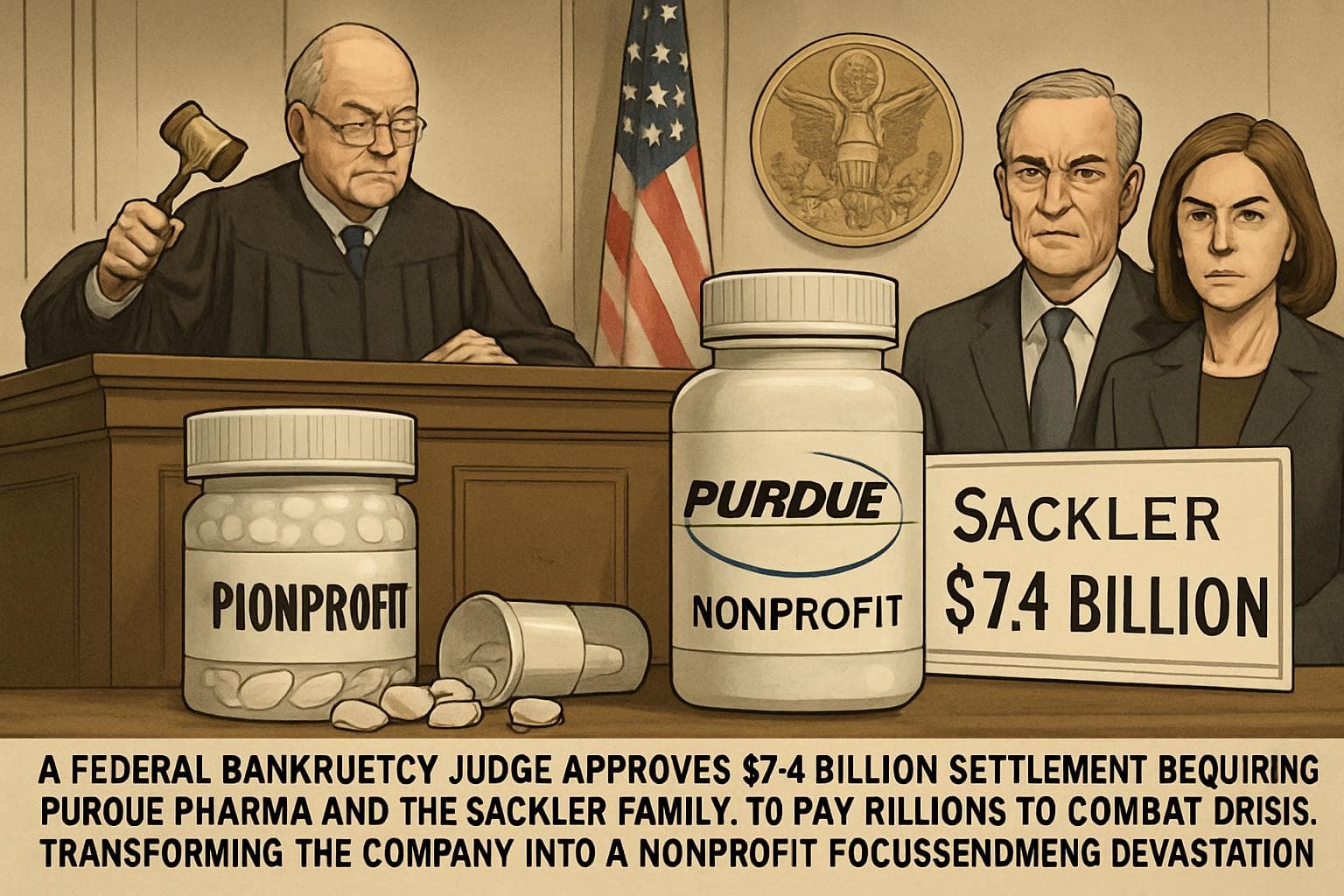
A federal bankruptcy judge has approved a landmark $7.4 billion settlement with Purdue Pharma, the maker of OxyContin, marking a significant development in the ongoing legal battle over the opioid crisis. The decision, announced on Friday, requires Purdue and its billionaire owners, the Sackler family, to pay billions to address the devastating impact of opioids in the United States.
Settlement Details and Sackler Family Contributions
Under the terms of the agreement, the Sackler family will contribute between $6.5 billion and $7 billion and relinquish ownership of Purdue Pharma. The company will be restructured into a nonprofit entity, Knoa Pharma, with a mission to combat the opioid crisis. This settlement replaces a previous deal rejected by the U.S. Supreme Court last year, which would have shielded the Sacklers from future lawsuits. The new agreement does not offer such immunity, allowing for potential future legal actions against the family.
Impact on Opioid Crisis and Victims
The settlement is poised to provide substantial funding for opioid addiction treatment and prevention efforts. Individual victims are expected to receive up to $865 million, while state and local governments will receive the majority of the funds. These resources aim to support communities devastated by the opioid epidemic, which has been linked to approximately 900,000 deaths in the U.S. since 1999.
Legal and Public Reactions
The approval of this settlement marks the culmination of a complex legal process involving thousands of lawsuits against Purdue Pharma. The case has been described as one of the most intricate bankruptcies in U.S. history. Despite some objections from individuals who felt the settlement did not adequately compensate victims, the plan received overwhelming support from government groups and personal injury victims, with over 99% of creditors voting in favor.
A Long Road to Accountability
Purdue Pharma's aggressive marketing of OxyContin has been blamed for fueling the opioid crisis, leading to widespread addiction and deaths. The Sackler family's reputation, once bolstered by philanthropy, has suffered due to their association with the crisis. This settlement represents a significant step towards accountability and healing for affected communities.
WHAT THIS MIGHT MEAN
The approval of this settlement could set a precedent for future legal actions against pharmaceutical companies involved in the opioid crisis. With the Sackler family not shielded from future lawsuits, there may be additional legal challenges ahead. Experts suggest that this case could influence how courts handle corporate accountability in public health crises. As funds from the settlement are distributed, communities will have the opportunity to enhance opioid addiction treatment and prevention programs, potentially reducing the epidemic's impact. However, the effectiveness of these efforts will depend on the strategic allocation of resources and continued legal and public scrutiny.
Related Articles

Iran Postpones Khamenei Funeral Amid Escalating US-Israeli Strikes

US-Iran Tensions Escalate Amid Renewed Nuclear Talks and Protests

Rising Tensions: Trump's Dual Approach to Iran's Nuclear Challenge
UK Denies US Use of Military Bases for Potential Iran Strikes Amid Chagos Islands Dispute

Canada Calls for De-escalation Amid US-Israel Strikes on Iran

Iranian Students Lead Major Protests Amid Rising US-Iran Tensions
Purdue Pharma's $7.4 Billion Settlement Approved, Sackler Family to Pay for Opioid Crisis
In This Article
 Ethan Brooks| Published
 HIGHLIGHTS
- A bankruptcy judge approved a $7.4 billion settlement with Purdue Pharma, resolving thousands of lawsuits related to the opioid crisis.
- The Sackler family, owners of Purdue, will contribute up to $7 billion and relinquish ownership of the company.
- The settlement does not grant the Sacklers immunity from future opioid-related lawsuits, unlike a previous deal rejected by the Supreme Court.
- The agreement is expected to fund opioid addiction treatment and prevention, with individual victims receiving up to $865 million.
- Over 99% of creditors supported the bankruptcy restructuring plan, marking a significant step in addressing the opioid epidemic.
A federal bankruptcy judge has approved a landmark $7.4 billion settlement with Purdue Pharma, the maker of OxyContin, marking a significant development in the ongoing legal battle over the opioid crisis. The decision, announced on Friday, requires Purdue and its billionaire owners, the Sackler family, to pay billions to address the devastating impact of opioids in the United States.
Settlement Details and Sackler Family Contributions
Under the terms of the agreement, the Sackler family will contribute between $6.5 billion and $7 billion and relinquish ownership of Purdue Pharma. The company will be restructured into a nonprofit entity, Knoa Pharma, with a mission to combat the opioid crisis. This settlement replaces a previous deal rejected by the U.S. Supreme Court last year, which would have shielded the Sacklers from future lawsuits. The new agreement does not offer such immunity, allowing for potential future legal actions against the family.
Impact on Opioid Crisis and Victims
The settlement is poised to provide substantial funding for opioid addiction treatment and prevention efforts. Individual victims are expected to receive up to $865 million, while state and local governments will receive the majority of the funds. These resources aim to support communities devastated by the opioid epidemic, which has been linked to approximately 900,000 deaths in the U.S. since 1999.
Legal and Public Reactions
The approval of this settlement marks the culmination of a complex legal process involving thousands of lawsuits against Purdue Pharma. The case has been described as one of the most intricate bankruptcies in U.S. history. Despite some objections from individuals who felt the settlement did not adequately compensate victims, the plan received overwhelming support from government groups and personal injury victims, with over 99% of creditors voting in favor.
A Long Road to Accountability
Purdue Pharma's aggressive marketing of OxyContin has been blamed for fueling the opioid crisis, leading to widespread addiction and deaths. The Sackler family's reputation, once bolstered by philanthropy, has suffered due to their association with the crisis. This settlement represents a significant step towards accountability and healing for affected communities.
WHAT THIS MIGHT MEAN
The approval of this settlement could set a precedent for future legal actions against pharmaceutical companies involved in the opioid crisis. With the Sackler family not shielded from future lawsuits, there may be additional legal challenges ahead. Experts suggest that this case could influence how courts handle corporate accountability in public health crises. As funds from the settlement are distributed, communities will have the opportunity to enhance opioid addiction treatment and prevention programs, potentially reducing the epidemic's impact. However, the effectiveness of these efforts will depend on the strategic allocation of resources and continued legal and public scrutiny.
Related Articles
Iran Postpones Khamenei Funeral Amid Escalating US-Israeli Strikes
US-Iran Tensions Escalate Amid Renewed Nuclear Talks and Protests
Rising Tensions: Trump's Dual Approach to Iran's Nuclear Challenge
UK Denies US Use of Military Bases for Potential Iran Strikes Amid Chagos Islands Dispute
Canada Calls for De-escalation Amid US-Israel Strikes on Iran
Iranian Students Lead Major Protests Amid Rising US-Iran Tensions