
Russia Welcomes US Security Strategy Amidst Ongoing Ukraine Peace Talks
In This Article
HIGHLIGHTS
- Russia has praised the new US national security strategy, aligning it with Moscow's vision and welcoming its softer stance.
- The strategy criticizes the EU, warning of "civilisational erasure" and promoting stronger US-Russia relations.
- Ukraine peace talks are ongoing, with US officials claiming progress, but key issues like territory and security guarantees remain unresolved.
- European leaders express concerns over the strategy's implications for EU-US relations and its alignment with far-right ideologies.
- Ukrainian President Zelenskyy seeks support from European allies amid US pressure to concede territory in peace negotiations.
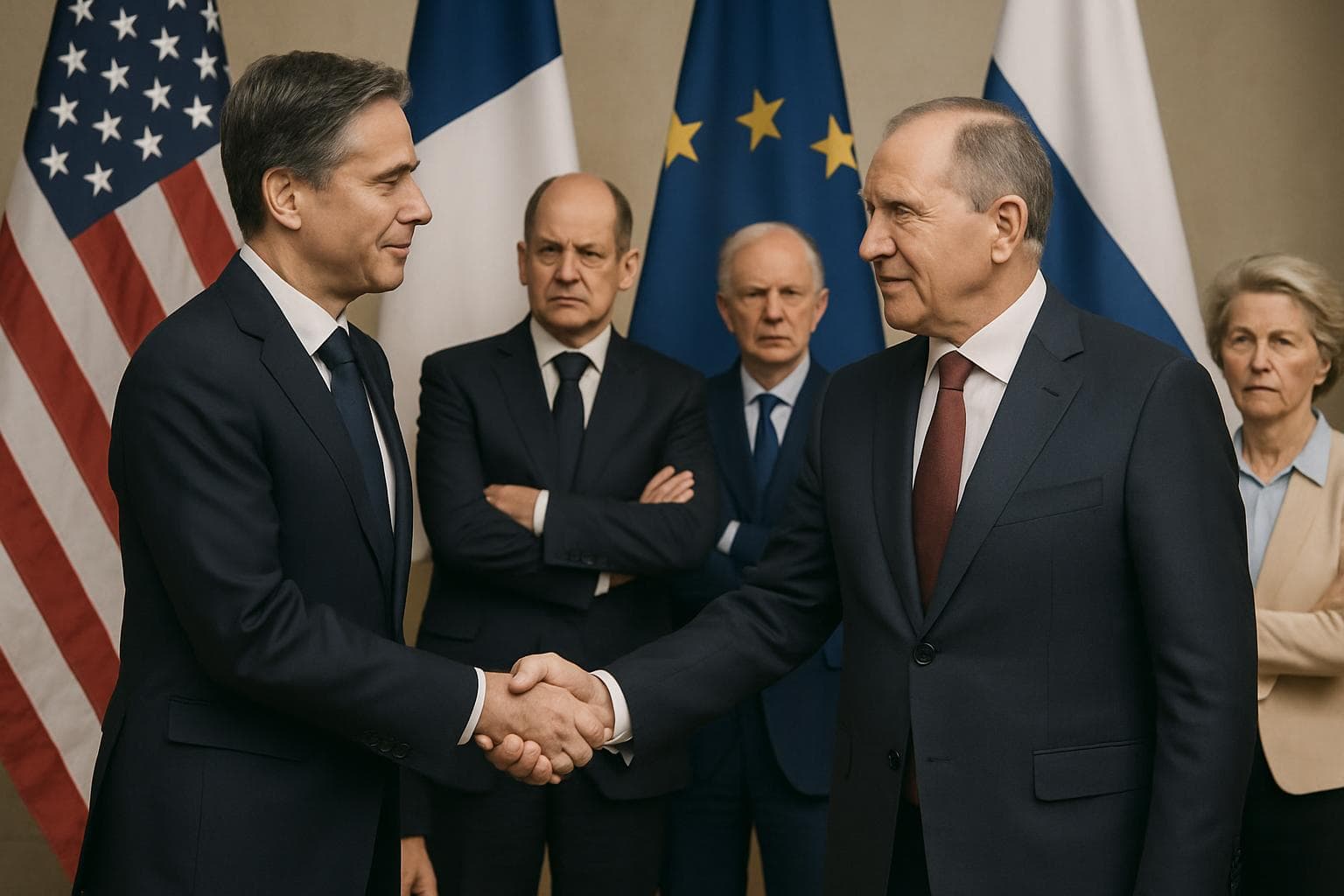
In a significant diplomatic development, Russia has expressed approval of the United States' new national security strategy, unveiled by President Donald Trump. The Kremlin has described the strategy as "largely consistent" with its own vision, marking a notable shift in US foreign policy. The 33-page document, released this week, refrains from labeling Russia as a threat and instead emphasizes the need for improved US-Russia relations.
US Strategy Sparks EU Concerns
The strategy has drawn criticism from European Union officials, who are concerned about its implications for transatlantic relations. The document warns of Europe's potential "civilisational erasure" and criticizes the EU's stance on issues like freedom of expression. It also calls for a revival of "Western identity" and praises "patriotic European parties," raising alarms about its alignment with far-right ideologies.
German Foreign Minister Johann Wadephul emphasized the importance of the US as a NATO ally but questioned the strategy's focus on societal organization. Meanwhile, Polish Prime Minister Donald Tusk reaffirmed Europe's status as a key US ally, urging a united front against common threats.
Ukraine Peace Talks at a Critical Juncture
As the US seeks to broker a peace deal in Ukraine, negotiations have reached a pivotal stage. President Volodymyr Zelenskyy is set to meet with European leaders, including UK Prime Minister Keir Starmer and French President Emmanuel Macron, to discuss the ongoing conflict. Zelenskyy has voiced concerns over US pressure to cede territory, highlighting the need for robust security guarantees to deter future Russian aggression.
US officials, including outgoing Ukraine envoy Keith Kellogg, claim progress in the talks, with territory and the fate of the Zaporizhzhia nuclear power plant as key sticking points. However, skepticism remains about the feasibility of a sustainable agreement, given the complex geopolitical dynamics.
WHAT THIS MIGHT MEAN
The evolving US-Russia relations, as reflected in the new security strategy, could reshape the geopolitical landscape, potentially easing tensions between the two nations. However, this shift may strain US-EU relations, especially if the strategy is perceived as endorsing far-right ideologies. The outcome of the Ukraine peace talks remains uncertain, with significant hurdles still to overcome. Should the US succeed in brokering a deal, it could pave the way for a new era of stability in Eastern Europe. However, failure to address key issues like security guarantees could prolong the conflict, leaving the region vulnerable to further instability.
Related Articles
Spain's Sánchez Stands Firm Against Trump's Trade Threat Over Iran Stance
Russian LNG Tanker Sinks in Mediterranean Amid Accusations of Ukrainian Drone Attack
UK-Iran Tensions: Starmer Defends Cautious Approach Amid Trump Criticism

UK Faces Dilemmas Amid Iran Conflict and China Spying Allegations
Senate Blocks Resolution to Limit Trump's Military Actions in Iran

Iran Postpones Khamenei Funeral Amid Escalating US-Israeli Strikes
Russia Welcomes US Security Strategy Amidst Ongoing Ukraine Peace Talks
In This Article
 Ethan Brooks| Published
 HIGHLIGHTS
- Russia has praised the new US national security strategy, aligning it with Moscow's vision and welcoming its softer stance.
- The strategy criticizes the EU, warning of "civilisational erasure" and promoting stronger US-Russia relations.
- Ukraine peace talks are ongoing, with US officials claiming progress, but key issues like territory and security guarantees remain unresolved.
- European leaders express concerns over the strategy's implications for EU-US relations and its alignment with far-right ideologies.
- Ukrainian President Zelenskyy seeks support from European allies amid US pressure to concede territory in peace negotiations.
In a significant diplomatic development, Russia has expressed approval of the United States' new national security strategy, unveiled by President Donald Trump. The Kremlin has described the strategy as "largely consistent" with its own vision, marking a notable shift in US foreign policy. The 33-page document, released this week, refrains from labeling Russia as a threat and instead emphasizes the need for improved US-Russia relations.
US Strategy Sparks EU Concerns
The strategy has drawn criticism from European Union officials, who are concerned about its implications for transatlantic relations. The document warns of Europe's potential "civilisational erasure" and criticizes the EU's stance on issues like freedom of expression. It also calls for a revival of "Western identity" and praises "patriotic European parties," raising alarms about its alignment with far-right ideologies.
German Foreign Minister Johann Wadephul emphasized the importance of the US as a NATO ally but questioned the strategy's focus on societal organization. Meanwhile, Polish Prime Minister Donald Tusk reaffirmed Europe's status as a key US ally, urging a united front against common threats.
Ukraine Peace Talks at a Critical Juncture
As the US seeks to broker a peace deal in Ukraine, negotiations have reached a pivotal stage. President Volodymyr Zelenskyy is set to meet with European leaders, including UK Prime Minister Keir Starmer and French President Emmanuel Macron, to discuss the ongoing conflict. Zelenskyy has voiced concerns over US pressure to cede territory, highlighting the need for robust security guarantees to deter future Russian aggression.
US officials, including outgoing Ukraine envoy Keith Kellogg, claim progress in the talks, with territory and the fate of the Zaporizhzhia nuclear power plant as key sticking points. However, skepticism remains about the feasibility of a sustainable agreement, given the complex geopolitical dynamics.
WHAT THIS MIGHT MEAN
The evolving US-Russia relations, as reflected in the new security strategy, could reshape the geopolitical landscape, potentially easing tensions between the two nations. However, this shift may strain US-EU relations, especially if the strategy is perceived as endorsing far-right ideologies. The outcome of the Ukraine peace talks remains uncertain, with significant hurdles still to overcome. Should the US succeed in brokering a deal, it could pave the way for a new era of stability in Eastern Europe. However, failure to address key issues like security guarantees could prolong the conflict, leaving the region vulnerable to further instability.
Related Articles
Spain's Sánchez Stands Firm Against Trump's Trade Threat Over Iran Stance
Russian LNG Tanker Sinks in Mediterranean Amid Accusations of Ukrainian Drone Attack
UK-Iran Tensions: Starmer Defends Cautious Approach Amid Trump Criticism
UK Faces Dilemmas Amid Iran Conflict and China Spying Allegations
Senate Blocks Resolution to Limit Trump's Military Actions in Iran
Iran Postpones Khamenei Funeral Amid Escalating US-Israeli Strikes