
Diplomatic Tensions Rise as Russia and Ukraine Face Stalemate Over Donbas
In This Article
HIGHLIGHTS
- President Vladimir Putin insists Ukrainian troops must leave Donbas or Russia will seize it, rejecting any compromise.
- Emmanuel Macron reportedly warned Volodymyr Zelenskyy of potential US betrayal over territorial issues.
- US peace plan discussions in Moscow, led by Trump's envoy, have not yielded any compromise, with key disagreements remaining.
- European leaders express concerns over US negotiations, fearing an imposed peace detrimental to Ukraine and European security.
- Ukrainian President Zelenskyy emphasizes the need for firm security guarantees and pressure on Russia to end the conflict.
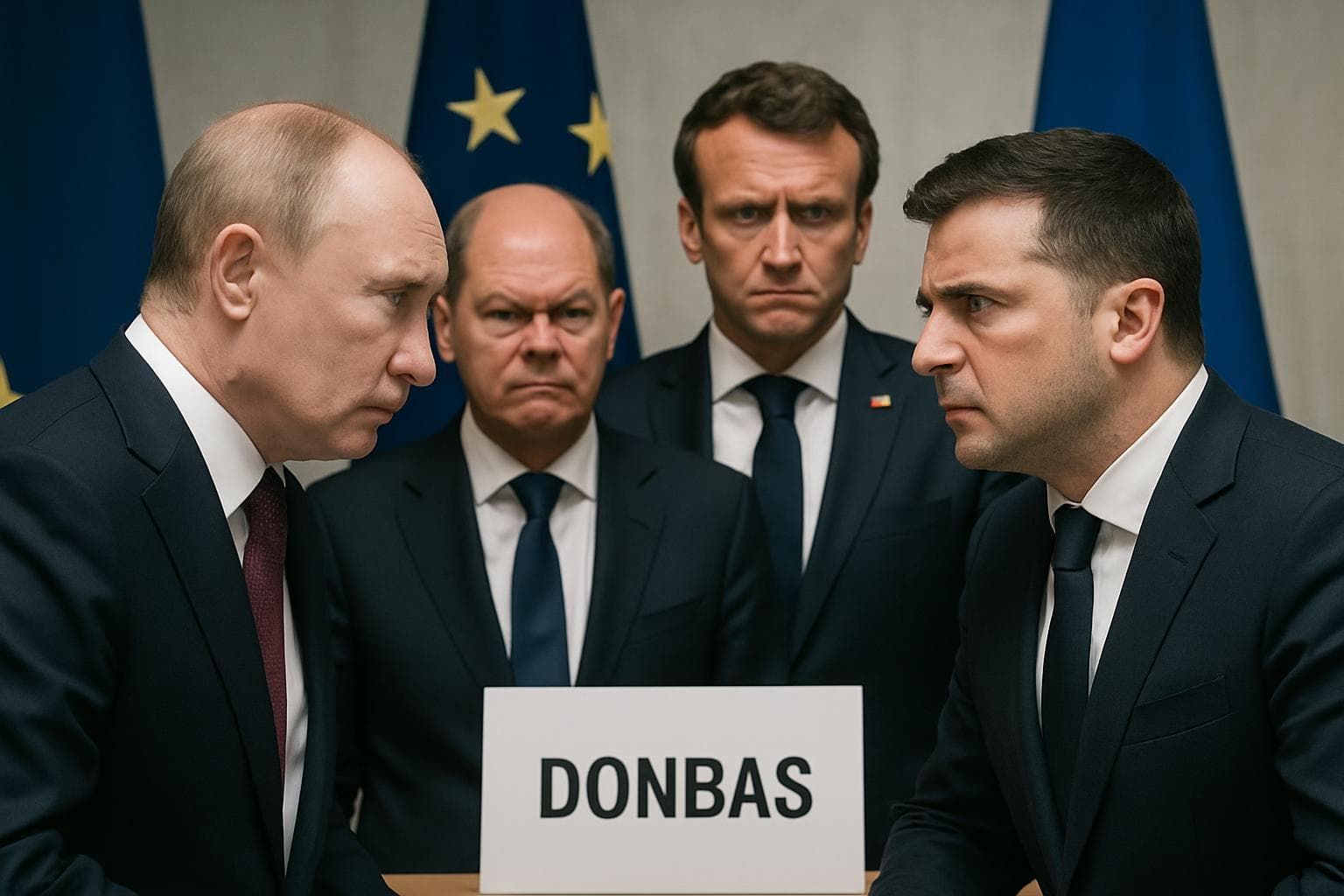
In a tense standoff over Ukraine's eastern Donbas region, Russian President Vladimir Putin has reiterated his demand for Ukrainian troops to withdraw, warning that Russia will otherwise seize the territory by force. Speaking to India Today, Putin dismissed any compromise, stating, "Either we liberate these territories by force, or Ukrainian troops will leave these territories." Currently, Moscow controls approximately 85% of Donbas, while Ukrainian President Volodymyr Zelenskyy has firmly ruled out ceding any territory.
US Peace Plan Stalled
Recent diplomatic efforts led by former US President Donald Trump's envoy, Steve Witkoff, have yet to produce a breakthrough. Talks in Moscow, which included discussions with Putin, have not resolved key issues, particularly concerning the fate of Ukrainian territories and security guarantees. Kremlin aide Yuri Ushakov noted the absence of any compromise, attributing Russia's strengthened negotiating position to recent battlefield successes.
European Concerns Over US Strategy
Meanwhile, European leaders have voiced apprehensions regarding the US approach to the negotiations. According to a leaked note reported by Der Spiegel, French President Emmanuel Macron warned Zelenskyy of a potential US betrayal over territorial matters. Germany's Chancellor Friedrich Merz and other European leaders echoed these concerns, emphasizing the need for caution and solidarity with Ukraine.
Ukraine's Call for Security Guarantees
Zelenskyy has consistently highlighted the necessity of robust security guarantees in any peace agreement. He insists that negotiations must be supported by international pressure on Russia, accusing Moscow of deliberately stalling ceasefire agreements. As diplomatic efforts continue, the Ukrainian president remains steadfast in his demand for a resolution that ensures Ukraine's sovereignty and territorial integrity.
WHAT THIS MIGHT MEAN
The ongoing diplomatic impasse over the Donbas region underscores the complexities of achieving a peaceful resolution to the Ukraine conflict. Should the US peace plan fail to address Ukraine's security concerns adequately, it risks alienating European allies and undermining regional stability. Experts suggest that without a unified international front, Russia may continue its territorial ambitions, prolonging the conflict.
The potential for a US-brokered peace deal that aligns too closely with Russian demands could lead to significant geopolitical shifts, impacting NATO's strategic posture and European security. As negotiations proceed, the international community must balance diplomatic engagement with firm support for Ukraine's sovereignty to prevent further escalation.
Related Articles
Russian LNG Tanker Sinks in Mediterranean Amid Accusations of Ukrainian Drone Attack
Spain's Sánchez Stands Firm Against Trump's Trade Threat Over Iran Stance
Senate Blocks Resolution to Limit Trump's Military Actions in Iran
UK-Iran Tensions: Starmer Defends Cautious Approach Amid Trump Criticism
Iran Postpones Khamenei Funeral Amid Escalating US-Israeli Strikes
Congress Subpoenas Attorney General Bondi in Epstein Investigation
Diplomatic Tensions Rise as Russia and Ukraine Face Stalemate Over Donbas
In This Article
 Ethan Brooks| Published
 HIGHLIGHTS
- President Vladimir Putin insists Ukrainian troops must leave Donbas or Russia will seize it, rejecting any compromise.
- Emmanuel Macron reportedly warned Volodymyr Zelenskyy of potential US betrayal over territorial issues.
- US peace plan discussions in Moscow, led by Trump's envoy, have not yielded any compromise, with key disagreements remaining.
- European leaders express concerns over US negotiations, fearing an imposed peace detrimental to Ukraine and European security.
- Ukrainian President Zelenskyy emphasizes the need for firm security guarantees and pressure on Russia to end the conflict.
In a tense standoff over Ukraine's eastern Donbas region, Russian President Vladimir Putin has reiterated his demand for Ukrainian troops to withdraw, warning that Russia will otherwise seize the territory by force. Speaking to India Today, Putin dismissed any compromise, stating, "Either we liberate these territories by force, or Ukrainian troops will leave these territories." Currently, Moscow controls approximately 85% of Donbas, while Ukrainian President Volodymyr Zelenskyy has firmly ruled out ceding any territory.
US Peace Plan Stalled
Recent diplomatic efforts led by former US President Donald Trump's envoy, Steve Witkoff, have yet to produce a breakthrough. Talks in Moscow, which included discussions with Putin, have not resolved key issues, particularly concerning the fate of Ukrainian territories and security guarantees. Kremlin aide Yuri Ushakov noted the absence of any compromise, attributing Russia's strengthened negotiating position to recent battlefield successes.
European Concerns Over US Strategy
Meanwhile, European leaders have voiced apprehensions regarding the US approach to the negotiations. According to a leaked note reported by Der Spiegel, French President Emmanuel Macron warned Zelenskyy of a potential US betrayal over territorial matters. Germany's Chancellor Friedrich Merz and other European leaders echoed these concerns, emphasizing the need for caution and solidarity with Ukraine.
Ukraine's Call for Security Guarantees
Zelenskyy has consistently highlighted the necessity of robust security guarantees in any peace agreement. He insists that negotiations must be supported by international pressure on Russia, accusing Moscow of deliberately stalling ceasefire agreements. As diplomatic efforts continue, the Ukrainian president remains steadfast in his demand for a resolution that ensures Ukraine's sovereignty and territorial integrity.
WHAT THIS MIGHT MEAN
The ongoing diplomatic impasse over the Donbas region underscores the complexities of achieving a peaceful resolution to the Ukraine conflict. Should the US peace plan fail to address Ukraine's security concerns adequately, it risks alienating European allies and undermining regional stability. Experts suggest that without a unified international front, Russia may continue its territorial ambitions, prolonging the conflict.
The potential for a US-brokered peace deal that aligns too closely with Russian demands could lead to significant geopolitical shifts, impacting NATO's strategic posture and European security. As negotiations proceed, the international community must balance diplomatic engagement with firm support for Ukraine's sovereignty to prevent further escalation.
Related Articles
Russian LNG Tanker Sinks in Mediterranean Amid Accusations of Ukrainian Drone Attack
Spain's Sánchez Stands Firm Against Trump's Trade Threat Over Iran Stance
Senate Blocks Resolution to Limit Trump's Military Actions in Iran
UK-Iran Tensions: Starmer Defends Cautious Approach Amid Trump Criticism
Iran Postpones Khamenei Funeral Amid Escalating US-Israeli Strikes
Congress Subpoenas Attorney General Bondi in Epstein Investigation