
Senate Republicans Push Forward Trump's 'Big Beautiful Bill' Amidst Internal Divisions
In This Article
HIGHLIGHTS
- Senate Republicans narrowly advanced Trump's "Big Beautiful Bill" with a 51-49 vote, facing internal party divisions.
- The bill proposes extending $3.8 trillion in tax cuts while cutting welfare programs, impacting millions of low-income Americans.
- Elon Musk criticized the bill, claiming it would harm future industries and increase US government debt.
- Senators Rand Paul and Thom Tillis opposed the bill due to concerns over the US debt limit and state healthcare funding.
- A final Senate vote is expected soon, with Democrats demanding the bill be read aloud before debate.
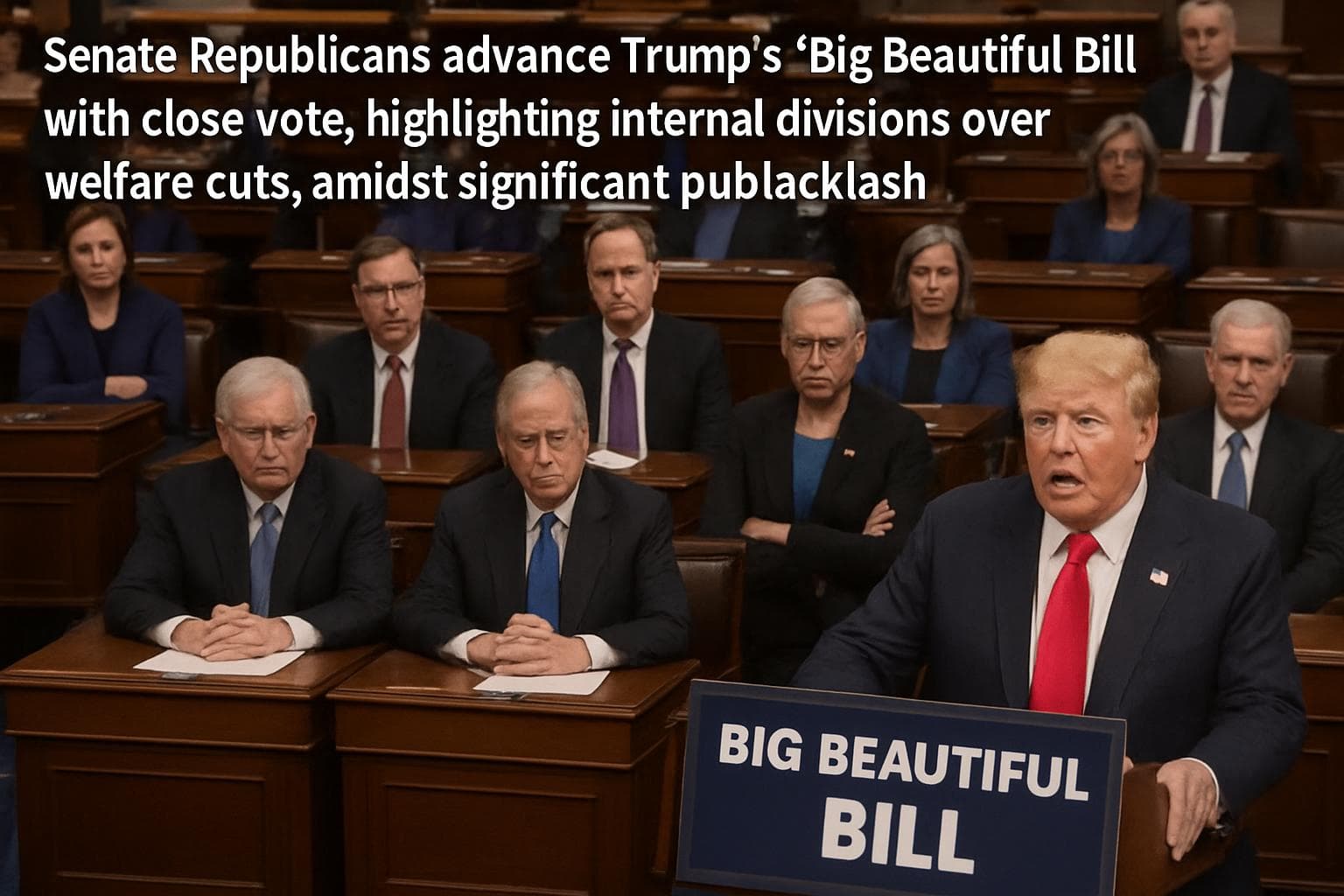
In a closely contested procedural vote, Senate Republicans have advanced President Donald Trump's ambitious tax-cut and spending bill, dubbed the "Big Beautiful Bill," with a narrow 51-49 margin. This legislative push, central to Trump's second-term agenda, has sparked significant debate within the party and across the nation.
Contentious Provisions and Internal Strife
The 940-page bill, which aims to extend $3.8 trillion in tax cuts, has divided Republicans, particularly over proposed cuts to welfare programs. These cuts could strip millions of low-income Americans of health insurance, a point of contention for Senators Rand Paul of Kentucky and Thom Tillis of North Carolina, who joined Democrats in opposing the bill. Paul objected to provisions that would raise the US debt limit, while Tillis expressed concerns about the financial impact on his state's Medicaid funding.
Public and Political Reactions
The bill has faced criticism beyond the Senate floor. Tech billionaire Elon Musk has been vocal in his opposition, labeling the legislation "utterly insane and destructive" on social media. Musk argues that the bill would harm future industries by raising taxes on renewable energy projects, while also exacerbating the US government's $36.2 trillion debt.
Senate Dynamics and Future Prospects
Despite the internal divisions, the bill managed to gain support from some previously skeptical Republicans, such as Senators Lisa Murkowski of Alaska and Susan Collins of Maine. Vice-President JD Vance was prepared to cast a tiebreaking vote, but Republican leaders secured enough support without it. The bill's fate remains uncertain, with a final Senate vote anticipated in the coming days. Democrats, led by Senate Minority Leader Chuck Schumer, have vowed to prolong the voting process, demanding the bill be read aloud in its entirety before debate.
WHAT THIS MIGHT MEAN
As the Senate prepares for a final vote, the outcome remains uncertain. If passed, the bill will return to the House of Representatives, where further challenges await. The proposed welfare cuts and tax extensions could face resistance from House members concerned about the Senate's amendments. Politically, the bill's passage could solidify Trump's legislative legacy, but it risks deepening divisions within the Republican Party and sparking public backlash over its social and economic implications. Experts suggest that the bill's impact on the national debt and social programs could become focal points in upcoming elections, influencing voter sentiment and policy debates.
Related Articles

Senate Blocks Resolution to Limit Trump's Military Actions in Iran

James Talarico Secures Democratic Nomination in Texas Senate Race Amidst Republican Runoff
Congress Subpoenas Attorney General Bondi in Epstein Investigation

Cuba Faces Widespread Blackout Amid Deepening Fuel Crisis

UK Faces Dilemmas Amid Iran Conflict and China Spying Allegations

China Sets Lowest GDP Growth Target in Decades Amid Economic Challenges
Senate Republicans Push Forward Trump's 'Big Beautiful Bill' Amidst Internal Divisions
In This Article
 Alex Carter| Published
 HIGHLIGHTS
- Senate Republicans narrowly advanced Trump's "Big Beautiful Bill" with a 51-49 vote, facing internal party divisions.
- The bill proposes extending $3.8 trillion in tax cuts while cutting welfare programs, impacting millions of low-income Americans.
- Elon Musk criticized the bill, claiming it would harm future industries and increase US government debt.
- Senators Rand Paul and Thom Tillis opposed the bill due to concerns over the US debt limit and state healthcare funding.
- A final Senate vote is expected soon, with Democrats demanding the bill be read aloud before debate.
In a closely contested procedural vote, Senate Republicans have advanced President Donald Trump's ambitious tax-cut and spending bill, dubbed the "Big Beautiful Bill," with a narrow 51-49 margin. This legislative push, central to Trump's second-term agenda, has sparked significant debate within the party and across the nation.
Contentious Provisions and Internal Strife
The 940-page bill, which aims to extend $3.8 trillion in tax cuts, has divided Republicans, particularly over proposed cuts to welfare programs. These cuts could strip millions of low-income Americans of health insurance, a point of contention for Senators Rand Paul of Kentucky and Thom Tillis of North Carolina, who joined Democrats in opposing the bill. Paul objected to provisions that would raise the US debt limit, while Tillis expressed concerns about the financial impact on his state's Medicaid funding.
Public and Political Reactions
The bill has faced criticism beyond the Senate floor. Tech billionaire Elon Musk has been vocal in his opposition, labeling the legislation "utterly insane and destructive" on social media. Musk argues that the bill would harm future industries by raising taxes on renewable energy projects, while also exacerbating the US government's $36.2 trillion debt.
Senate Dynamics and Future Prospects
Despite the internal divisions, the bill managed to gain support from some previously skeptical Republicans, such as Senators Lisa Murkowski of Alaska and Susan Collins of Maine. Vice-President JD Vance was prepared to cast a tiebreaking vote, but Republican leaders secured enough support without it. The bill's fate remains uncertain, with a final Senate vote anticipated in the coming days. Democrats, led by Senate Minority Leader Chuck Schumer, have vowed to prolong the voting process, demanding the bill be read aloud in its entirety before debate.
WHAT THIS MIGHT MEAN
As the Senate prepares for a final vote, the outcome remains uncertain. If passed, the bill will return to the House of Representatives, where further challenges await. The proposed welfare cuts and tax extensions could face resistance from House members concerned about the Senate's amendments. Politically, the bill's passage could solidify Trump's legislative legacy, but it risks deepening divisions within the Republican Party and sparking public backlash over its social and economic implications. Experts suggest that the bill's impact on the national debt and social programs could become focal points in upcoming elections, influencing voter sentiment and policy debates.
Related Articles
Senate Blocks Resolution to Limit Trump's Military Actions in Iran
James Talarico Secures Democratic Nomination in Texas Senate Race Amidst Republican Runoff
Congress Subpoenas Attorney General Bondi in Epstein Investigation
Cuba Faces Widespread Blackout Amid Deepening Fuel Crisis
UK Faces Dilemmas Amid Iran Conflict and China Spying Allegations
China Sets Lowest GDP Growth Target in Decades Amid Economic Challenges