
South Korea Fires Warning Shots as North Korean Troops Cross DMZ Border
In This Article
HIGHLIGHTS
- South Korea fired warning shots at North Korean soldiers who briefly crossed the Demilitarized Zone (DMZ) border on Tuesday.
- North Korea accused South Korea of a "deliberate provocation" that risks escalating tensions between the two nations.
- The incident occurred as South Korean President Lee Jae Myung seeks to improve inter-Korean relations, despite Pyongyang's dismissive stance.
- The DMZ remains a heavily fortified area, with recent efforts by North Korea to permanently seal its border with the South.
- The two Koreas have been technically at war since the Korean War ended in 1953 without a peace treaty.
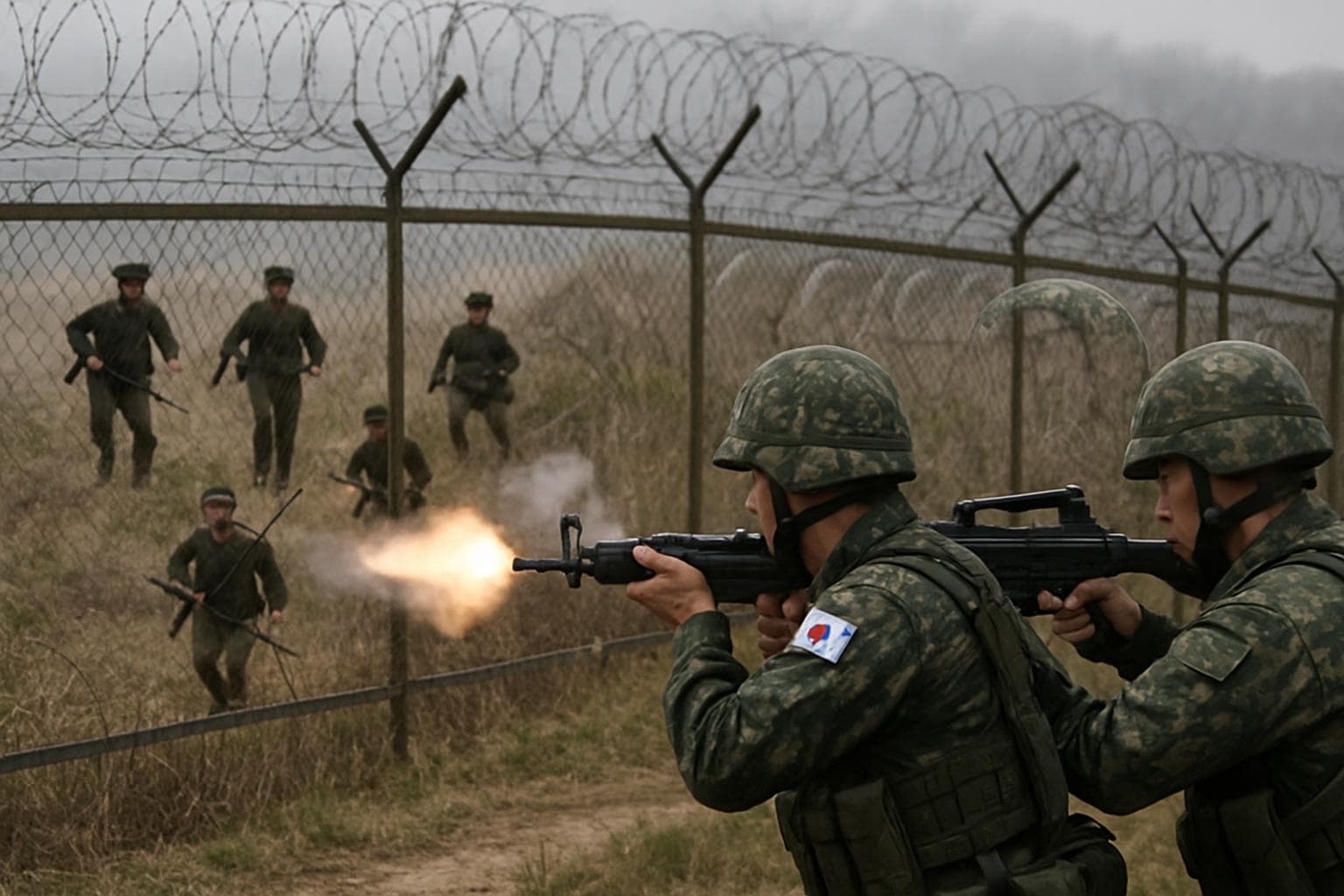
In a recent escalation of tensions on the Korean Peninsula, South Korea confirmed it fired warning shots at North Korean soldiers who briefly crossed the Demilitarized Zone (DMZ) earlier this week. The incident, which took place on Tuesday, has been labeled a "deliberate provocation" by Pyongyang, raising concerns about potential "uncontrollable" tensions between the two nations.
Border Incursion and Response
According to South Korea's Joint Chiefs of Staff, several North Korean soldiers crossed the military demarcation line within the DMZ at approximately 15:00 local time. In response, South Korean forces fired more than ten warning shots, prompting the North Korean troops to retreat back across the border. The DMZ, a heavily mined and fortified area, serves as a buffer zone between the two Koreas, which remain technically at war since the Korean War ended in 1953 without a peace treaty.
Political Context and Reactions
The incident comes amid efforts by South Korea's newly elected President Lee Jae Myung to improve inter-Korean relations. Despite Lee's campaign promises to build "military trust" with the North, Pyongyang has shown little interest in reconciliation. North Korean state media, citing Lt Gen Ko Jong Chol, condemned the warning shots as a "premeditated and deliberate provocation," warning of potential retaliation.
Ongoing Tensions and Military Activities
The border confrontation highlights the fragile state of affairs on the peninsula, where both nations maintain significant military presences. North Korea has been working to permanently seal its border with the South, a move that has included destroying symbolic infrastructure connecting the two countries. Meanwhile, South Korea and the United States have commenced joint military exercises, which Pyongyang views as rehearsals for invasion. North Korean leader Kim Jong Un has called for the rapid expansion of the North's nuclear capabilities in response to these drills.
WHAT THIS MIGHT MEAN
The recent border incident underscores the persistent volatility on the Korean Peninsula. If tensions continue to rise, there is a risk of further military confrontations, which could destabilize the region. President Lee Jae Myung's efforts to engage Pyongyang diplomatically may face significant challenges, particularly if North Korea continues to dismiss overtures for dialogue. Experts suggest that maintaining open communication channels and reducing military provocations will be crucial in preventing escalation. The international community, including key players like the United States and China, may need to play a more active role in facilitating dialogue and ensuring regional stability.
Related Articles
Iran Postpones Khamenei Funeral Amid Escalating US-Israeli Strikes

US-Iran Tensions Escalate Amid Renewed Nuclear Talks and Protests

China Sets Lowest GDP Growth Target in Decades Amid Economic Challenges

UK Faces Dilemmas Amid Iran Conflict and China Spying Allegations
Canada Calls for De-escalation Amid US-Israel Strikes on Iran

US Supreme Court Ruling Sparks Trade Uncertainty in Asia and Beyond
South Korea Fires Warning Shots as North Korean Troops Cross DMZ Border
In This Article
 Ethan Brooks| Published
 HIGHLIGHTS
- South Korea fired warning shots at North Korean soldiers who briefly crossed the Demilitarized Zone (DMZ) border on Tuesday.
- North Korea accused South Korea of a "deliberate provocation" that risks escalating tensions between the two nations.
- The incident occurred as South Korean President Lee Jae Myung seeks to improve inter-Korean relations, despite Pyongyang's dismissive stance.
- The DMZ remains a heavily fortified area, with recent efforts by North Korea to permanently seal its border with the South.
- The two Koreas have been technically at war since the Korean War ended in 1953 without a peace treaty.
In a recent escalation of tensions on the Korean Peninsula, South Korea confirmed it fired warning shots at North Korean soldiers who briefly crossed the Demilitarized Zone (DMZ) earlier this week. The incident, which took place on Tuesday, has been labeled a "deliberate provocation" by Pyongyang, raising concerns about potential "uncontrollable" tensions between the two nations.
Border Incursion and Response
According to South Korea's Joint Chiefs of Staff, several North Korean soldiers crossed the military demarcation line within the DMZ at approximately 15:00 local time. In response, South Korean forces fired more than ten warning shots, prompting the North Korean troops to retreat back across the border. The DMZ, a heavily mined and fortified area, serves as a buffer zone between the two Koreas, which remain technically at war since the Korean War ended in 1953 without a peace treaty.
Political Context and Reactions
The incident comes amid efforts by South Korea's newly elected President Lee Jae Myung to improve inter-Korean relations. Despite Lee's campaign promises to build "military trust" with the North, Pyongyang has shown little interest in reconciliation. North Korean state media, citing Lt Gen Ko Jong Chol, condemned the warning shots as a "premeditated and deliberate provocation," warning of potential retaliation.
Ongoing Tensions and Military Activities
The border confrontation highlights the fragile state of affairs on the peninsula, where both nations maintain significant military presences. North Korea has been working to permanently seal its border with the South, a move that has included destroying symbolic infrastructure connecting the two countries. Meanwhile, South Korea and the United States have commenced joint military exercises, which Pyongyang views as rehearsals for invasion. North Korean leader Kim Jong Un has called for the rapid expansion of the North's nuclear capabilities in response to these drills.
WHAT THIS MIGHT MEAN
The recent border incident underscores the persistent volatility on the Korean Peninsula. If tensions continue to rise, there is a risk of further military confrontations, which could destabilize the region. President Lee Jae Myung's efforts to engage Pyongyang diplomatically may face significant challenges, particularly if North Korea continues to dismiss overtures for dialogue. Experts suggest that maintaining open communication channels and reducing military provocations will be crucial in preventing escalation. The international community, including key players like the United States and China, may need to play a more active role in facilitating dialogue and ensuring regional stability.
Related Articles
Iran Postpones Khamenei Funeral Amid Escalating US-Israeli Strikes
US-Iran Tensions Escalate Amid Renewed Nuclear Talks and Protests
China Sets Lowest GDP Growth Target in Decades Amid Economic Challenges
UK Faces Dilemmas Amid Iran Conflict and China Spying Allegations
Canada Calls for De-escalation Amid US-Israel Strikes on Iran
US Supreme Court Ruling Sparks Trade Uncertainty in Asia and Beyond