
Southwest Airlines Flight Avoids Collision, Injures Crew
In This Article
HIGHLIGHTS
- A Southwest Airlines flight from Burbank to Las Vegas rapidly descended to avoid a near-miss with a Hawker Hunter jet, injuring two flight attendants.
- The Federal Aviation Administration (FAA) is investigating the incident, which occurred shortly after takeoff and involved a loss of contact with air traffic control.
- Passengers, including comedian Jimmy Dore, reported a terrifying experience, with some lifted from their seats during the sudden maneuver.
- The flight continued to Las Vegas, landing without further incident, as Southwest Airlines collaborates with the FAA to understand the event.
- This incident follows another near-miss involving a Delta flight and a military bomber, raising concerns about aviation safety.
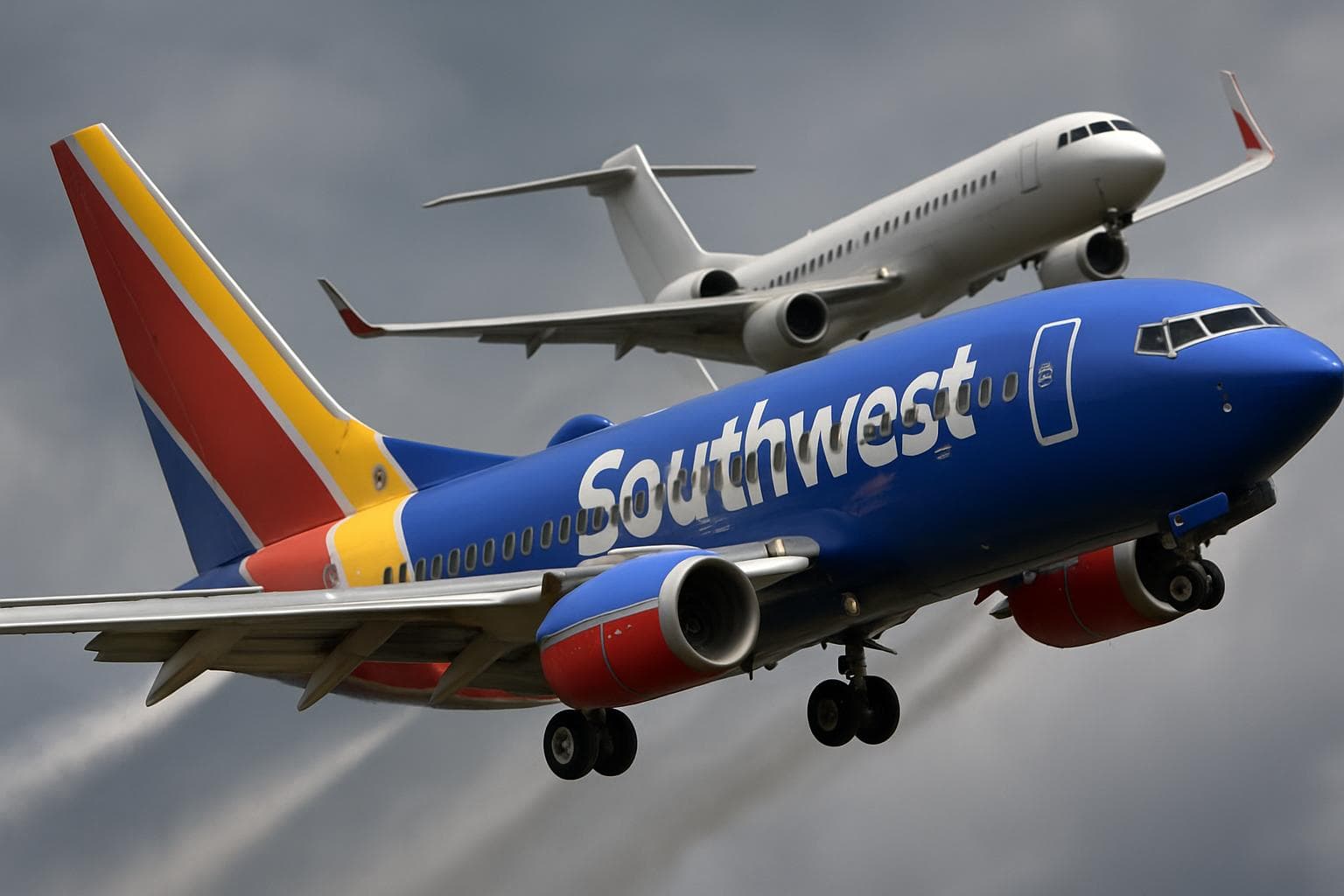
A Southwest Airlines flight narrowly avoided a mid-air collision shortly after departing from Hollywood Burbank Airport en route to Las Vegas, resulting in injuries to two flight attendants. The dramatic incident unfolded on Friday when Flight 1496 was forced to make a rapid descent to evade a privately owned Hawker Hunter jet, according to multiple reports and flight tracking data.
Incident Details and Passenger Accounts
The near-miss occurred less than ten minutes into the flight, prompting the aircraft to plummet suddenly, lifting passengers out of their seats. Comedian Jimmy Dore, who was onboard, described the harrowing experience on social media, noting that the pilot's collision warning system had activated, necessitating an emergency maneuver. "Pilot said his collision warning went off & he needed to avoid plane coming at us," Dore wrote.
Caitlin Burdi, another passenger, likened the experience to a theme park ride, recounting the terror as the plane dropped 20 to 30 feet. "We really thought we were plummeting to a plane crash," she told Fox News. The flight attendants required medical attention following the incident.
FAA Investigation and Safety Concerns
The Federal Aviation Administration (FAA) has launched an investigation into the incident, emphasizing its commitment to ensuring safety in the national airspace. The Southwest Airlines statement confirmed the flight's continuation to Las Vegas, where it landed uneventfully. The airline is cooperating with the FAA to gain a clearer understanding of the circumstances surrounding the event.
This incident comes on the heels of another near-miss involving a Delta flight and a US military bomber, highlighting ongoing concerns about aviation safety and the effectiveness of air traffic control systems.
WHAT THIS MIGHT MEAN
The FAA's investigation into the Southwest Airlines incident could lead to increased scrutiny of air traffic control protocols and the implementation of enhanced safety measures to prevent future near-misses. Aviation experts may call for a review of the coordination between civilian and military flights, particularly in congested airspace. As the investigation unfolds, airlines and regulatory bodies will likely face pressure to reassure the public about the safety of air travel, potentially leading to policy changes or technological upgrades in collision avoidance systems.
Related Articles
Intensified US-Israel Strikes on Iran Spark Global Outcry
US-Iran Tensions Escalate Amid Renewed Nuclear Talks and Protests
US Homeland Security Shutdown Sparks Concerns Over Travel Delays and Immigration Reforms
El Paso Airspace Closure Sparks Confusion Amid Drone Concerns
US Military Strikes Raise Legal Concerns Amid Anti-Drug Campaign
Rising Tensions: US Military Buildup in Gulf as Trump Warns Iran Over Nuclear Deal
Southwest Airlines Flight Avoids Collision, Injures Crew
In This Article
 Leila Hassan| Published
 HIGHLIGHTS
- A Southwest Airlines flight from Burbank to Las Vegas rapidly descended to avoid a near-miss with a Hawker Hunter jet, injuring two flight attendants.
- The Federal Aviation Administration (FAA) is investigating the incident, which occurred shortly after takeoff and involved a loss of contact with air traffic control.
- Passengers, including comedian Jimmy Dore, reported a terrifying experience, with some lifted from their seats during the sudden maneuver.
- The flight continued to Las Vegas, landing without further incident, as Southwest Airlines collaborates with the FAA to understand the event.
- This incident follows another near-miss involving a Delta flight and a military bomber, raising concerns about aviation safety.
A Southwest Airlines flight narrowly avoided a mid-air collision shortly after departing from Hollywood Burbank Airport en route to Las Vegas, resulting in injuries to two flight attendants. The dramatic incident unfolded on Friday when Flight 1496 was forced to make a rapid descent to evade a privately owned Hawker Hunter jet, according to multiple reports and flight tracking data.
Incident Details and Passenger Accounts
The near-miss occurred less than ten minutes into the flight, prompting the aircraft to plummet suddenly, lifting passengers out of their seats. Comedian Jimmy Dore, who was onboard, described the harrowing experience on social media, noting that the pilot's collision warning system had activated, necessitating an emergency maneuver. "Pilot said his collision warning went off & he needed to avoid plane coming at us," Dore wrote.
Caitlin Burdi, another passenger, likened the experience to a theme park ride, recounting the terror as the plane dropped 20 to 30 feet. "We really thought we were plummeting to a plane crash," she told Fox News. The flight attendants required medical attention following the incident.
FAA Investigation and Safety Concerns
The Federal Aviation Administration (FAA) has launched an investigation into the incident, emphasizing its commitment to ensuring safety in the national airspace. The Southwest Airlines statement confirmed the flight's continuation to Las Vegas, where it landed uneventfully. The airline is cooperating with the FAA to gain a clearer understanding of the circumstances surrounding the event.
This incident comes on the heels of another near-miss involving a Delta flight and a US military bomber, highlighting ongoing concerns about aviation safety and the effectiveness of air traffic control systems.
WHAT THIS MIGHT MEAN
The FAA's investigation into the Southwest Airlines incident could lead to increased scrutiny of air traffic control protocols and the implementation of enhanced safety measures to prevent future near-misses. Aviation experts may call for a review of the coordination between civilian and military flights, particularly in congested airspace. As the investigation unfolds, airlines and regulatory bodies will likely face pressure to reassure the public about the safety of air travel, potentially leading to policy changes or technological upgrades in collision avoidance systems.
Related Articles
Intensified US-Israel Strikes on Iran Spark Global Outcry
US-Iran Tensions Escalate Amid Renewed Nuclear Talks and Protests
US Homeland Security Shutdown Sparks Concerns Over Travel Delays and Immigration Reforms
El Paso Airspace Closure Sparks Confusion Amid Drone Concerns
US Military Strikes Raise Legal Concerns Amid Anti-Drug Campaign
Rising Tensions: US Military Buildup in Gulf as Trump Warns Iran Over Nuclear Deal