
Stalled Vaccination Rates Put Millions of Children at Risk Globally
In This Article
HIGHLIGHTS
- Global vaccination rates for children have stalled or reversed since 2010, with significant declines in measles coverage in nearly 100 countries.
- The Covid-19 pandemic exacerbated disruptions in vaccination programs, leaving millions of children vulnerable to preventable diseases like measles and polio.
- Vaccine hesitancy and misinformation, coupled with cuts in international aid, are major contributors to the stagnation in immunisation progress.
- Disparities in vaccination rates persist between wealthier and lower-income countries, with sub-Saharan Africa and South Asia most affected.
- Experts warn that without urgent action, global immunisation targets for 2030 will not be met, increasing the risk of disease outbreaks.
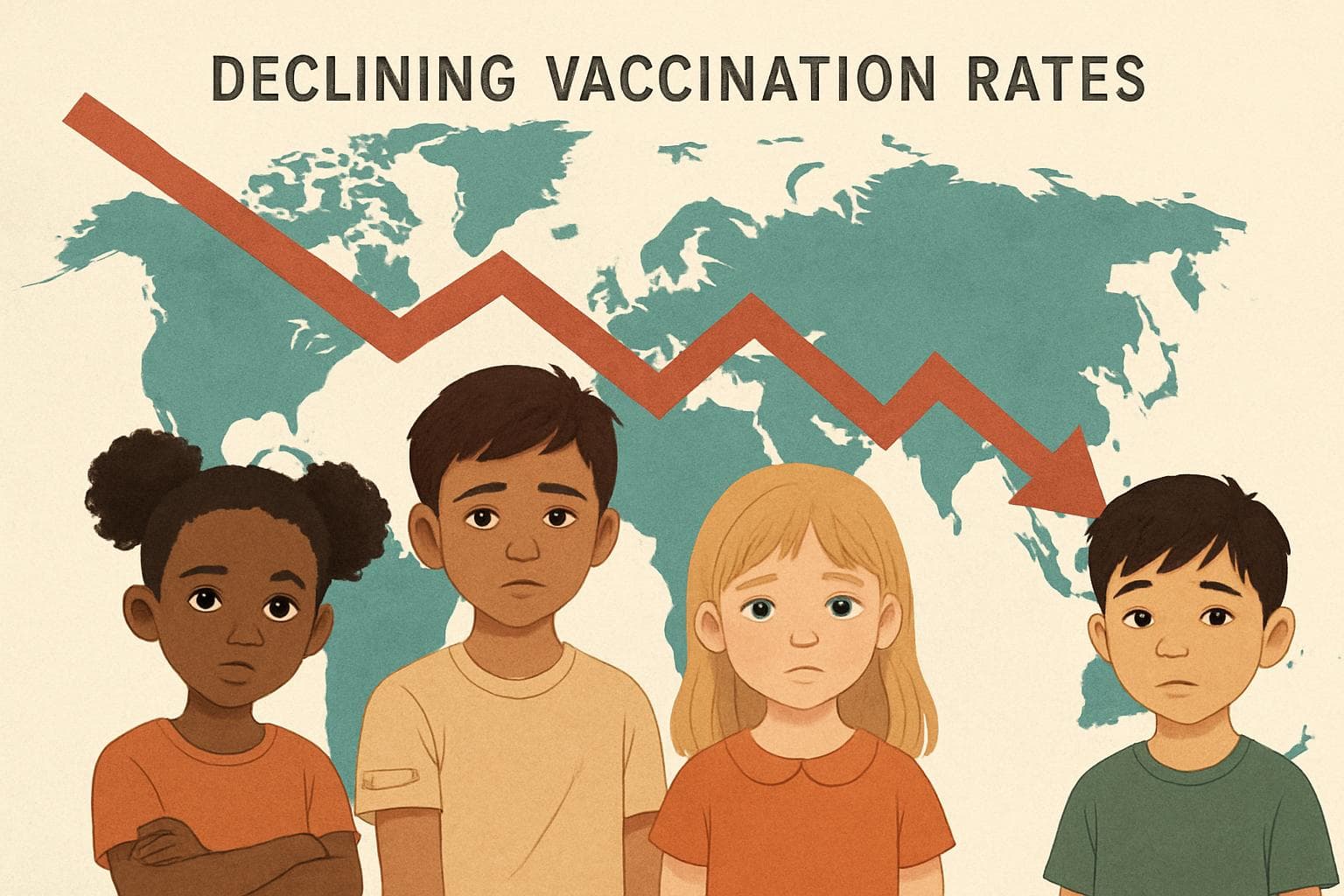
A recent global study has revealed a concerning stagnation in childhood vaccination rates, threatening millions of children with exposure to preventable diseases. Despite significant progress over the past five decades, the momentum has slowed since 2010, with the Covid-19 pandemic further exacerbating the situation.
Decline in Global Vaccination Rates
The study, published in The Lancet, highlights a troubling decline in vaccine coverage, particularly for measles, which has decreased in nearly 100 countries. This regression has left millions of children, especially in sub-Saharan Africa and South Asia, unprotected against life-threatening diseases. Dr. Jonathan Mosser from the Institute for Health Metrics and Evaluation at the University of Washington emphasized the critical role of routine childhood vaccinations as cost-effective public health interventions. However, he noted that persistent global inequalities, compounded by the pandemic and rising vaccine misinformation, have hindered progress.
Impact of the Covid-19 Pandemic
The pandemic has disrupted vaccination programs worldwide, leading to a significant increase in the number of unvaccinated children. By 2023, nearly 16 million children had not received any childhood vaccinations. The study's authors warn that this trend could lead to outbreaks of diseases such as measles, polio, and diphtheria, underscoring the urgent need for targeted improvements in vaccination efforts.
Challenges and Disparities
The report also highlights the disparities in vaccination rates between wealthier and lower-income countries. While the global childhood vaccination program has been a success since its inception in 1974, recent years have seen a slowdown in progress. Professor Sir Andrew Pollard from the Oxford Vaccine Group expressed concern over the potential for increased hospitalizations and deaths from preventable diseases if current trends continue. Dr. David Elliman from University College London pointed to factors such as civil unrest, wars, and cuts in foreign aid as significant barriers to vaccine access.
WHAT THIS MIGHT MEAN
The current stagnation in global vaccination rates poses a significant threat to public health, with experts warning of potential outbreaks of preventable diseases. Without urgent intervention, global immunisation targets for 2030 are unlikely to be met, increasing the risk of disease resurgence. Addressing vaccine hesitancy and misinformation, alongside strengthening primary healthcare systems, will be crucial in reversing this trend. The international community must prioritize equitable access to vaccines and restore funding to ensure all children benefit from life-saving immunisations.
Related Articles

Breakthrough Drug Offers Hope for Children with Severe Epilepsy
Statins Proven Safer Than Previously Believed, Major Review Reveals

Paracetamol Deemed Safe for Pregnant Women, Study Refutes Autism Claims
Ultra-Processed Foods: A Growing Global Health Concern
Weight-Loss Injections Transform Consumer Habits Amidst Counterfeit Pill Concerns

Surge in Nicotine Pouch Use Among Young Men Sparks Regulatory Debate in Great Britain
Stalled Vaccination Rates Put Millions of Children at Risk Globally
In This Article
 Maya Singh| Published
 HIGHLIGHTS
- Global vaccination rates for children have stalled or reversed since 2010, with significant declines in measles coverage in nearly 100 countries.
- The Covid-19 pandemic exacerbated disruptions in vaccination programs, leaving millions of children vulnerable to preventable diseases like measles and polio.
- Vaccine hesitancy and misinformation, coupled with cuts in international aid, are major contributors to the stagnation in immunisation progress.
- Disparities in vaccination rates persist between wealthier and lower-income countries, with sub-Saharan Africa and South Asia most affected.
- Experts warn that without urgent action, global immunisation targets for 2030 will not be met, increasing the risk of disease outbreaks.
A recent global study has revealed a concerning stagnation in childhood vaccination rates, threatening millions of children with exposure to preventable diseases. Despite significant progress over the past five decades, the momentum has slowed since 2010, with the Covid-19 pandemic further exacerbating the situation.
Decline in Global Vaccination Rates
The study, published in The Lancet, highlights a troubling decline in vaccine coverage, particularly for measles, which has decreased in nearly 100 countries. This regression has left millions of children, especially in sub-Saharan Africa and South Asia, unprotected against life-threatening diseases. Dr. Jonathan Mosser from the Institute for Health Metrics and Evaluation at the University of Washington emphasized the critical role of routine childhood vaccinations as cost-effective public health interventions. However, he noted that persistent global inequalities, compounded by the pandemic and rising vaccine misinformation, have hindered progress.
Impact of the Covid-19 Pandemic
The pandemic has disrupted vaccination programs worldwide, leading to a significant increase in the number of unvaccinated children. By 2023, nearly 16 million children had not received any childhood vaccinations. The study's authors warn that this trend could lead to outbreaks of diseases such as measles, polio, and diphtheria, underscoring the urgent need for targeted improvements in vaccination efforts.
Challenges and Disparities
The report also highlights the disparities in vaccination rates between wealthier and lower-income countries. While the global childhood vaccination program has been a success since its inception in 1974, recent years have seen a slowdown in progress. Professor Sir Andrew Pollard from the Oxford Vaccine Group expressed concern over the potential for increased hospitalizations and deaths from preventable diseases if current trends continue. Dr. David Elliman from University College London pointed to factors such as civil unrest, wars, and cuts in foreign aid as significant barriers to vaccine access.
WHAT THIS MIGHT MEAN
The current stagnation in global vaccination rates poses a significant threat to public health, with experts warning of potential outbreaks of preventable diseases. Without urgent intervention, global immunisation targets for 2030 are unlikely to be met, increasing the risk of disease resurgence. Addressing vaccine hesitancy and misinformation, alongside strengthening primary healthcare systems, will be crucial in reversing this trend. The international community must prioritize equitable access to vaccines and restore funding to ensure all children benefit from life-saving immunisations.
Related Articles
Breakthrough Drug Offers Hope for Children with Severe Epilepsy
Statins Proven Safer Than Previously Believed, Major Review Reveals
Paracetamol Deemed Safe for Pregnant Women, Study Refutes Autism Claims
Ultra-Processed Foods: A Growing Global Health Concern
Weight-Loss Injections Transform Consumer Habits Amidst Counterfeit Pill Concerns
Surge in Nicotine Pouch Use Among Young Men Sparks Regulatory Debate in Great Britain