
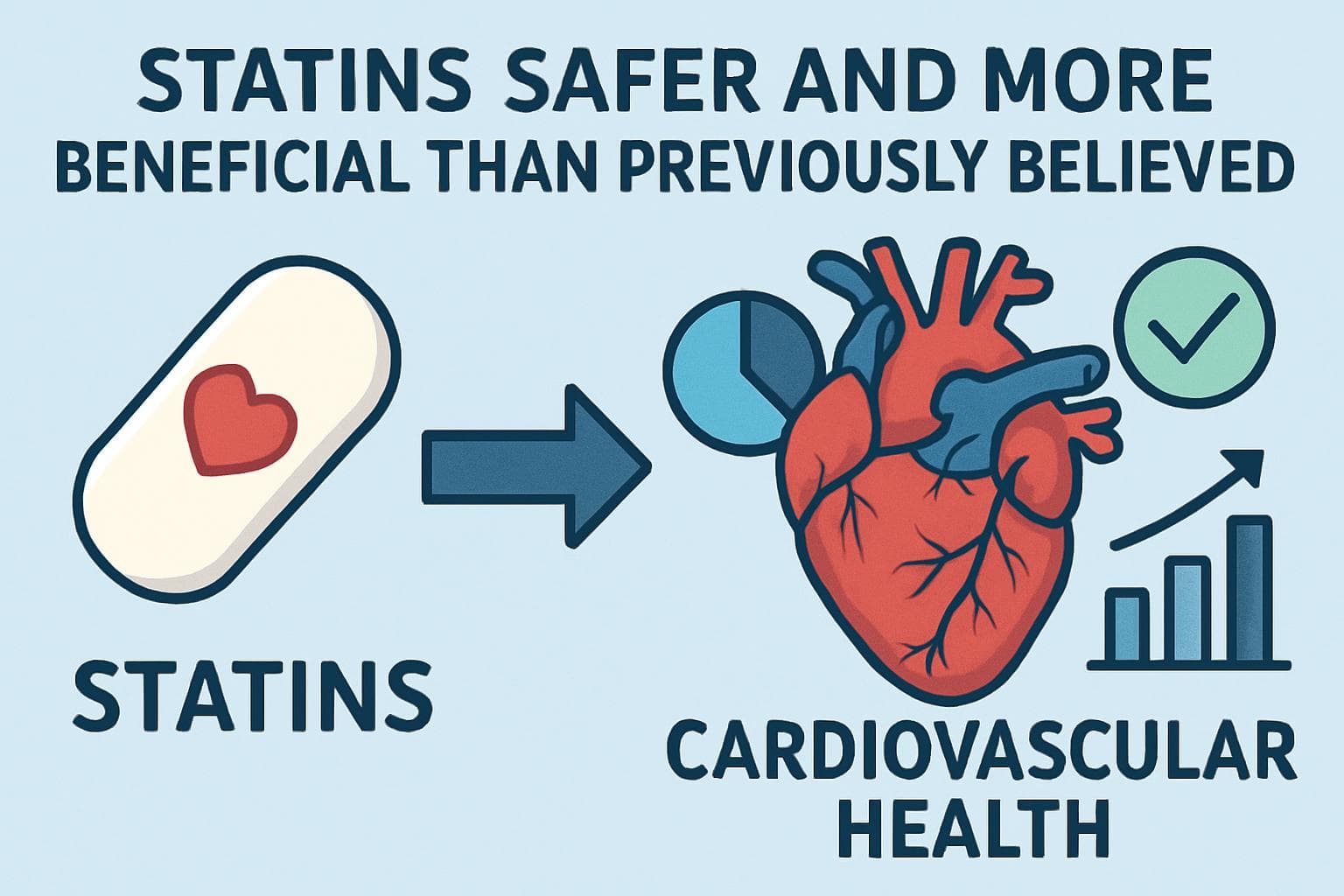
Statins Proven Safer Than Previously Believed, Major Review Reveals
In This Article
HIGHLIGHTS
- A comprehensive review found that statins are safer than previously thought, with most side effects not caused by the drugs.
- The study, involving over 120,000 participants, identified only four minor side effects linked to statins.
- Statins significantly reduce the risk of heart attacks and strokes, outweighing the minimal side effects.
- Researchers urge updating statin labels to reflect the new evidence, aiding informed health decisions.
- The British Heart Foundation highlights the study's role in countering misinformation about statins.
A groundbreaking review has revealed that cholesterol-lowering drugs known as statins are considerably safer than previously believed, challenging long-standing concerns about their side effects. Published in The Lancet, the study examined data from over 120,000 participants across 19 randomized controlled trials, making it the most comprehensive assessment of statin side effects to date.
Minimal Side Effects Confirmed
The review, conducted by researchers at Oxford University and funded by the British Heart Foundation, found that out of 66 listed side effects, only four—liver test changes, minor liver abnormalities, urine changes, and tissue swelling—were associated with statin use. These side effects were rare and minor, with no evidence linking statins to more serious conditions like memory loss or depression.
Significant Benefits in Cardiovascular Health
Statins have long been recognized for their efficacy in reducing "bad" LDL cholesterol levels, thereby lowering the risk of heart attacks and strokes. The study reaffirms that the benefits of statins in preventing cardiovascular disease far outweigh the minimal risks of side effects. Prof. Christina Reith, the study's lead author, emphasized that the findings should reassure patients and healthcare providers about the safety of statins.
Call for Updated Information
The researchers advocate for an urgent revision of statin labels to reflect the new evidence, enabling patients and doctors to make better-informed decisions. Prof. Sir Rory Collins, a senior author of the study, stated that the current misinformation surrounding statins has deterred many from using these life-saving drugs. Prof. Bryan Williams from the British Heart Foundation echoed this sentiment, highlighting the importance of the study in dispelling myths and preventing unnecessary deaths from cardiovascular disease.
WHAT THIS MIGHT MEAN
The findings of this review could lead to significant changes in how statins are perceived and prescribed. By updating the information on statin labels, healthcare providers may see an increase in patient compliance, ultimately reducing the incidence of heart attacks and strokes. Additionally, the study may prompt further research into the long-term effects of statins, potentially uncovering more insights into their safety and efficacy. As the medical community digests these findings, the emphasis on evidence-based medicine will likely strengthen, fostering a more informed public discourse on the use of cholesterol-lowering drugs.
Related Articles
Paracetamol Deemed Safe for Pregnant Women, Study Refutes Autism Claims
Ultra-Processed Foods: A Growing Global Health Concern

AI Stethoscope Revolutionizes Heart Condition Detection in Seconds
Stalled Vaccination Rates Put Millions of Children at Risk Globally

Hamas Reasserts Control in Gaza Amid Rising Death Toll

Sarah Ferguson's Charity Closes Amid New Epstein Revelations
Statins Proven Safer Than Previously Believed, Major Review Reveals
In This Article
 Maya Singh| Published
 HIGHLIGHTS
- A comprehensive review found that statins are safer than previously thought, with most side effects not caused by the drugs.
- The study, involving over 120,000 participants, identified only four minor side effects linked to statins.
- Statins significantly reduce the risk of heart attacks and strokes, outweighing the minimal side effects.
- Researchers urge updating statin labels to reflect the new evidence, aiding informed health decisions.
- The British Heart Foundation highlights the study's role in countering misinformation about statins.
A groundbreaking review has revealed that cholesterol-lowering drugs known as statins are considerably safer than previously believed, challenging long-standing concerns about their side effects. Published in The Lancet, the study examined data from over 120,000 participants across 19 randomized controlled trials, making it the most comprehensive assessment of statin side effects to date.
Minimal Side Effects Confirmed
The review, conducted by researchers at Oxford University and funded by the British Heart Foundation, found that out of 66 listed side effects, only four—liver test changes, minor liver abnormalities, urine changes, and tissue swelling—were associated with statin use. These side effects were rare and minor, with no evidence linking statins to more serious conditions like memory loss or depression.
Significant Benefits in Cardiovascular Health
Statins have long been recognized for their efficacy in reducing "bad" LDL cholesterol levels, thereby lowering the risk of heart attacks and strokes. The study reaffirms that the benefits of statins in preventing cardiovascular disease far outweigh the minimal risks of side effects. Prof. Christina Reith, the study's lead author, emphasized that the findings should reassure patients and healthcare providers about the safety of statins.
Call for Updated Information
The researchers advocate for an urgent revision of statin labels to reflect the new evidence, enabling patients and doctors to make better-informed decisions. Prof. Sir Rory Collins, a senior author of the study, stated that the current misinformation surrounding statins has deterred many from using these life-saving drugs. Prof. Bryan Williams from the British Heart Foundation echoed this sentiment, highlighting the importance of the study in dispelling myths and preventing unnecessary deaths from cardiovascular disease.
WHAT THIS MIGHT MEAN
The findings of this review could lead to significant changes in how statins are perceived and prescribed. By updating the information on statin labels, healthcare providers may see an increase in patient compliance, ultimately reducing the incidence of heart attacks and strokes. Additionally, the study may prompt further research into the long-term effects of statins, potentially uncovering more insights into their safety and efficacy. As the medical community digests these findings, the emphasis on evidence-based medicine will likely strengthen, fostering a more informed public discourse on the use of cholesterol-lowering drugs.
Related Articles
Paracetamol Deemed Safe for Pregnant Women, Study Refutes Autism Claims
Ultra-Processed Foods: A Growing Global Health Concern
AI Stethoscope Revolutionizes Heart Condition Detection in Seconds
Stalled Vaccination Rates Put Millions of Children at Risk Globally
Hamas Reasserts Control in Gaza Amid Rising Death Toll
Sarah Ferguson's Charity Closes Amid New Epstein Revelations