
Sudan Landslide Tragedy: Over 1,000 Feared Dead in Marra Mountains
In This Article
HIGHLIGHTS
- A devastating landslide in Sudan's Marra Mountains has killed at least 1,000 people, with only one survivor reported.
- The Sudan Liberation Movement/Army, which controls the area, has called for international humanitarian assistance.
- The landslide follows heavy rains and has compounded the ongoing humanitarian crisis in the war-torn Darfur region.
- The civil war between the Sudanese army and the Rapid Support Forces has displaced millions and led to severe famine.
- Darfur's governor has described the landslide as a "humanitarian tragedy" and urged urgent international intervention.
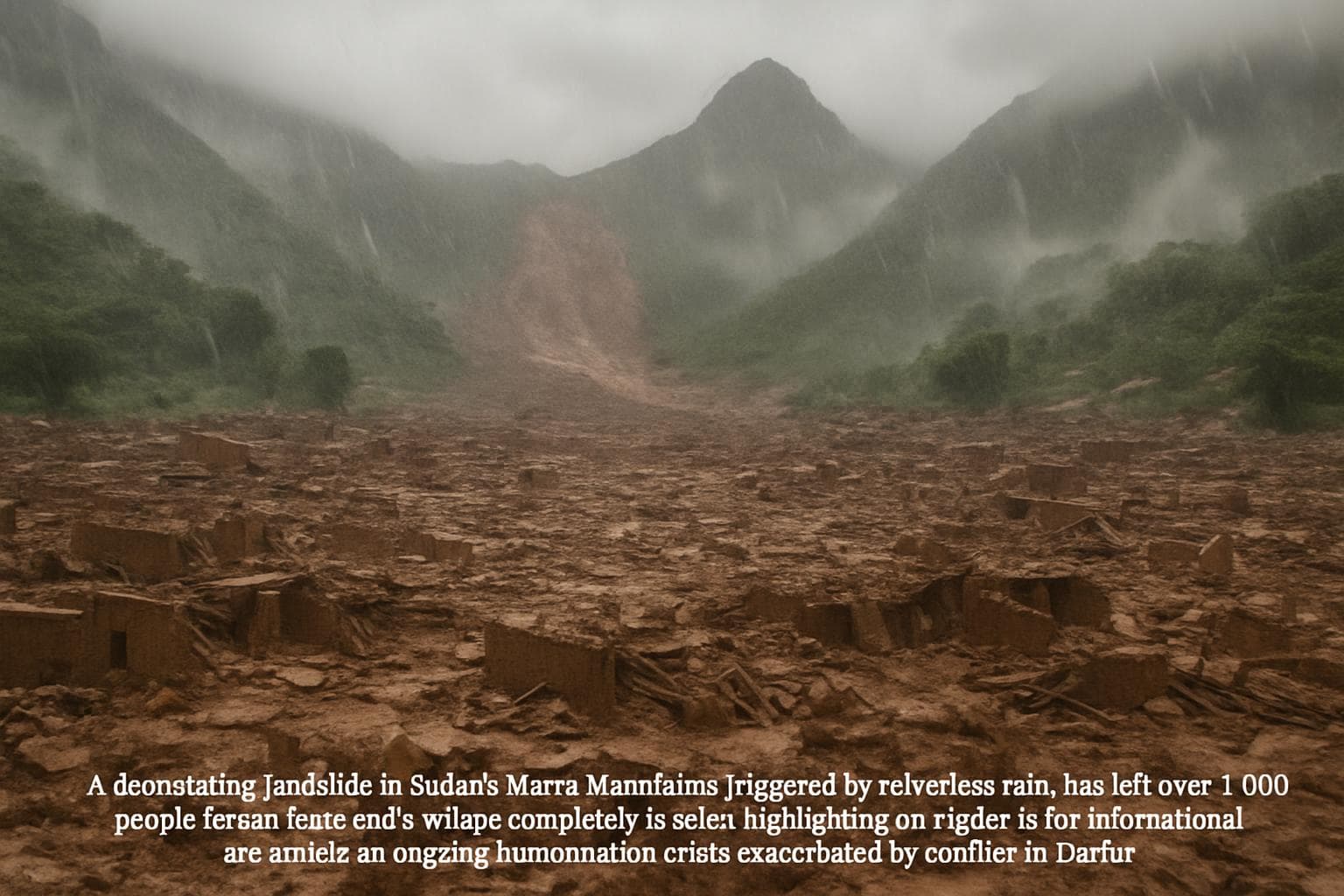
A catastrophic landslide in Sudan's Marra Mountains has claimed the lives of over 1,000 people, according to the Sudan Liberation Movement/Army (SLM), which controls the region. Triggered by days of relentless rain, the disaster struck on Sunday, leaving the village of Tarasin completely leveled and only one known survivor.
The SLM has urgently appealed for international aid, calling on the United Nations and other humanitarian organizations to assist in the recovery efforts and provide much-needed support. "Initial information indicates the death of all village residents," the group stated, highlighting the dire need for intervention.
Humanitarian Crisis Deepens
The landslide has exacerbated the already dire humanitarian situation in Darfur, a region plagued by a brutal civil war since April 2023. The conflict between the Sudanese army and the paramilitary Rapid Support Forces (RSF) has led to widespread famine and accusations of genocide, particularly in the ethnically diverse Darfur region.
Darfur's governor, Minni Minnawi, has described the landslide as a "humanitarian tragedy that goes beyond the borders of the region." He has called for urgent international assistance, emphasizing that the scale of the disaster is beyond what local communities can handle alone.
Ongoing Conflict and Displacement
The Marra Mountains have become a refuge for many fleeing the violence in North Darfur, particularly around El Fasher, where fighting has intensified. The SLM, while largely staying out of the conflict, controls significant parts of this mountainous region.
The ongoing war has resulted in the deaths of tens of thousands and the displacement of millions, with about 12 million people forced from their homes. The United Nations and rights groups have reported severe atrocities, including ethnically motivated violence and sexual assaults.
Calls for International Aid
Access to the affected areas remains severely restricted due to the ongoing conflict, complicating efforts to deliver humanitarian aid. The international community faces significant challenges in addressing the needs of the displaced and those affected by the landslide.
The International Criminal Court is investigating alleged war crimes and crimes against humanity in the region, underscoring the severity of the situation. As the humanitarian crisis deepens, the need for coordinated international intervention becomes increasingly urgent.
WHAT THIS MIGHT MEAN
The landslide in the Marra Mountains adds a new layer of complexity to Sudan's already critical humanitarian crisis. With the region largely inaccessible due to ongoing conflict, delivering aid will require coordinated international efforts and potential negotiations with local armed groups. The disaster may prompt increased international scrutiny and pressure on the Sudanese government and the RSF to allow humanitarian access.
Politically, the tragedy could influence ongoing peace negotiations, potentially shifting priorities towards humanitarian concerns. Experts suggest that without immediate intervention, the situation could deteriorate further, exacerbating the already severe famine and displacement issues in Darfur. The international community's response will be crucial in shaping the region's future stability and addressing the urgent needs of its people.
Related Articles
UN Report: Sudan's El Fasher Siege Shows Genocide Hallmarks
Israel's New West Bank Measures Spark Global Outcry
Palestinian-American Teen Killed by Israeli Settlers in West Bank Sparks Calls for Accountability

US-Iran Tensions Escalate Amid Military Buildup and Diplomatic Deadlock

Trump's Board of Peace Pledges $7 Billion for Gaza Amidst International Skepticism
Intensified US-Israel Strikes on Iran Spark Global Outcry
Sudan Landslide Tragedy: Over 1,000 Feared Dead in Marra Mountains
In This Article
 James Okoro| Published
 HIGHLIGHTS
- A devastating landslide in Sudan's Marra Mountains has killed at least 1,000 people, with only one survivor reported.
- The Sudan Liberation Movement/Army, which controls the area, has called for international humanitarian assistance.
- The landslide follows heavy rains and has compounded the ongoing humanitarian crisis in the war-torn Darfur region.
- The civil war between the Sudanese army and the Rapid Support Forces has displaced millions and led to severe famine.
- Darfur's governor has described the landslide as a "humanitarian tragedy" and urged urgent international intervention.
A catastrophic landslide in Sudan's Marra Mountains has claimed the lives of over 1,000 people, according to the Sudan Liberation Movement/Army (SLM), which controls the region. Triggered by days of relentless rain, the disaster struck on Sunday, leaving the village of Tarasin completely leveled and only one known survivor.
The SLM has urgently appealed for international aid, calling on the United Nations and other humanitarian organizations to assist in the recovery efforts and provide much-needed support. "Initial information indicates the death of all village residents," the group stated, highlighting the dire need for intervention.
Humanitarian Crisis Deepens
The landslide has exacerbated the already dire humanitarian situation in Darfur, a region plagued by a brutal civil war since April 2023. The conflict between the Sudanese army and the paramilitary Rapid Support Forces (RSF) has led to widespread famine and accusations of genocide, particularly in the ethnically diverse Darfur region.
Darfur's governor, Minni Minnawi, has described the landslide as a "humanitarian tragedy that goes beyond the borders of the region." He has called for urgent international assistance, emphasizing that the scale of the disaster is beyond what local communities can handle alone.
Ongoing Conflict and Displacement
The Marra Mountains have become a refuge for many fleeing the violence in North Darfur, particularly around El Fasher, where fighting has intensified. The SLM, while largely staying out of the conflict, controls significant parts of this mountainous region.
The ongoing war has resulted in the deaths of tens of thousands and the displacement of millions, with about 12 million people forced from their homes. The United Nations and rights groups have reported severe atrocities, including ethnically motivated violence and sexual assaults.
Calls for International Aid
Access to the affected areas remains severely restricted due to the ongoing conflict, complicating efforts to deliver humanitarian aid. The international community faces significant challenges in addressing the needs of the displaced and those affected by the landslide.
The International Criminal Court is investigating alleged war crimes and crimes against humanity in the region, underscoring the severity of the situation. As the humanitarian crisis deepens, the need for coordinated international intervention becomes increasingly urgent.
WHAT THIS MIGHT MEAN
The landslide in the Marra Mountains adds a new layer of complexity to Sudan's already critical humanitarian crisis. With the region largely inaccessible due to ongoing conflict, delivering aid will require coordinated international efforts and potential negotiations with local armed groups. The disaster may prompt increased international scrutiny and pressure on the Sudanese government and the RSF to allow humanitarian access.
Politically, the tragedy could influence ongoing peace negotiations, potentially shifting priorities towards humanitarian concerns. Experts suggest that without immediate intervention, the situation could deteriorate further, exacerbating the already severe famine and displacement issues in Darfur. The international community's response will be crucial in shaping the region's future stability and addressing the urgent needs of its people.
Related Articles
UN Report: Sudan's El Fasher Siege Shows Genocide Hallmarks
Israel's New West Bank Measures Spark Global Outcry
Palestinian-American Teen Killed by Israeli Settlers in West Bank Sparks Calls for Accountability
US-Iran Tensions Escalate Amid Military Buildup and Diplomatic Deadlock
Trump's Board of Peace Pledges $7 Billion for Gaza Amidst International Skepticism
Intensified US-Israel Strikes on Iran Spark Global Outcry