
Sudan's Rapid Support Forces Agree to Ceasefire Amid War Crimes Allegations
In This Article
HIGHLIGHTS
- The Rapid Support Forces (RSF) have agreed to a US-proposed humanitarian ceasefire amid accusations of war crimes in El Fasher.
- The International Criminal Court is investigating potential war crimes by the RSF, including mass killings and blockades in Darfur.
- Satellite images and reports indicate systematic body disposal by the RSF, with mass graves being dug in El Fasher.
- The UK government faced criticism for opting against ambitious atrocity prevention plans for Sudan, citing resource constraints.
- The ongoing conflict has led to a severe humanitarian crisis, with over 24 million people facing acute food shortages in Sudan.
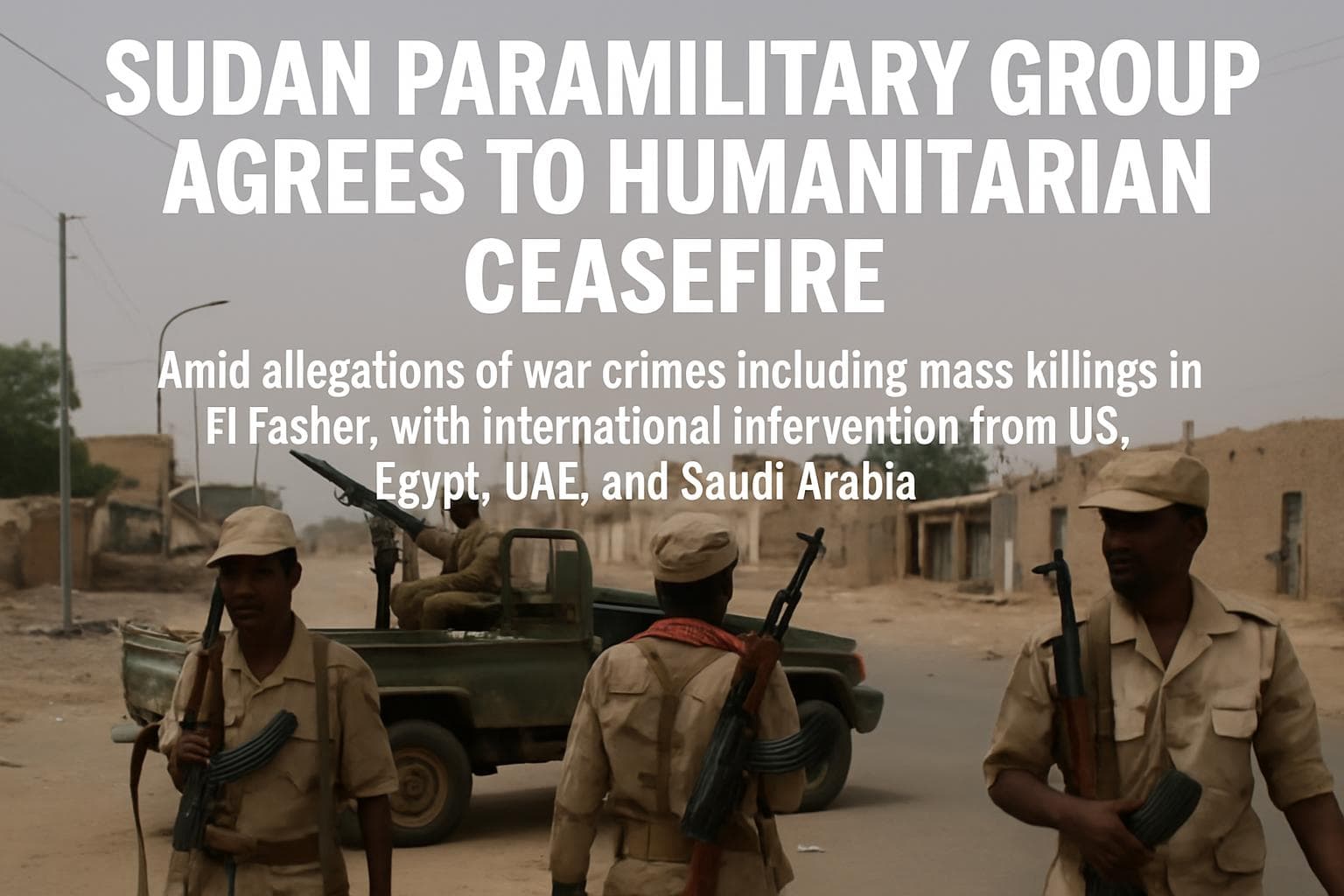
In a significant development in the ongoing Sudan conflict, the Rapid Support Forces (RSF) have agreed to a humanitarian ceasefire proposed by the United States, Egypt, the UAE, and Saudi Arabia. This decision follows mounting international criticism over alleged war crimes committed by the RSF in the city of El Fasher, Darfur.
Allegations of War Crimes
The RSF, a paramilitary group with a controversial history, has been accused of committing atrocities in El Fasher, including mass killings and ethnic cleansing. The International Criminal Court (ICC) has launched an investigation into these allegations, which include reports of systematic body disposal and mass graves. Satellite images have corroborated these claims, showing evidence of bodies being hidden in trenches and pits.
Humanitarian Crisis and Ceasefire Agreement
The conflict, which erupted in April 2023 between Sudan's army and the RSF, has resulted in a dire humanitarian crisis. The UN estimates that over 24 million people in Sudan are facing acute food shortages. The RSF's 18-month siege of El Fasher blocked humanitarian aid, exacerbating famine conditions. The ceasefire aims to address these catastrophic humanitarian consequences and facilitate the urgent delivery of aid.
Despite the ceasefire agreement, Sudan's military-led government has not yet responded. The RSF's principal backer, the UAE, has also faced criticism for allegedly supplying weapons used in the conflict, though it denies these claims.
UK's Response and Criticism
The UK government has come under fire for rejecting more ambitious atrocity prevention plans for Sudan, despite intelligence warnings of potential genocide in El Fasher. An internal report revealed that resource constraints led to the adoption of the least ambitious option, which involved limited funding to international organizations for protection activities.
Shayna Lewis, a Sudan specialist, criticized the UK's decision, stating that atrocities are preventable with political will. The UK's role as the UN Security Council's "penholder" for Sudan further highlights the importance of its response to the crisis.
WHAT THIS MIGHT MEAN
The acceptance of the ceasefire by the RSF marks a potential turning point in the Sudan conflict, but its implementation remains uncertain without the Sudanese military's agreement. The international community will closely monitor the situation, as the ceasefire could pave the way for broader peace talks and a transition to civilian rule.
The ICC's investigation into war crimes could lead to increased pressure on the RSF and its leaders, potentially influencing future negotiations. However, the humanitarian crisis continues to worsen, with millions in urgent need of aid. The global response, particularly from influential nations like the UK, will be crucial in addressing both the immediate humanitarian needs and the long-term resolution of the conflict.
Related Articles

Canada and Australia Forge Strategic Partnership Amid Global Uncertainty

Middle East Conflict Drives UK Energy Prices to New Highs

UK Faces Dilemmas Amid Iran Conflict and China Spying Allegations

UK Reinforces Military Presence in Cyprus Amid Middle East Tensions
China Sets Lowest GDP Growth Target in Decades Amid Economic Challenges

UK Government to Reform Asylum Seeker Support and Employment Policies
Sudan's Rapid Support Forces Agree to Ceasefire Amid War Crimes Allegations
In This Article
 James Okoro| Published
 HIGHLIGHTS
- The Rapid Support Forces (RSF) have agreed to a US-proposed humanitarian ceasefire amid accusations of war crimes in El Fasher.
- The International Criminal Court is investigating potential war crimes by the RSF, including mass killings and blockades in Darfur.
- Satellite images and reports indicate systematic body disposal by the RSF, with mass graves being dug in El Fasher.
- The UK government faced criticism for opting against ambitious atrocity prevention plans for Sudan, citing resource constraints.
- The ongoing conflict has led to a severe humanitarian crisis, with over 24 million people facing acute food shortages in Sudan.
In a significant development in the ongoing Sudan conflict, the Rapid Support Forces (RSF) have agreed to a humanitarian ceasefire proposed by the United States, Egypt, the UAE, and Saudi Arabia. This decision follows mounting international criticism over alleged war crimes committed by the RSF in the city of El Fasher, Darfur.
Allegations of War Crimes
The RSF, a paramilitary group with a controversial history, has been accused of committing atrocities in El Fasher, including mass killings and ethnic cleansing. The International Criminal Court (ICC) has launched an investigation into these allegations, which include reports of systematic body disposal and mass graves. Satellite images have corroborated these claims, showing evidence of bodies being hidden in trenches and pits.
Humanitarian Crisis and Ceasefire Agreement
The conflict, which erupted in April 2023 between Sudan's army and the RSF, has resulted in a dire humanitarian crisis. The UN estimates that over 24 million people in Sudan are facing acute food shortages. The RSF's 18-month siege of El Fasher blocked humanitarian aid, exacerbating famine conditions. The ceasefire aims to address these catastrophic humanitarian consequences and facilitate the urgent delivery of aid.
Despite the ceasefire agreement, Sudan's military-led government has not yet responded. The RSF's principal backer, the UAE, has also faced criticism for allegedly supplying weapons used in the conflict, though it denies these claims.
UK's Response and Criticism
The UK government has come under fire for rejecting more ambitious atrocity prevention plans for Sudan, despite intelligence warnings of potential genocide in El Fasher. An internal report revealed that resource constraints led to the adoption of the least ambitious option, which involved limited funding to international organizations for protection activities.
Shayna Lewis, a Sudan specialist, criticized the UK's decision, stating that atrocities are preventable with political will. The UK's role as the UN Security Council's "penholder" for Sudan further highlights the importance of its response to the crisis.
WHAT THIS MIGHT MEAN
The acceptance of the ceasefire by the RSF marks a potential turning point in the Sudan conflict, but its implementation remains uncertain without the Sudanese military's agreement. The international community will closely monitor the situation, as the ceasefire could pave the way for broader peace talks and a transition to civilian rule.
The ICC's investigation into war crimes could lead to increased pressure on the RSF and its leaders, potentially influencing future negotiations. However, the humanitarian crisis continues to worsen, with millions in urgent need of aid. The global response, particularly from influential nations like the UK, will be crucial in addressing both the immediate humanitarian needs and the long-term resolution of the conflict.
Related Articles
Canada and Australia Forge Strategic Partnership Amid Global Uncertainty
Middle East Conflict Drives UK Energy Prices to New Highs
UK Faces Dilemmas Amid Iran Conflict and China Spying Allegations
UK Reinforces Military Presence in Cyprus Amid Middle East Tensions
China Sets Lowest GDP Growth Target in Decades Amid Economic Challenges
UK Government to Reform Asylum Seeker Support and Employment Policies