
Deadly Suicide Bombing Strikes Damascus Church, Killing 22
In This Article
HIGHLIGHTS
- A suicide bombing at the Greek Orthodox Church in Damascus killed at least 22 people and injured 63, marking the first major attack since the fall of Bashar al-Assad.
- The attacker, affiliated with the Islamic State, opened fire before detonating an explosive vest during a church service.
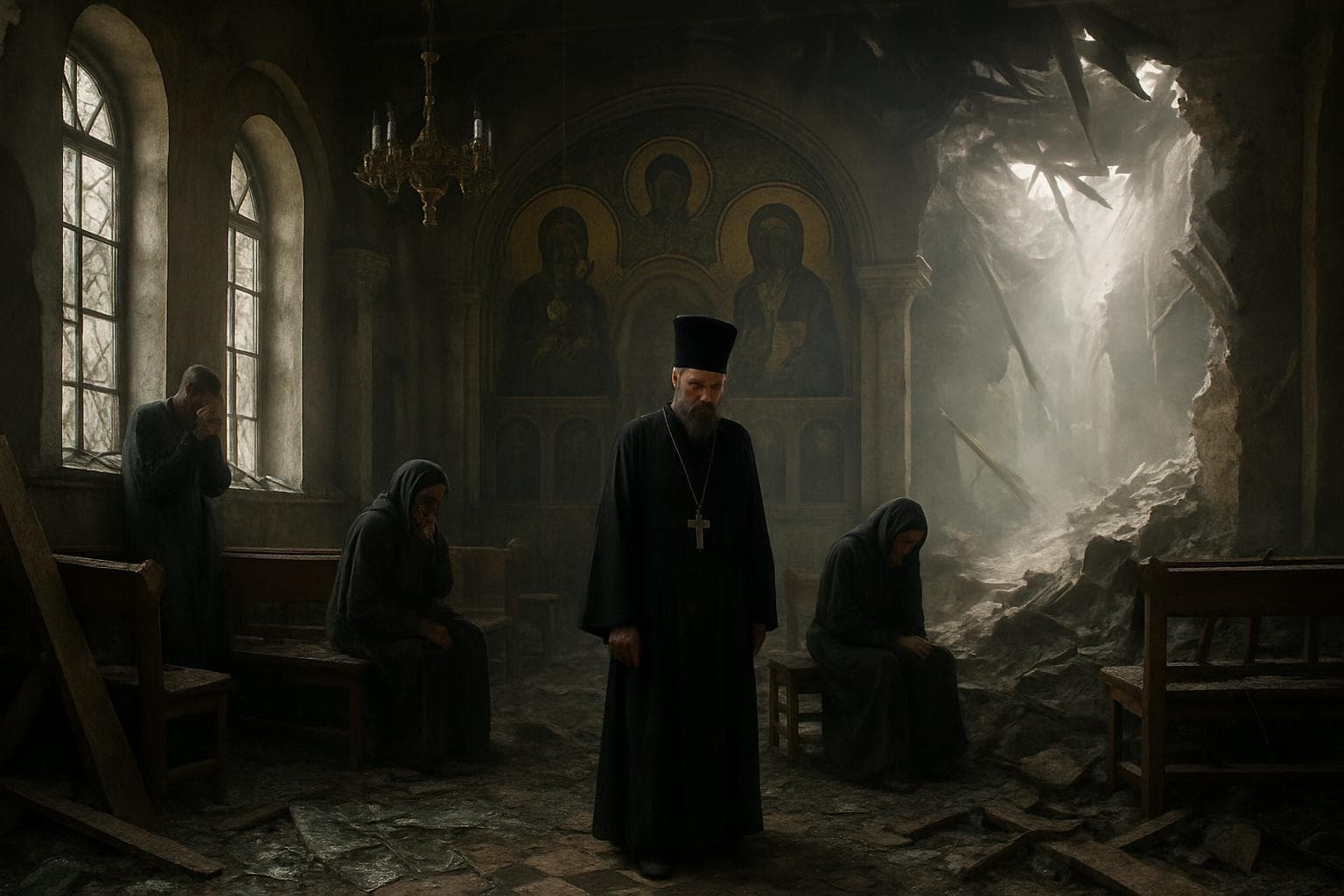
- Eyewitnesses reported chaos and destruction inside the church, with pews shattered and blood spattered across the walls.
- The Syrian interim government, led by former Islamist rebels, has vowed to protect religious minorities amid rising sectarian violence.
- International figures, including the UN and US special envoys, condemned the attack and called for unity against terrorism.
A devastating suicide bombing at a Greek Orthodox Church in Damascus has left at least 22 people dead and 63 injured, according to Syrian authorities. The attack, which occurred during a Sunday evening service, marks the first major operation by the Islamic State (IS) since the overthrow of former President Bashar al-Assad in December.
Attack Details and Eyewitness Accounts
The assailant, reportedly affiliated with IS, entered the Greek Orthodox Church of the Prophet Elias in the Dweila neighborhood, opening fire on congregants before detonating an explosive vest. Eyewitness Lawrence Maamari described the chaos, stating, "Someone entered [the church] from outside carrying a weapon" and began shooting. Another witness, Ziad, recounted hearing gunfire followed by an explosion that sent glass flying, leaving the church interior in ruins.
Immediate Aftermath and Response
The attack has sent shockwaves through the Christian community in Damascus, with the Greek Orthodox Patriarchate of Antioch condemning the "treacherous hand of evil" that struck during the divine liturgy. The patriarchate urged Syria's interim authorities to ensure the protection of all citizens and religious sites. Greek Prime Minister Kyriakos Mitsotakis echoed these sentiments, calling for concrete measures to safeguard ethnic and religious minorities in Syria.
Political and International Reactions
Syria's interim President Ahmed al-Sharaa, whose Sunni Islamist group Hayat Tahrir al-Sham (HTS) now leads the government, has pledged to protect religious minorities. However, the country has been plagued by sectarian violence, with IS exploiting the security vacuum post-Assad. The UN special envoy for Syria, Geir Pedersen, and US special envoy Tom Barrack condemned the attack, urging Syrians to reject terrorism and extremism.
WHAT THIS MIGHT MEAN
The recent attack underscores the fragile security situation in Syria, as the interim government grapples with the remnants of IS and other extremist groups. The bombing could exacerbate sectarian tensions, challenging the new leadership's commitment to protecting religious minorities. Experts suggest that the international community's support will be crucial in stabilizing the region and preventing further violence. As Syria navigates its post-Assad era, the government's ability to maintain civil peace and unity among its diverse population remains a critical test.
Related Articles

Middle East Conflict Drives UK Energy Prices to New Highs

US and Israel Intensify Military Campaign as Iran's Capabilities Dwindle
UK Reinforces Military Presence in Cyprus Amid Middle East Tensions

US-Iran Tensions Escalate Amid Renewed Nuclear Talks and Protests
Palestinian-American Teen Killed by Israeli Settlers in West Bank Sparks Calls for Accountability

Trump's Board of Peace Pledges $7 Billion for Gaza Amidst International Skepticism
Deadly Suicide Bombing Strikes Damascus Church, Killing 22
In This Article
 James Okoro| Published
 HIGHLIGHTS
- A suicide bombing at the Greek Orthodox Church in Damascus killed at least 22 people and injured 63, marking the first major attack since the fall of Bashar al-Assad.
- The attacker, affiliated with the Islamic State, opened fire before detonating an explosive vest during a church service.
- Eyewitnesses reported chaos and destruction inside the church, with pews shattered and blood spattered across the walls.
- The Syrian interim government, led by former Islamist rebels, has vowed to protect religious minorities amid rising sectarian violence.
- International figures, including the UN and US special envoys, condemned the attack and called for unity against terrorism.
A devastating suicide bombing at a Greek Orthodox Church in Damascus has left at least 22 people dead and 63 injured, according to Syrian authorities. The attack, which occurred during a Sunday evening service, marks the first major operation by the Islamic State (IS) since the overthrow of former President Bashar al-Assad in December.
Attack Details and Eyewitness Accounts
The assailant, reportedly affiliated with IS, entered the Greek Orthodox Church of the Prophet Elias in the Dweila neighborhood, opening fire on congregants before detonating an explosive vest. Eyewitness Lawrence Maamari described the chaos, stating, "Someone entered [the church] from outside carrying a weapon" and began shooting. Another witness, Ziad, recounted hearing gunfire followed by an explosion that sent glass flying, leaving the church interior in ruins.
Immediate Aftermath and Response
The attack has sent shockwaves through the Christian community in Damascus, with the Greek Orthodox Patriarchate of Antioch condemning the "treacherous hand of evil" that struck during the divine liturgy. The patriarchate urged Syria's interim authorities to ensure the protection of all citizens and religious sites. Greek Prime Minister Kyriakos Mitsotakis echoed these sentiments, calling for concrete measures to safeguard ethnic and religious minorities in Syria.
Political and International Reactions
Syria's interim President Ahmed al-Sharaa, whose Sunni Islamist group Hayat Tahrir al-Sham (HTS) now leads the government, has pledged to protect religious minorities. However, the country has been plagued by sectarian violence, with IS exploiting the security vacuum post-Assad. The UN special envoy for Syria, Geir Pedersen, and US special envoy Tom Barrack condemned the attack, urging Syrians to reject terrorism and extremism.
WHAT THIS MIGHT MEAN
The recent attack underscores the fragile security situation in Syria, as the interim government grapples with the remnants of IS and other extremist groups. The bombing could exacerbate sectarian tensions, challenging the new leadership's commitment to protecting religious minorities. Experts suggest that the international community's support will be crucial in stabilizing the region and preventing further violence. As Syria navigates its post-Assad era, the government's ability to maintain civil peace and unity among its diverse population remains a critical test.
Related Articles
Middle East Conflict Drives UK Energy Prices to New Highs
US and Israel Intensify Military Campaign as Iran's Capabilities Dwindle
UK Reinforces Military Presence in Cyprus Amid Middle East Tensions
US-Iran Tensions Escalate Amid Renewed Nuclear Talks and Protests
Palestinian-American Teen Killed by Israeli Settlers in West Bank Sparks Calls for Accountability
Trump's Board of Peace Pledges $7 Billion for Gaza Amidst International Skepticism