
Supreme Court Ruling Spurs FCA to Launch Car Finance Compensation Scheme
In This Article
HIGHLIGHTS
- A Supreme Court ruling has opened the door for potential compensation for car finance customers mis-sold loans due to undisclosed commissions.
- The Financial Conduct Authority (FCA) plans to launch a redress scheme covering loans from 2007, potentially costing lenders £9bn to £18bn.
- Discretionary commission arrangements (DCAs), banned in 2021, are a key focus, affecting millions of contracts where dealers set higher interest rates for more commission.
- The FCA will consult on the compensation scheme, aiming to finalize it by next year, with payouts depending on individual case details.
- Consumers are advised against using claims companies, as they charge fees and do not expedite the compensation process.
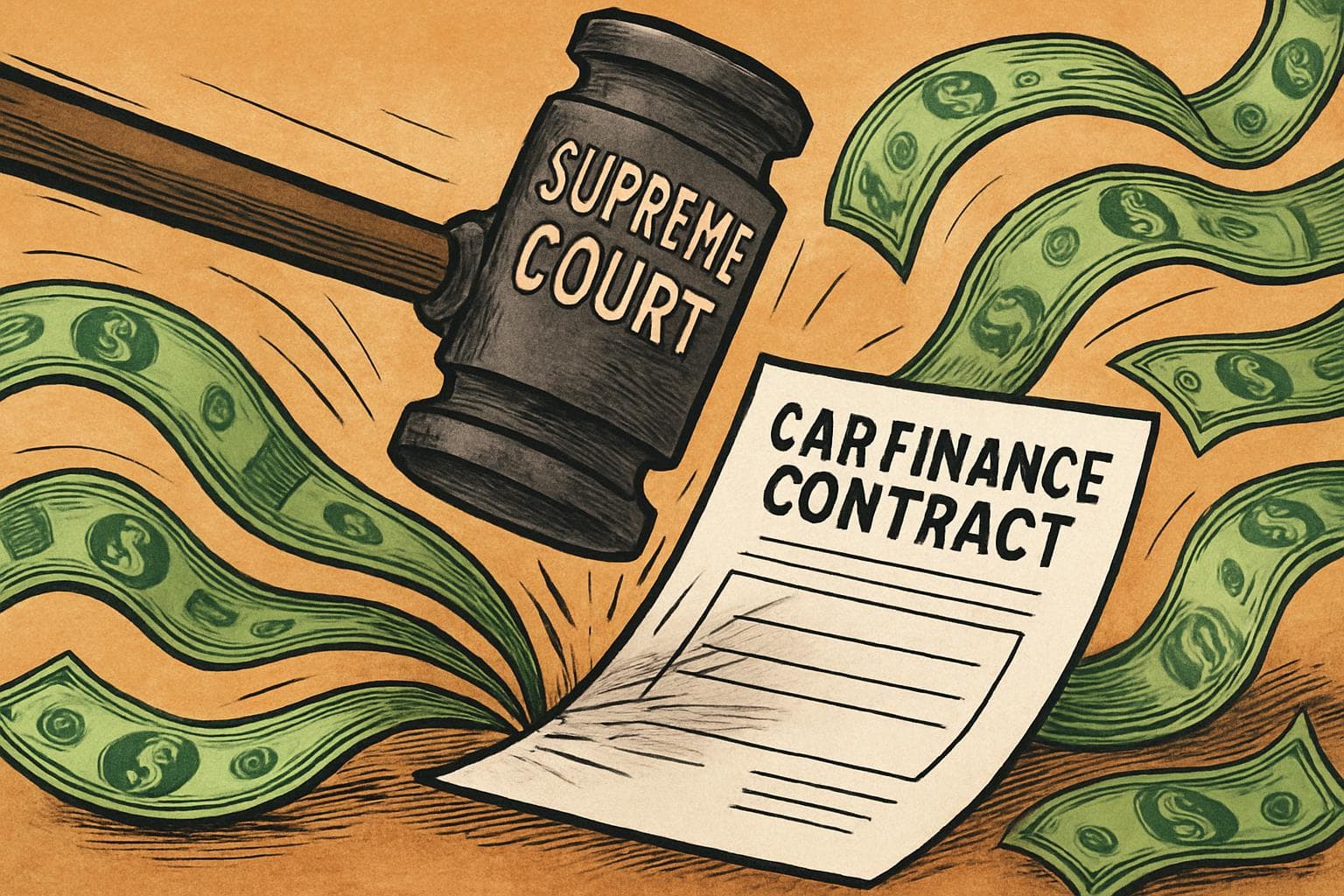
Millions of car finance customers could be eligible for compensation following a Supreme Court ruling that highlighted the mis-selling of loans due to undisclosed commissions. The Financial Conduct Authority (FCA) has announced plans to implement a redress scheme, potentially costing lenders between £9 billion and £18 billion.
Background and Legal Context
The Supreme Court's decision comes after a lengthy legal battle over hidden commissions paid by lenders to car dealers. These commissions were often not disclosed to customers, leading to unfair financial agreements. The ruling specifically addressed discretionary commission arrangements (DCAs), which allowed dealers to set higher interest rates to earn more commission. Although DCAs were banned in 2021, they were prevalent in contracts from 2007 to 2020.
FCA's Redress Scheme
In response to the ruling, the FCA is preparing to launch a compensation scheme. The regulator will consult on the details, aiming to cover loans dating back to 2007. The scheme will focus on cases where commissions were not properly disclosed, a situation believed to affect the majority of the 14.6 million contracts involving DCAs. The consultation is set to begin in early October, with the FCA planning to finalize the scheme by next year.
Eligibility and Consumer Advice
Consumers who suspect they were affected by these practices are advised to review their loan agreements for undisclosed commissions. The FCA has cautioned against using claims companies, which charge fees without expediting the compensation process. Instead, affected individuals should await the outcome of the FCA's consultation and the subsequent implementation of the compensation scheme.
Personal Impact and Case Study
The Supreme Court ruling was influenced by a test case involving Marcus Johnson, who was unaware that 55% of his car loan interest was commission. The court deemed this level of commission unreasonable, setting a precedent for future claims. Johnson's case highlights the complexity and lack of transparency in many car finance agreements, often leaving consumers at a disadvantage.
WHAT THIS MIGHT MEAN
The FCA's forthcoming compensation scheme could significantly impact the car finance industry, potentially leading to stricter regulations and increased transparency in loan agreements. As the consultation progresses, lenders may face increased scrutiny and financial liability, prompting changes in how car loans are structured and sold. For consumers, the scheme offers a chance for redress and greater awareness of their rights in financial transactions. However, the final outcome will depend on the specifics of each case and the FCA's ability to enforce fair practices across the industry.
Related Articles

Trump's New Tariff Strategy Sparks Global Trade Uncertainty

Trump Raises Import Tariffs to 15% After Supreme Court Setback

Trump Administration Sues Harvard Over Alleged Non-Compliance in Admissions Investigation

High Court Upholds Guidance on Single-Sex Spaces Amidst Transgender Rights Debate
Keir Starmer Faces Intense Scrutiny Over Mandelson Appointment Amid Scandal
Scottish Government Defends Transgender Prisoner Policy Amid Legal Challenge
Supreme Court Ruling Spurs FCA to Launch Car Finance Compensation Scheme
In This Article
 Daniel Rivera| Published
 HIGHLIGHTS
- A Supreme Court ruling has opened the door for potential compensation for car finance customers mis-sold loans due to undisclosed commissions.
- The Financial Conduct Authority (FCA) plans to launch a redress scheme covering loans from 2007, potentially costing lenders £9bn to £18bn.
- Discretionary commission arrangements (DCAs), banned in 2021, are a key focus, affecting millions of contracts where dealers set higher interest rates for more commission.
- The FCA will consult on the compensation scheme, aiming to finalize it by next year, with payouts depending on individual case details.
- Consumers are advised against using claims companies, as they charge fees and do not expedite the compensation process.
Millions of car finance customers could be eligible for compensation following a Supreme Court ruling that highlighted the mis-selling of loans due to undisclosed commissions. The Financial Conduct Authority (FCA) has announced plans to implement a redress scheme, potentially costing lenders between £9 billion and £18 billion.
Background and Legal Context
The Supreme Court's decision comes after a lengthy legal battle over hidden commissions paid by lenders to car dealers. These commissions were often not disclosed to customers, leading to unfair financial agreements. The ruling specifically addressed discretionary commission arrangements (DCAs), which allowed dealers to set higher interest rates to earn more commission. Although DCAs were banned in 2021, they were prevalent in contracts from 2007 to 2020.
FCA's Redress Scheme
In response to the ruling, the FCA is preparing to launch a compensation scheme. The regulator will consult on the details, aiming to cover loans dating back to 2007. The scheme will focus on cases where commissions were not properly disclosed, a situation believed to affect the majority of the 14.6 million contracts involving DCAs. The consultation is set to begin in early October, with the FCA planning to finalize the scheme by next year.
Eligibility and Consumer Advice
Consumers who suspect they were affected by these practices are advised to review their loan agreements for undisclosed commissions. The FCA has cautioned against using claims companies, which charge fees without expediting the compensation process. Instead, affected individuals should await the outcome of the FCA's consultation and the subsequent implementation of the compensation scheme.
Personal Impact and Case Study
The Supreme Court ruling was influenced by a test case involving Marcus Johnson, who was unaware that 55% of his car loan interest was commission. The court deemed this level of commission unreasonable, setting a precedent for future claims. Johnson's case highlights the complexity and lack of transparency in many car finance agreements, often leaving consumers at a disadvantage.
WHAT THIS MIGHT MEAN
The FCA's forthcoming compensation scheme could significantly impact the car finance industry, potentially leading to stricter regulations and increased transparency in loan agreements. As the consultation progresses, lenders may face increased scrutiny and financial liability, prompting changes in how car loans are structured and sold. For consumers, the scheme offers a chance for redress and greater awareness of their rights in financial transactions. However, the final outcome will depend on the specifics of each case and the FCA's ability to enforce fair practices across the industry.
Related Articles
Trump's New Tariff Strategy Sparks Global Trade Uncertainty
Trump Raises Import Tariffs to 15% After Supreme Court Setback
Trump Administration Sues Harvard Over Alleged Non-Compliance in Admissions Investigation
High Court Upholds Guidance on Single-Sex Spaces Amidst Transgender Rights Debate
Keir Starmer Faces Intense Scrutiny Over Mandelson Appointment Amid Scandal
Scottish Government Defends Transgender Prisoner Policy Amid Legal Challenge