
Syria Joins US-Led Coalition Against IS as Sanctions Partially Lifted
In This Article
HIGHLIGHTS
- Syria joins the US-led coalition against the Islamic State after a historic meeting between President Trump and Syrian President Ahmed al-Sharaa.
- The US announced a 180-day suspension of some sanctions under the Caesar Act, aimed at aiding Syria's postwar reconstruction.
- Ahmed al-Sharaa, a former leader of Hayat Tahrir al-Sham, has been removed from the US terrorism blacklist, marking a significant shift in US-Syria relations.
- The US and Syria have agreed to reopen the Syrian embassy in Washington, signaling a thaw in diplomatic relations.
- Syria has conducted nationwide operations against IS cells, arresting 71 individuals and seizing weapons.
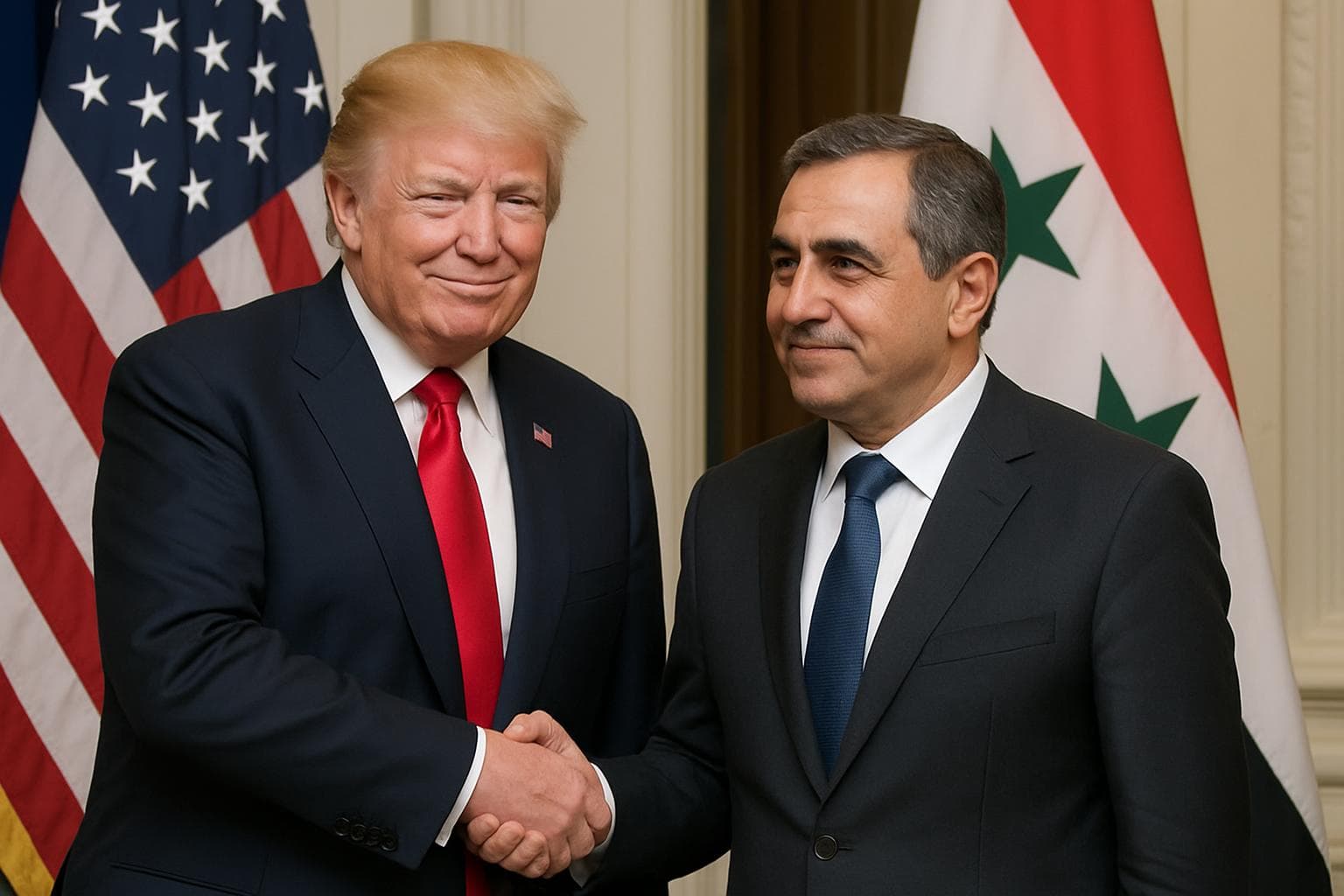
In a historic diplomatic shift, Syria has joined the US-led coalition to combat the Islamic State (IS), following a landmark meeting between US President Donald Trump and Syrian President Ahmed al-Sharaa at the White House. This marks the first official visit by a Syrian leader to the US since the country's independence in 1946.
A New Chapter in US-Syria Relations
The meeting signifies a dramatic turnaround in US-Syria relations, previously strained by years of civil war and sanctions. President Trump expressed optimism about Syria's future, stating, "We want to see Syria become a country that's very successful." The US has partially lifted sanctions under the Caesar Syria Civilian Protection Act, which had imposed severe economic restrictions on Syria due to human rights abuses during the Assad regime. The 180-day suspension aims to facilitate Syria's reconstruction efforts, although certain transactions involving Russia and Iran remain restricted.
Ahmed al-Sharaa's Transformation
Ahmed al-Sharaa, once a leader of the al-Qaida-affiliated group Hayat Tahrir al-Sham, has undergone a significant rebranding. Previously designated a terrorist by the US, al-Sharaa has been removed from the terrorism blacklist, reflecting his efforts to rebuild Syria with international support. "We have a big mission to build the economy," al-Sharaa stated, emphasizing Syria's potential for growth.
Diplomatic and Security Developments
The US and Syria have agreed to reopen the Syrian embassy in Washington, a move that underscores the warming of diplomatic ties. Additionally, Syria has intensified its efforts against IS, conducting 61 raids and arresting 71 individuals. The US State Department acknowledged Syria's progress in meeting US demands, including efforts to locate missing Americans and eliminate chemical weapons.
Economic and Political Implications
The World Bank estimates Syria's reconstruction costs at $216 billion, highlighting the immense challenges ahead. However, the lifting of sanctions is expected to attract foreign investment and aid Syria's recovery. The US has also indicated that Syria's integration into the coalition against IS is part of a broader strategy to ensure regional stability.
WHAT THIS MIGHT MEAN
The partial lifting of sanctions and Syria's inclusion in the US-led coalition against IS could pave the way for further diplomatic and economic engagement between the two nations. However, the suspension of the Caesar Act is temporary, and its permanent repeal would require congressional approval. This development may also influence Syria's relations with other regional powers, particularly Russia and Iran, as the US seeks to limit their influence in the Middle East. As Syria rebuilds, the international community will closely monitor its commitment to democratic reforms and human rights, which could impact future foreign aid and investment.
Related Articles
Spain's Sánchez Stands Firm Against Trump's Trade Threat Over Iran Stance
Senate Blocks Resolution to Limit Trump's Military Actions in Iran
Intensified US-Israel Strikes on Iran Spark Global Outcry
UK-Iran Tensions: Starmer Defends Cautious Approach Amid Trump Criticism
US and Israel Intensify Military Campaign as Iran's Capabilities Dwindle
Iran Postpones Khamenei Funeral Amid Escalating US-Israeli Strikes
Syria Joins US-Led Coalition Against IS as Sanctions Partially Lifted
In This Article
 Ethan Brooks| Published
 HIGHLIGHTS
- Syria joins the US-led coalition against the Islamic State after a historic meeting between President Trump and Syrian President Ahmed al-Sharaa.
- The US announced a 180-day suspension of some sanctions under the Caesar Act, aimed at aiding Syria's postwar reconstruction.
- Ahmed al-Sharaa, a former leader of Hayat Tahrir al-Sham, has been removed from the US terrorism blacklist, marking a significant shift in US-Syria relations.
- The US and Syria have agreed to reopen the Syrian embassy in Washington, signaling a thaw in diplomatic relations.
- Syria has conducted nationwide operations against IS cells, arresting 71 individuals and seizing weapons.
In a historic diplomatic shift, Syria has joined the US-led coalition to combat the Islamic State (IS), following a landmark meeting between US President Donald Trump and Syrian President Ahmed al-Sharaa at the White House. This marks the first official visit by a Syrian leader to the US since the country's independence in 1946.
A New Chapter in US-Syria Relations
The meeting signifies a dramatic turnaround in US-Syria relations, previously strained by years of civil war and sanctions. President Trump expressed optimism about Syria's future, stating, "We want to see Syria become a country that's very successful." The US has partially lifted sanctions under the Caesar Syria Civilian Protection Act, which had imposed severe economic restrictions on Syria due to human rights abuses during the Assad regime. The 180-day suspension aims to facilitate Syria's reconstruction efforts, although certain transactions involving Russia and Iran remain restricted.
Ahmed al-Sharaa's Transformation
Ahmed al-Sharaa, once a leader of the al-Qaida-affiliated group Hayat Tahrir al-Sham, has undergone a significant rebranding. Previously designated a terrorist by the US, al-Sharaa has been removed from the terrorism blacklist, reflecting his efforts to rebuild Syria with international support. "We have a big mission to build the economy," al-Sharaa stated, emphasizing Syria's potential for growth.
Diplomatic and Security Developments
The US and Syria have agreed to reopen the Syrian embassy in Washington, a move that underscores the warming of diplomatic ties. Additionally, Syria has intensified its efforts against IS, conducting 61 raids and arresting 71 individuals. The US State Department acknowledged Syria's progress in meeting US demands, including efforts to locate missing Americans and eliminate chemical weapons.
Economic and Political Implications
The World Bank estimates Syria's reconstruction costs at $216 billion, highlighting the immense challenges ahead. However, the lifting of sanctions is expected to attract foreign investment and aid Syria's recovery. The US has also indicated that Syria's integration into the coalition against IS is part of a broader strategy to ensure regional stability.
WHAT THIS MIGHT MEAN
The partial lifting of sanctions and Syria's inclusion in the US-led coalition against IS could pave the way for further diplomatic and economic engagement between the two nations. However, the suspension of the Caesar Act is temporary, and its permanent repeal would require congressional approval. This development may also influence Syria's relations with other regional powers, particularly Russia and Iran, as the US seeks to limit their influence in the Middle East. As Syria rebuilds, the international community will closely monitor its commitment to democratic reforms and human rights, which could impact future foreign aid and investment.
Related Articles
Spain's Sánchez Stands Firm Against Trump's Trade Threat Over Iran Stance
Senate Blocks Resolution to Limit Trump's Military Actions in Iran
Intensified US-Israel Strikes on Iran Spark Global Outcry
UK-Iran Tensions: Starmer Defends Cautious Approach Amid Trump Criticism
US and Israel Intensify Military Campaign as Iran's Capabilities Dwindle
Iran Postpones Khamenei Funeral Amid Escalating US-Israeli Strikes