
Syrian President Sharaa Visits US Amid Renewed Efforts to Combat Islamic State
In This Article
HIGHLIGHTS
- Syrian President Ahmed Sharaa visits the US for talks with President Trump after being removed from a terrorism blacklist.
- Syrian security forces conducted 61 raids, arresting 71 suspected Islamic State members and seizing weapons.
- The US lifted sanctions on Sharaa and his group, Hayat Tahrir al-Sham, recognizing their efforts to moderate and combat extremism.
- Sharaa aims to secure international support and funding for Syria's reconstruction, estimated to cost $216 billion.
- The US is considering establishing a military presence in Damascus to support a security pact between Syria and Israel.
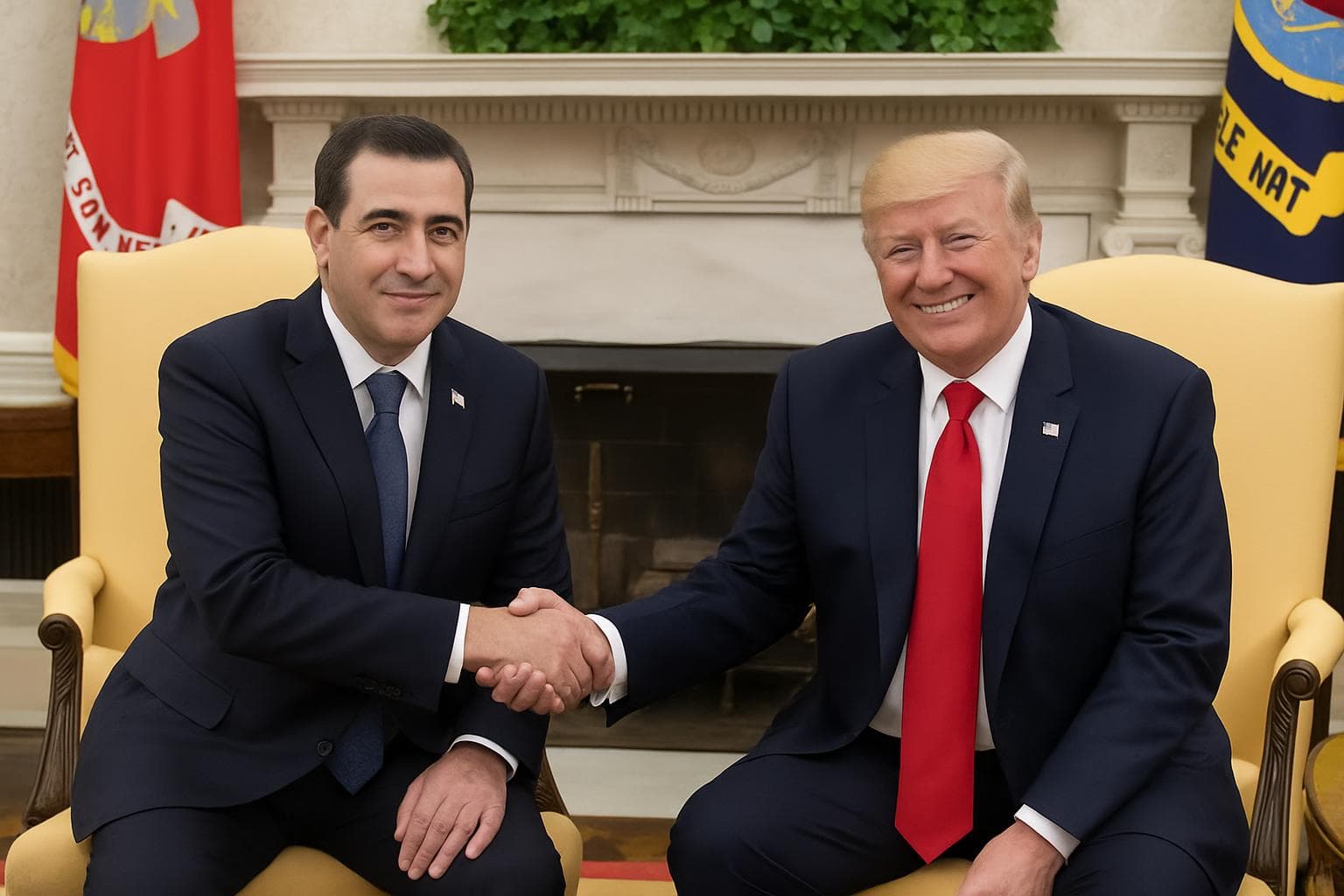
Syrian President Ahmed Sharaa has arrived in Washington for a pivotal meeting with US President Donald Trump, marking a significant step in Syria-US relations. This visit comes shortly after Sharaa was removed from the US terrorism blacklist, a move that signals a shift in diplomatic ties between the two nations.
Revoking Sanctions and Diplomatic Engagement
The US Treasury Department recently lifted sanctions on Sharaa and his group, Hayat Tahrir al-Sham (HTS), acknowledging their progress in distancing from extremist affiliations. Sharaa, formerly known as Muhammad al-Jawlani, led HTS after severing ties with al-Qaeda in 2016. This diplomatic thaw follows a UN Security Council resolution, backed by the US, to ease sanctions on Syria, aiming to reintegrate the nation into the global community.
Syrian Raids Against Islamic State
As Sharaa arrived in the US, Syrian security forces launched a series of preemptive raids across the country, targeting Islamic State cells. These operations resulted in the arrest of 71 suspects and the seizure of weapons and explosives. The crackdown underscores Syria's commitment to eradicating remnants of the Islamic State, a key agenda item in Sharaa's discussions with Trump.
Rebuilding a War-Torn Nation
Sharaa's visit also seeks to garner international support for Syria's reconstruction, a daunting task with costs estimated at $216 billion by the World Bank. The Syrian leader's efforts to present a moderate government have garnered backing from former adversaries, as he pledges to unify Syria's diverse ethnic groups and factions.
Strategic Military Developments
In a related development, the US is reportedly considering establishing a military presence at an airbase in Damascus. This move is part of a broader strategy to broker a security pact between Syria and Israel, enhancing regional stability and counterterrorism efforts.
WHAT THIS MIGHT MEAN
The outcome of Sharaa's visit to the US could significantly influence Syria's future trajectory. If successful, it may lead to increased international support and funding for Syria's reconstruction, aiding in the country's recovery from years of civil war. The potential establishment of a US military presence in Damascus could further solidify Syria's role in the US-led coalition against the Islamic State, fostering regional security.
However, challenges remain, including the need to maintain internal stability and address ongoing ethnic tensions within Syria. The international community will closely monitor Sharaa's ability to deliver on his promises of moderation and unity, which are crucial for sustaining diplomatic and economic support.
Related Articles
Senate Blocks Resolution to Limit Trump's Military Actions in Iran

US and Israel Intensify Military Campaign as Iran's Capabilities Dwindle

Intensified US-Israel Strikes on Iran Spark Global Outcry
Spain's Sánchez Stands Firm Against Trump's Trade Threat Over Iran Stance
Iran Postpones Khamenei Funeral Amid Escalating US-Israeli Strikes
Congress Subpoenas Attorney General Bondi in Epstein Investigation
Syrian President Sharaa Visits US Amid Renewed Efforts to Combat Islamic State
In This Article
 Ethan Brooks| Published
 HIGHLIGHTS
- Syrian President Ahmed Sharaa visits the US for talks with President Trump after being removed from a terrorism blacklist.
- Syrian security forces conducted 61 raids, arresting 71 suspected Islamic State members and seizing weapons.
- The US lifted sanctions on Sharaa and his group, Hayat Tahrir al-Sham, recognizing their efforts to moderate and combat extremism.
- Sharaa aims to secure international support and funding for Syria's reconstruction, estimated to cost $216 billion.
- The US is considering establishing a military presence in Damascus to support a security pact between Syria and Israel.
Syrian President Ahmed Sharaa has arrived in Washington for a pivotal meeting with US President Donald Trump, marking a significant step in Syria-US relations. This visit comes shortly after Sharaa was removed from the US terrorism blacklist, a move that signals a shift in diplomatic ties between the two nations.
Revoking Sanctions and Diplomatic Engagement
The US Treasury Department recently lifted sanctions on Sharaa and his group, Hayat Tahrir al-Sham (HTS), acknowledging their progress in distancing from extremist affiliations. Sharaa, formerly known as Muhammad al-Jawlani, led HTS after severing ties with al-Qaeda in 2016. This diplomatic thaw follows a UN Security Council resolution, backed by the US, to ease sanctions on Syria, aiming to reintegrate the nation into the global community.
Syrian Raids Against Islamic State
As Sharaa arrived in the US, Syrian security forces launched a series of preemptive raids across the country, targeting Islamic State cells. These operations resulted in the arrest of 71 suspects and the seizure of weapons and explosives. The crackdown underscores Syria's commitment to eradicating remnants of the Islamic State, a key agenda item in Sharaa's discussions with Trump.
Rebuilding a War-Torn Nation
Sharaa's visit also seeks to garner international support for Syria's reconstruction, a daunting task with costs estimated at $216 billion by the World Bank. The Syrian leader's efforts to present a moderate government have garnered backing from former adversaries, as he pledges to unify Syria's diverse ethnic groups and factions.
Strategic Military Developments
In a related development, the US is reportedly considering establishing a military presence at an airbase in Damascus. This move is part of a broader strategy to broker a security pact between Syria and Israel, enhancing regional stability and counterterrorism efforts.
WHAT THIS MIGHT MEAN
The outcome of Sharaa's visit to the US could significantly influence Syria's future trajectory. If successful, it may lead to increased international support and funding for Syria's reconstruction, aiding in the country's recovery from years of civil war. The potential establishment of a US military presence in Damascus could further solidify Syria's role in the US-led coalition against the Islamic State, fostering regional security.
However, challenges remain, including the need to maintain internal stability and address ongoing ethnic tensions within Syria. The international community will closely monitor Sharaa's ability to deliver on his promises of moderation and unity, which are crucial for sustaining diplomatic and economic support.
Related Articles
Senate Blocks Resolution to Limit Trump's Military Actions in Iran
US and Israel Intensify Military Campaign as Iran's Capabilities Dwindle
Intensified US-Israel Strikes on Iran Spark Global Outcry
Spain's Sánchez Stands Firm Against Trump's Trade Threat Over Iran Stance
Iran Postpones Khamenei Funeral Amid Escalating US-Israeli Strikes
Congress Subpoenas Attorney General Bondi in Epstein Investigation