
Syrian President Pledges Druze Protection Amid Israeli Strikes and Sectarian Unrest
In This Article
HIGHLIGHTS
- Syrian interim President Ahmed al-Sharaa vows to protect the Druze community amid escalating sectarian violence in Suweida.
- Israeli airstrikes targeted Syrian military sites in Damascus, citing protection of Druze civilians as a motive.
- Over 350 people have died since clashes erupted between Druze militias and Bedouin tribes in Suweida.
- The US announced "specific steps" to end the violence, with international mediation efforts involving Arab and Turkish parties.
- Syrian military forces began withdrawing from Suweida under a ceasefire agreement, though its durability remains uncertain.
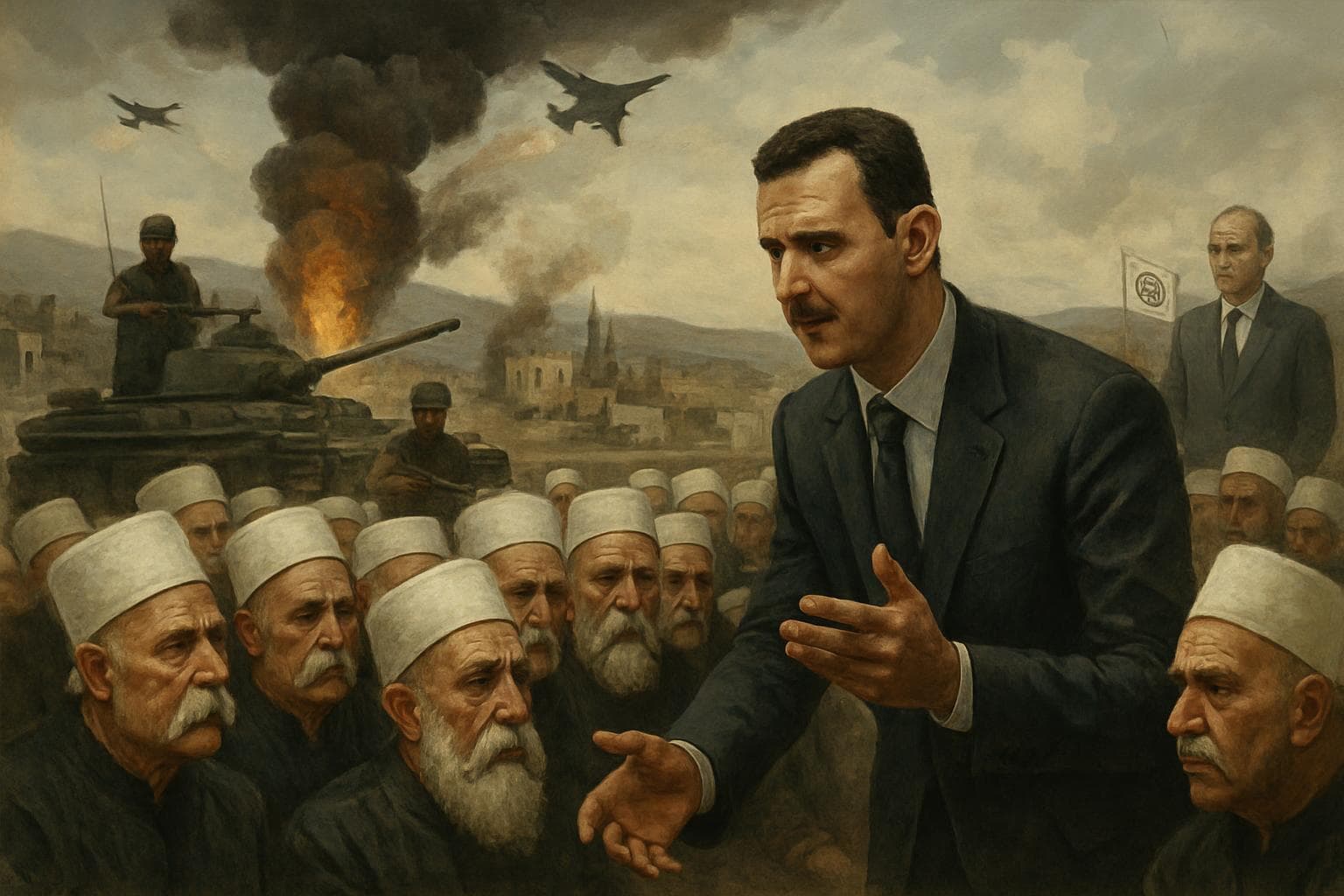
In a televised address, Syria's interim President Ahmed al-Sharaa has committed to safeguarding the Druze community following a surge in sectarian violence in the Suweida province. This pledge comes in the wake of Israeli airstrikes on Syrian military targets in Damascus, which Israel claims were necessary to protect Druze civilians.
Sectarian Clashes and International Response
The violence in Suweida, which erupted on Sunday, has resulted in over 350 fatalities, involving Druze militias and Bedouin tribes. The Syrian government deployed forces to the predominantly Druze city for the first time since Sunni Islamist rebels, led by Sharaa's group, overthrew President Bashar al-Assad in December. The intervention by Israeli forces, described by Prime Minister Benjamin Netanyahu as an effort to "save our Druze brothers," has further complicated the situation.
Ceasefire and Withdrawal Efforts
Amidst the turmoil, the US announced that "specific steps" had been agreed upon to quell the violence, with Secretary of State Marco Rubio emphasizing the need for all parties to uphold their commitments. Syrian state media reported a military withdrawal from Suweida as part of a ceasefire agreement with Druze leaders, though the presence of other government forces remains ambiguous.
Broader Implications and Community Concerns
The Druze, a religious minority with significant populations in Lebanon, Jordan, Israel, and the Golan Heights, have expressed distrust towards Sharaa's government due to his jihadist past. This distrust is exacerbated by recent sectarian violence, including a deadly clash in May. Sharaa, however, reiterated that the Druze are integral to Syria's national fabric and promised accountability for any transgressions against them.
WHAT THIS MIGHT MEAN
The unfolding situation in Suweida poses significant challenges for regional stability. If the ceasefire holds, it could pave the way for a more permanent resolution to the sectarian tensions. However, the ongoing distrust between the Druze community and the Syrian government, coupled with the potential for further Israeli intervention, could lead to renewed conflict. International mediation, particularly involving the US, Arab, and Turkish efforts, will be crucial in maintaining peace and preventing a broader sectarian war. The UN Security Council's upcoming meeting may also influence diplomatic strategies and future actions in the region.
Related Articles
Senate Blocks Resolution to Limit Trump's Military Actions in Iran
Iran Postpones Khamenei Funeral Amid Escalating US-Israeli Strikes
US and Israel Intensify Military Campaign as Iran's Capabilities Dwindle
Intensified US-Israel Strikes on Iran Spark Global Outcry
Canada Calls for De-escalation Amid US-Israel Strikes on Iran
US-Iran Tensions Escalate Amid Renewed Nuclear Talks and Protests
Syrian President Pledges Druze Protection Amid Israeli Strikes and Sectarian Unrest
In This Article
 Ethan Brooks| Published
 HIGHLIGHTS
- Syrian interim President Ahmed al-Sharaa vows to protect the Druze community amid escalating sectarian violence in Suweida.
- Israeli airstrikes targeted Syrian military sites in Damascus, citing protection of Druze civilians as a motive.
- Over 350 people have died since clashes erupted between Druze militias and Bedouin tribes in Suweida.
- The US announced "specific steps" to end the violence, with international mediation efforts involving Arab and Turkish parties.
- Syrian military forces began withdrawing from Suweida under a ceasefire agreement, though its durability remains uncertain.
In a televised address, Syria's interim President Ahmed al-Sharaa has committed to safeguarding the Druze community following a surge in sectarian violence in the Suweida province. This pledge comes in the wake of Israeli airstrikes on Syrian military targets in Damascus, which Israel claims were necessary to protect Druze civilians.
Sectarian Clashes and International Response
The violence in Suweida, which erupted on Sunday, has resulted in over 350 fatalities, involving Druze militias and Bedouin tribes. The Syrian government deployed forces to the predominantly Druze city for the first time since Sunni Islamist rebels, led by Sharaa's group, overthrew President Bashar al-Assad in December. The intervention by Israeli forces, described by Prime Minister Benjamin Netanyahu as an effort to "save our Druze brothers," has further complicated the situation.
Ceasefire and Withdrawal Efforts
Amidst the turmoil, the US announced that "specific steps" had been agreed upon to quell the violence, with Secretary of State Marco Rubio emphasizing the need for all parties to uphold their commitments. Syrian state media reported a military withdrawal from Suweida as part of a ceasefire agreement with Druze leaders, though the presence of other government forces remains ambiguous.
Broader Implications and Community Concerns
The Druze, a religious minority with significant populations in Lebanon, Jordan, Israel, and the Golan Heights, have expressed distrust towards Sharaa's government due to his jihadist past. This distrust is exacerbated by recent sectarian violence, including a deadly clash in May. Sharaa, however, reiterated that the Druze are integral to Syria's national fabric and promised accountability for any transgressions against them.
WHAT THIS MIGHT MEAN
The unfolding situation in Suweida poses significant challenges for regional stability. If the ceasefire holds, it could pave the way for a more permanent resolution to the sectarian tensions. However, the ongoing distrust between the Druze community and the Syrian government, coupled with the potential for further Israeli intervention, could lead to renewed conflict. International mediation, particularly involving the US, Arab, and Turkish efforts, will be crucial in maintaining peace and preventing a broader sectarian war. The UN Security Council's upcoming meeting may also influence diplomatic strategies and future actions in the region.
Related Articles
Senate Blocks Resolution to Limit Trump's Military Actions in Iran
Iran Postpones Khamenei Funeral Amid Escalating US-Israeli Strikes
US and Israel Intensify Military Campaign as Iran's Capabilities Dwindle
Intensified US-Israel Strikes on Iran Spark Global Outcry
Canada Calls for De-escalation Amid US-Israel Strikes on Iran
US-Iran Tensions Escalate Amid Renewed Nuclear Talks and Protests